
Uncategorized
Research uncovers how prostate cancer cells resist treatment

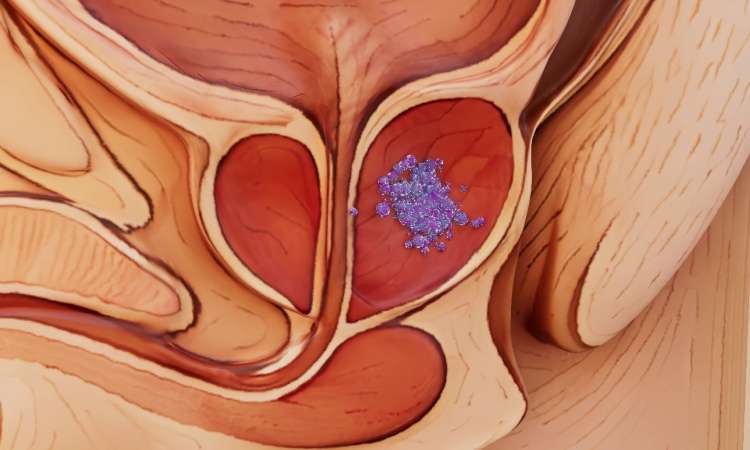

Researchers at Texas A&M Health have identified a molecular mechanism that increases cholesterol levels inside prostate cancer cells—an important process that may help explain how some tumours progress and become resistant to treatment.
The study, led by Ziying Liu, a former student in the lab of Fen Wang, at the Institute of Biosciences and Technology and the Naresh K Vashisht College of Medicine, found that a cell signalling receptor called fibroblast growth factor receptor 1 (FGFR1) helps prostate cancer cells increase their internal supply of cholesterol.
When the research team removed FGFR1 from prostate cancer cells, cholesterol levels dropped. Genes responsible for taking up low-density lipoprotein (LDL) and producing cholesterol within the cell became less active.
The standard first-line treatment for prostate cancer is androgen deprivation therapy (ADT). Although many patients initially respond to this therapy, most cases progress within one to three years to a more aggressive form known as castration-resistant prostate cancer.
One of the biological processes contributing to this transition is steroidogenesis—the production of steroid hormones derived from cholesterol. Because these hormones can fuel tumour growth even when androgen levels are suppressed, understanding how cancer cells obtain and regulate cholesterol has become an important focus of prostate cancer research.
By clarifying the molecular mechanisms that control cholesterol metabolism in prostate cancer cells, the research may help identify potential targets for future therapies aimed at slowing or preventing disease progression.
“Cancer cells frequently rewire metabolic pathways to sustain growth, and evade therapeutic treatment,” Wang said. “Our group has previously shown that aberrant FGFR1 signalling drives several metabolic programmes in prostate cancer, including glycolysis, choline metabolism and iron metabolism. This study adds cholesterol metabolism to that list and further highlights FGFR1 as a multifunctional pathway that could be exploited for future immunotherapy strategies.”
The post Research uncovers how prostate cancer cells resist treatment appeared first on Drug Discovery World (DDW).

Uncategorized
Sanofi Bispecific Scores in Asthma, Rhinosinusitis, but Eczema Bet Doesn’t Pay Off
Sanofi Bispecific Scores in Asthma, Rhinosinusitis, but Eczema Bet Doesn’t Pay Off
Sanofi has faced questions about the potential of lunsekimig in eczema, with executives calling the clinical trial a “measured risk.” Read More
Uncategorized
STAT+: Gilead to buy cancer biotech Tubulis for more than $3 billion
In a move that will grow its oncology pipeline, Gilead Sciences is spending more than $3 billion to buy the German biotech Tubulis, the companies said Tuesday.
The deal includes an upfront payment of $3.15 billion and up to $1.85 billion more if certain milestones are reached. It also highlights both the therapeutic and commercial promise of antibody-drug conjugates, the next-generation chemotherapy treatments that the privately held Tubulis is developing.
Gilead’s latest move comes just months after it said it would acquire Arcellx in a deal worth $7.8 billion. The two companies had already been working together on a multiple myeloma CAR-T therapy that could be approved later this year. Gilead last month also announced that it was buying Ouro Therapeutics, which is focused on drugs for autoimmune disease, for up to $2.18 billion.
In a move that will grow its oncology pipeline, Gilead Sciences is spending more than $3 billion to buy the German biotech Tubulis, the companies said Tuesday.
The deal includes an upfront payment of $3.15 billion and up to $1.85 billion more if certain milestones are reached. It also highlights both the therapeutic and commercial promise of antibody-drug conjugates, the next-generation chemotherapy treatments that the privately held Tubulis is developing.
Gilead’s latest move comes just months after it said it would acquire Arcellx in a deal worth $7.8 billion. The two companies had already been working together on a multiple myeloma CAR-T therapy that could be approved later this year. Gilead last month also announced that it was buying Ouro Therapeutics, which is focused on drugs for autoimmune disease, for up to $2.18 billion.
In its third acquisition of 2026, Gilead is spending $3.15 billion upfront to snag a next-generation antibody-drug conjugate platform from German startup Tubulis.
The California biopharma could pay out another $1.85 billion down the road …


Illinois’ financial crisis could bring the state to a halt
The final 6 ‘Game of Thrones’ episodes might feel like a full season
New Season 8 Walking Dead trailer flashes forward in time
Mod turns ‘Counter-Strike’ into a ‘Tekken’ clone with fighting chickens
Meet Superman’s grandfather in new trailer for Krypton
Disney’s live-action Aladdin finally finds its stars
Sanofi Bispecific Scores in Asthma, Rhinosinusitis, but Eczema Bet Doesn’t Pay Off

STAT+: Gilead to buy cancer biotech Tubulis for more than $3 billion
Gilead continues dealmaking streak with $3.15B Tubulis buy for ADCs
BioNTech to shutter Singapore HQ after ‘comprehensive review’
Amgen Seeks ‘Return to Growth’ for Tepezza as More Convenient Formulation Aces Phase 3

STAT+: Merck’s experimental HIV prevention pill could be made for less than $5 a year, researchers say
Illinois’ financial crisis could bring the state to a halt
The final 6 ‘Game of Thrones’ episodes might feel like a full season
New Season 8 Walking Dead trailer flashes forward in time
Mod turns ‘Counter-Strike’ into a ‘Tekken’ clone with fighting chickens
Meet Superman’s grandfather in new trailer for Krypton
Disney’s live-action Aladdin finally finds its stars
-
 Uncategorized9 years ago
These ’90s fashion trends are making a comeback in 2017
-
Contributors9 years ago
The final 6 ‘Game of Thrones’ episodes might feel like a full season
-
Uncategorized9 years ago
According to Dior Couture, this taboo fashion accessory is back
-
Uncategorized9 years ago
The old and New Edition cast comes together to perform
-
Uncategorized9 years ago
Phillies’ Aaron Altherr makes mind-boggling barehanded play
-
Uncategorized9 years ago
Uber and Lyft are finally available in all of New York State
-
Uncategorized9 years ago
Disney’s live-action Aladdin finally finds its stars
-
Uncategorized9 years ago
Steph Curry finally got the contract he deserves from the Warriors