
Uncategorized
NHS health data should be used for clinical trial recruitment, says ABPI



The UK has an opportunity to enhance its global competitiveness in the delivery of industry clinical trials by harnessing NHS health data to more efficiently recruit patients, according to a new report from the ABPI.
Following a period of decline, the number of industry clinical trials in the UK is rising again. Despite this good news, participation in these trials is falling, and is now at its lowest level since 2017/18, representing only 3.4% of individuals taking part in all UK trials.
The ABPI’s new report, ‘Globally competitive UK-wide data-enabled clinical trials: the time is now,’ argues that the solution to rapidly recruiting more patients who are suitable for industry clinical trials is better use of NHS health data.
A key driver of declining recruitment into industry trials is inefficient methods of identifying eligible patients. Current processes are costly and resource-intensive for an overstretched NHS, and they waste patients’ time when they are turned away because they don’t meet the trial criteria to take part.
NHS records contain comprehensive medical information on the UK’s 69 million population. This globally unique asset could dramatically improve how patients are recruited into industry clinical trials in the UK, resulting in faster, more efficient and more inclusive processes.
Anonymised NHS records are already being successfully used in pockets of the UK to support trial recruitment. The recent government announcement to establish a Health Data Research Service (HDRS) provides a mechanism to coordinate and streamline locating the most suitable patients for an industry clinical trial across the UK.
A new model for health data use
The ABPI proposal involves conducting centralised searches of anonymised NHS records within the HDRS and providing this information to NHS trial sites, which have the authority to identify patients and review their eligibility for a specific trial. This evidence-based approach matches trial eligibility criteria to information within a patient’s medical record.
In addition to inviting more eligible patients to participate in a trial, invitations would be targeted only to those who meet the eligibility criteria based on their medical history, meaning fewer patients would be turned away at the recruitment screening stage.
The new ABPI report sets out industry’s view of how adopting data-enabled methods would improve the predictability and accuracy of carrying out trials in the UK, by accelerating recruitment timelines and ensuring that the right patients are matched to the right studies.
Dr Janet Valentine, ABPI Executive Director of Innovation and Research Policy, said: “Because of the benefits industry trials bring to patients and the economy, global competition to attract commercial trials is fierce. It is therefore vital that the UK acts now to secure industry investment and builds on the public’s growing enthusiasm to take part in research.
“NHS health data offers the UK a potential leading edge on our competitors by transforming how we find and recruit patients into trials, reducing delays, costs and avoiding wasted effort. Importantly, the approach we are recommending improves efficiencies in the NHS whilst maintaining patient confidentiality.
“Our model, which has been developed in consultation with industry, NHS leaders and service providers, aligns with the government’s priorities for research and use of health data. If we get this right, we will restore the UK’s reputation for predictable and rapid recruitment into trials, making the UK a far more attractive place for global industry research investment.”
The post NHS health data should be used for clinical trial recruitment, says ABPI appeared first on Drug Discovery World (DDW).

Uncategorized
Sanofi Bispecific Scores in Asthma, Rhinosinusitis, but Eczema Bet Doesn’t Pay Off
Sanofi Bispecific Scores in Asthma, Rhinosinusitis, but Eczema Bet Doesn’t Pay Off
Sanofi has faced questions about the potential of lunsekimig in eczema, with executives calling the clinical trial a “measured risk.” Read More
Uncategorized
STAT+: Gilead to buy cancer biotech Tubulis for more than $3 billion
In a move that will grow its oncology pipeline, Gilead Sciences is spending more than $3 billion to buy the German biotech Tubulis, the companies said Tuesday.
The deal includes an upfront payment of $3.15 billion and up to $1.85 billion more if certain milestones are reached. It also highlights both the therapeutic and commercial promise of antibody-drug conjugates, the next-generation chemotherapy treatments that the privately held Tubulis is developing.
Gilead’s latest move comes just months after it said it would acquire Arcellx in a deal worth $7.8 billion. The two companies had already been working together on a multiple myeloma CAR-T therapy that could be approved later this year. Gilead last month also announced that it was buying Ouro Therapeutics, which is focused on drugs for autoimmune disease, for up to $2.18 billion.
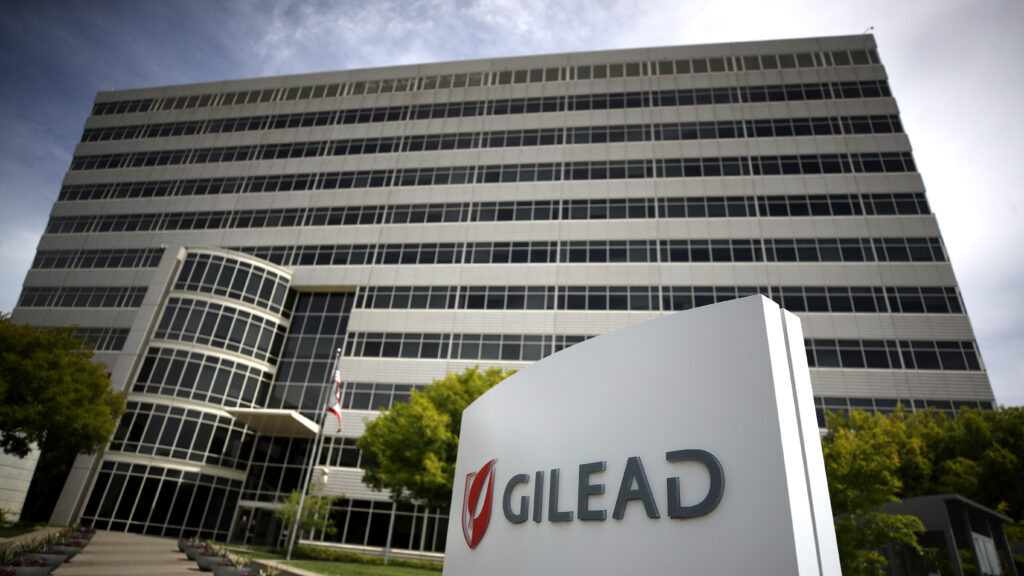
In a move that will grow its oncology pipeline, Gilead Sciences is spending more than $3 billion to buy the German biotech Tubulis, the companies said Tuesday.
The deal includes an upfront payment of $3.15 billion and up to $1.85 billion more if certain milestones are reached. It also highlights both the therapeutic and commercial promise of antibody-drug conjugates, the next-generation chemotherapy treatments that the privately held Tubulis is developing.
Gilead’s latest move comes just months after it said it would acquire Arcellx in a deal worth $7.8 billion. The two companies had already been working together on a multiple myeloma CAR-T therapy that could be approved later this year. Gilead last month also announced that it was buying Ouro Therapeutics, which is focused on drugs for autoimmune disease, for up to $2.18 billion.
In its third acquisition of 2026, Gilead is spending $3.15 billion upfront to snag a next-generation antibody-drug conjugate platform from German startup Tubulis.
The California biopharma could pay out another $1.85 billion down the road …


Illinois’ financial crisis could bring the state to a halt
The final 6 ‘Game of Thrones’ episodes might feel like a full season
New Season 8 Walking Dead trailer flashes forward in time
Mod turns ‘Counter-Strike’ into a ‘Tekken’ clone with fighting chickens
Meet Superman’s grandfather in new trailer for Krypton
Disney’s live-action Aladdin finally finds its stars
Sanofi Bispecific Scores in Asthma, Rhinosinusitis, but Eczema Bet Doesn’t Pay Off

STAT+: Gilead to buy cancer biotech Tubulis for more than $3 billion
Gilead continues dealmaking streak with $3.15B Tubulis buy for ADCs
BioNTech to shutter Singapore HQ after ‘comprehensive review’
Amgen Seeks ‘Return to Growth’ for Tepezza as More Convenient Formulation Aces Phase 3

STAT+: Merck’s experimental HIV prevention pill could be made for less than $5 a year, researchers say
Illinois’ financial crisis could bring the state to a halt
The final 6 ‘Game of Thrones’ episodes might feel like a full season
New Season 8 Walking Dead trailer flashes forward in time
Mod turns ‘Counter-Strike’ into a ‘Tekken’ clone with fighting chickens
Meet Superman’s grandfather in new trailer for Krypton
Disney’s live-action Aladdin finally finds its stars
-
 Uncategorized9 years ago
These ’90s fashion trends are making a comeback in 2017
-
Contributors9 years ago
The final 6 ‘Game of Thrones’ episodes might feel like a full season
-
Uncategorized9 years ago
According to Dior Couture, this taboo fashion accessory is back
-
Uncategorized9 years ago
The old and New Edition cast comes together to perform
-
Uncategorized9 years ago
Phillies’ Aaron Altherr makes mind-boggling barehanded play
-
Uncategorized9 years ago
Uber and Lyft are finally available in all of New York State
-
Uncategorized9 years ago
Disney’s live-action Aladdin finally finds its stars
-
Uncategorized9 years ago
Steph Curry finally got the contract he deserves from the Warriors