
Uncategorized
Injectable Microgel Developed to Reduce Bleeding in Infants Undergoing Surgery

Biomedical researchers headed by a team at the Lampe Joint Department of Biomedical Engineering, University of North Carolina at Chapel Hill/North Carolina State University, have developed an injectable microgel to help reduce bleeding in infants who require surgical care. Tests in an animal model showed that the hemostatic microgels, known as B-knob-triggered microgels (BK-TriGs), reduced bleeding by at least 50%.
Research lead Ashley Brown, PhD, who is the Lampe Distinguished Professor of Biomedical Engineering, is co-corresponding author of the team’s published paper in Science Advances, titled “Hemostatic B-knob-triggered microgels (BK-TriGs) to address bleeding in neonates.” In their paper the team concluded “This study highlights the potential of BK-TriGs, designed for neonatal-specific clotting mechanisms, to address the heightened bleeding and thrombosis risks in neonates, who face 4.4 times higher postsurgery mortality … Our findings support BK-TriGs as a promising approach for improving hemostasis in neonates, offering a tailored, effective solution for this vulnerable patient population.”
When adults cut themselves, a multi-step process called hemostasis stops the bleeding from the injured blood vessel. But hemostasis in infants is different from hemostasis in adults. This difference can be problematic if infants require surgery to address significant medical problems. In surgeries, neonatal patients normally receive blood from adult donors to compensate for blood lost during the operation. “Current treatments rely on transfusing adult blood products, which may cause complications resulting from structural and functional differences between neonatal and adult fibrinogen,” the authors wrote. “… these transfusions pose serious safety concerns by increasing morbidity, prolonging intensive care unit stays, and elevating posttransfusion thrombosis risks in neonates.”
Brown noted, “… if you give adult blood to an infant, the difference in adult hemostasis versus infant hemostasis can lead to too much clotting. That can increase the likelihood of thrombosis, where blood clots form in the lungs or elsewhere and put the baby at risk … “My research team has done a lot of work on surgery-related bleeding in newborns, and we wanted to develop a therapeutic intervention that would reduce bleeding and—by extension—reduce the need for infants to receive adult blood transfusions during surgery.”
The scientists have now reported on their development of a material called B-knob triggered microgels (BK-TriGs). “Fibrin is the main clotting protein in human blood,” Brown explains. “There is a short amino acid sequence called a ‘B peptide’ that links together fibrin molecules to create blood clots where they are needed—and these B peptides play a particularly important role in hemostasis for infants. The BK-TriGs are engineered particles that are studded with those B peptides.”
The particles can absorb water and become squishy hydrogels, which mimic the mechanical properties of natural platelets in a way that maximizes the ability of the B peptides to create fibrin networks and stanch bleeding. “Functionalized with a fibrin hole b–specific peptide, BK-TriGs enhance clot density and resistance to degradation,” the team noted.
The researchers first tested the BK-TriGs by using microfluidic devices that allowed them to conduct in vitro testing to see how the microgels affected clotting in blood plasma from human adults and infants. “In vitro studies using neonatal platelet-poor plasma (PPP) showed that at an optimal concentration, BK-TriGs increased clot density by more than 100% and improved stability by reducing fibrinolysis,” they wrote in summary. “Under flow conditions BK-TriGs promoted robust clot formation compared to plasma-only controls.” Brown noted, “We found that BK-TriGs worked better at improving blood clotting in infant plasma than in adult plasma, which was what we expected to see.”
To further test the efficacy of the BK-TriGs, the researchers worked with lab mice that were genetically engineered to not make fibrinogen, the precursor to fibrin. This allowed the researchers to first introduce infant fibrinogen into the lab mice so that the mice exhibit a form of hemostasis similar to infants. “This innovative model enabled the evaluation of BK-TriGs in a setting that replicates key aspects of neonatal fibrinogen polymerization and fibrinolytic sensitivity, providing preliminary insights into their potential clinical utility.”
Brown added, “We found that the BK-TriGs outperformed any of the other options we tested at reducing blood loss. Specifically, the BK-TriGs reduced blood loss by 50-60% compared to the control group.”
The authors further stated, “The findings highlight the potential of BK-TriGs as a promising synthetic platelet-mimetic approach for enhancing clot density and stability, particularly in neonatal plasma where traditional blood products may pose risks … A fibrin-targeted approach like BK-TriGs, which enhances clot formation without introducing systemic thrombotic risk, may offer a safer alternative to adult fibrinogen transfusions.”
Next steps for the work are to see how BK-TriGs compare to other hemostatic therapeutics that are on the market, either on their own or when used in conjunction with BK-TriGs. “The results we’re reporting here are exciting, but we are still far removed from clinical use,” Brown, acknowledged. “We need to make sure there are no unforeseen risks associated with blood clotting.” The team also commented, “Expanding this research to include different clinical bleeding scenarios will be essential to advancing these materials toward therapeutic applications.”
“This is particularly relevant in neonates, where the most severe bleeding complications often arise in critical sites such as the gastrointestinal tract and the brain,” Brown continued, “But if we do find BK-TriGs are safe and effective, we’re optimistic this could be a cost-effective way to make surgery safer for infants. Manufacturing the BK-TriG particles would be relatively inexpensive—certainly in comparison to blood products.”
The post Injectable Microgel Developed to Reduce Bleeding in Infants Undergoing Surgery appeared first on GEN – Genetic Engineering and Biotechnology News.

Uncategorized
Opinion: STAT+: Former Geisinger CEO: U.S. health systems must replace huge numbers of people with AI
About 20 years ago, I stepped on stage at one of our Geisinger town halls and looked out upon a sea of people: thousands of full-time employees at an integrated health system charged with the health and well-being of millions of Pennsylvanians.
Only a fraction of the people in that room were clinicians.
That was the first time I fully visualized the problem: We employed more people in our revenue cycle department to process bills and reconcile data than we did doctors. And we weren’t alone. It’s the same story at every health system in America, large and small, and over the past two decades, the ratio has become dramatically more disparate.

About 20 years ago, I stepped on stage at one of our Geisinger town halls and looked out upon a sea of people: thousands of full-time employees at an integrated health system charged with the health and well-being of millions of Pennsylvanians.
Only a fraction of the people in that room were clinicians.
That was the first time I fully visualized the problem: We employed more people in our revenue cycle department to process bills and reconcile data than we did doctors. And we weren’t alone. It’s the same story at every health system in America, large and small, and over the past two decades, the ratio has become dramatically more disparate.
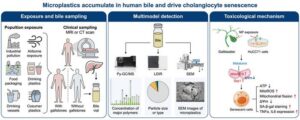
Microplastics have become a defining environmental signature of modern life, turning up in oceans, soil, food, drinking water, and even the air. But their biological fate inside the human body remains far less understood. A new study suggests that these particles may be doing more than simply passing through. Instead, they may be accumulating in one of the body’s most overlooked fluids—bile—and leaving behind measurable cellular damage that could shape future thinking about environmentally driven biliary injury and long‑term health effects. As the authors noted in their abstract, “the long-term accumulation patterns and chronic toxic effects of microplastics within the human biliary system are largely unknown,” underscoring the need for deeper investigation into how these particles behave in the enterohepatic circulation.
Researchers from the Tenth Affiliated Hospital of Southern Medical University (Dongguan People’s Hospital), Sun Yat-sen University, Guilin Medical University, and collaborating institutions reported the findings in Environmental Science and Ecotechnology. Their study, “Microplastics accumulate in human bile and drive cholangiocyte senescence,” provides the first direct evidence that microplastics are not only present in bile but may also contribute to mitochondrial dysfunction and premature aging in cholangiocytes, the epithelial cells that line the bile ducts.
The team collected bile from 14 surgical patients (five without gallstones and nine with gallstones) and used a multimodal analytical approach—pyrolysis–gas chromatography–mass spectrometry, laser direct infrared spectroscopy, and scanning electron microscopy—to characterize the particles. According to the paper, “we show the universal presence of microplastics in human bile,” identifying six polymer types dominated by polyethylene terephthalate and polyethylene, with most particles measuring 20–50 μm. Patients with gallstones carried substantially higher microplastic burdens, raising questions about whether biliary stasis or altered bile composition may influence microplastic retention.

To probe biological effects, the researchers exposed cultured human cholangiocytes to low-dose polystyrene nanoplastics for seven days, simulating chronic exposure. The cells exhibited mitochondrial dysfunction, elevated reactive oxygen species, reduced ATP, Drp1‑mediated mitochondrial fission, and G1 cell‑cycle arrest—hallmarks of senescence. As the authors wrote, chronic exposure “induces mitochondrial dysfunction-associated senescence in cholangiocytes,” suggesting a mechanistic link between environmental microplastics and biliary aging.
One of the most intriguing findings is that melatonin, a widely used antioxidant, partially reversed the mitochondrial and inflammatory damage. While far from a therapeutic recommendation, the result hints at a potential intervention point and gives the study translational relevance.
The work reframes the biliary system as something far more active than a simple transit channel. The data indicate that bile can serve as a reservoir for microplastics and that prolonged exposure may age cholangiocytes by driving mitochondrial dysfunction. The partial rescue with melatonin adds a mechanistic foothold for future intervention, even as the authors caution that broader human studies are essential.
For biotech, the implications are broad. The work highlights bile as a clinically accessible matrix for exposure assessment, opening the door to new diagnostics for environmental toxicology. The mitochondrial stress signature aligns with pathways already being targeted by companies developing senolytics, mitoprotective agents, and anti‑inflammatory therapeutics. The authors wrote that the research provides “a mechanistic foundation for assessing the health risks of plastic pollution and developing therapeutic interventions for environmentally driven biliary disorders.”
The post Microplastics in Human Bile Drive Mitochondrial Dysfunction and Senescence appeared first on GEN – Genetic Engineering and Biotechnology News.
Uncategorized
STAT+: Health insurers score major win with higher 2027 Medicare Advantage rates
Companies that sell Medicare Advantage plans will receive a 2.5% pay bump on average in 2027, up significantly from what was proposed and a win for an industry that has experienced higher medical costs and has opposed nearly all reforms to the lucrative taxpayer-financed program.
More importantly, the Trump administration scrapped its proposal that would have used more updated data in the payment process, ensuring that Medicare Advantage insurers retain billions of dollars.
In addition to base payments, Medicare Advantage insurers get paid based on how sick their members. This process is known as risk adjustment and has been flagged by watchdogs, auditors, and federal attorneys as rife with abuse. Trump officials proposed using newer data that goes into seniors’ “risk scores,” but after intense industry pushback over the past two months, they are dropping the proposal for now.

Companies that sell Medicare Advantage plans will receive a 2.5% pay bump on average in 2027, up significantly from what was proposed and a win for an industry that has experienced higher medical costs and has opposed nearly all reforms to the lucrative taxpayer-financed program.
More importantly, the Trump administration scrapped its proposal that would have used more updated data in the payment process, ensuring that Medicare Advantage insurers retain billions of dollars.
In addition to base payments, Medicare Advantage insurers get paid based on how sick their members. This process is known as risk adjustment and has been flagged by watchdogs, auditors, and federal attorneys as rife with abuse. Trump officials proposed using newer data that goes into seniors’ “risk scores,” but after intense industry pushback over the past two months, they are dropping the proposal for now.


Illinois’ financial crisis could bring the state to a halt
The final 6 ‘Game of Thrones’ episodes might feel like a full season
New Season 8 Walking Dead trailer flashes forward in time
Mod turns ‘Counter-Strike’ into a ‘Tekken’ clone with fighting chickens
Meet Superman’s grandfather in new trailer for Krypton
Disney’s live-action Aladdin finally finds its stars

Opinion: STAT+: Former Geisinger CEO: U.S. health systems must replace huge numbers of people with AI

Microplastics in Human Bile Drive Mitochondrial Dysfunction and Senescence

STAT+: Health insurers score major win with higher 2027 Medicare Advantage rates

CRISPR at 25: The Past, Present, and Future of Genome Editing
Immunotherapy Enhanced by Restoring Mitochondrial Function in Dendritic Cells

Hims & Hers says limited data stolen in social engineering attack
Illinois’ financial crisis could bring the state to a halt
The final 6 ‘Game of Thrones’ episodes might feel like a full season
New Season 8 Walking Dead trailer flashes forward in time
Mod turns ‘Counter-Strike’ into a ‘Tekken’ clone with fighting chickens
Meet Superman’s grandfather in new trailer for Krypton
Disney’s live-action Aladdin finally finds its stars
-
 Uncategorized9 years ago
These ’90s fashion trends are making a comeback in 2017
-
Contributors9 years ago
The final 6 ‘Game of Thrones’ episodes might feel like a full season
-
Uncategorized9 years ago
According to Dior Couture, this taboo fashion accessory is back
-
Uncategorized9 years ago
The old and New Edition cast comes together to perform
-
Uncategorized9 years ago
Phillies’ Aaron Altherr makes mind-boggling barehanded play
-
Uncategorized9 years ago
Uber and Lyft are finally available in all of New York State
-
Uncategorized9 years ago
Disney’s live-action Aladdin finally finds its stars
-
Uncategorized9 years ago
Steph Curry finally got the contract he deserves from the Warriors