
Uncategorized
Common Ancestry Limits Protein Sequence Exploration, Computational Study Shows

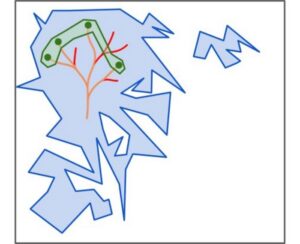
For all the excitement surrounding AlphaFold and the surge of AI‑driven protein design tools, one fact often goes unexamined: nearly every model is trained on databases of known proteins. These databases feel vast, but compared to the astronomical number of sequences that could, in principle, form a functional protein, they represent only a sliver of what’s possible. That raises a fundamental question for the field: how representative is the protein universe we currently know?
A new study published in PNAS and titled “Descent from a common ancestor restricts exploration of protein sequence space,” takes direct aim at that question, using large‑scale protein evolution modeling to probe the limits of protein diversification. The work, led by researchers at the Okinawa Institute of Science and Technology (OIST), the Institute of Science and Technology Austria (ISTA), the University of Vienna, and the Centro de Astrobiología (CAB), suggests that the boundaries of today’s protein diversity were set remarkably early in life’s history.
“Modern AI methods are thought to be revolutionizing protein design,” said Fyodor Kondrashov, PhD, who heads OIST’s Evolutionary and Synthetic Biology Unit, in a press release. “Yet most of these AI design methods are typically trained on databases of known proteins. Without understanding how representative these known proteins are of sequence space, how confident can we be that such methods can generate truly diverse protein designs?”

To investigate that representativeness, the team began by mathematically describing the region of sequence space occupied by known proteins. They estimated the “dimensionality” of each protein family, a measure of how many independent directions evolution has actually sampled, using correlation‑based analyses of sequence variation. The researchers then simulated protein evolution to test how ancestry, selection, and epistasis shape the diversity of sequences that evolution can reach. The goal was to estimate how many functional sequences should exist for a given protein family and to compare that theoretical diversity with the diversity observed in nature.
What emerged was a striking pattern: the strongest constraint on protein evolution is not selection or epistasis, but ancestry itself. Proteins tend to remain clustered near the sequences of their earliest ancestors, with limited divergence into the broader functional landscape. As the authors report, “For some gene families the effective topological dimension was on the order of one; in just a few families it was larger than 10.”
“That [the] starting point is the main evolutionary limit is not necessarily surprising, but the scale of its importance is really quite remarkable,” said lead author Lada Isakova, a PhD student within the unit. “As an evolutionary biologist, I was intrigued to see how little selection and epistasis seemed to matter in our results.”
The findings also feed into long‑standing debates about how the first proteins emerged. The team’s simulations suggest that early protein families could not have arisen simply by mutating a single first sequence. Instead, the data point toward DNA recombination “to create new DNA molecules which could encode very different proteins,” explained Isakova.
For today’s protein engineers, the work underscores a practical limitation: AI models trained on existing proteins may struggle to extrapolate into unexplored regions of sequence space. “Most methods won’t be able to generalize well beyond the current known sequence space,” Isakova noted. “We can see there are huge swaths of sequence space left to be explored, but it’ll take new experimental data to enable expansion into these unknown realms.”
The post Common Ancestry Limits Protein Sequence Exploration, Computational Study Shows appeared first on GEN – Genetic Engineering and Biotechnology News.

The acquisition of Tubulis GmbH—Gilead Sciences’ latest of the year after buying Arcells and Ouro Medicines—brings into the fold a novel ovarian cancer candidate that has demonstrated promising mid-stage data.
Uncategorized
STAT+: Pharmalittle: We’re reading about FDA backing domestic production, another Gilead deal, and more
Rise and shine, everyone, another busy day is on the way. And it is getting off to a good start here on the Pharmalot campus, where clear blue skies and comfortable breezes are greeting us. Who could ask for anything more? Actually, we could — it is time to reheat the kettle for another cuppa stimulation. Our choice today is ginger peach. And here is a helpful tip — a teaspoon of honey enhances the flavors splendidly. Of course, you are invited to join us. For the full experience, we are now hawking replicas — take a look. Meanwhile, here are a few tidbits to help you along. As always, do keep in touch. We appreciate feedback, criticism, and tips. …
The U.S. Food and Drug Administration used the president’s budget to propose policies aimed at encouraging domestic development and manufacturing of drugs, STAT notes. FDA Commissioner Marty Makary has said the agency needs “giant, big ideas” to counter China’s dominance in early-stage clinical development of drugs. Among the FDA’s ideas are proposals to make it easier to run early-stage trials in the U.S. and to hand an advantage to U.S.-based generics manufacturers. The Trump administration has been using a variety of policy levers to try and bring drug manufacturing to the U.S. One of the legislative proposals in the FDA’s budget justification would let domestic manufacturers of generic drugs challenge brand drug patents a month before foreign companies, a major advantage in an intensely competitive process.
Two more drugmakers, AbbVie and Genentech, will officially start selling their medicines on the TrumpRx website, CBS News tells us. Abbvie, which struck a deal with the Trump administration in January to cut the cost of certain medicines, will sell Humira, a popular medication used to treat rheumatoid arthritis, Crohn’s disease, and ulcerative colitis, on the site at an 86% discount. The prescription prices on the site, however, are only available to patients who are uninsured, or whose insurance does not cover it, and who must pay the full list price out of pocket. Those with insurance coverage generally pay lower prices already. TrumpRx now sells over 61 drugs at a lower price, up from about 40 when the website went live in February.

Rise and shine, everyone, another busy day is on the way. And it is getting off to a good start here on the Pharmalot campus, where clear blue skies and comfortable breezes are greeting us. Who could ask for anything more? Actually, we could — it is time to reheat the kettle for another cuppa stimulation. Our choice today is ginger peach. And here is a helpful tip — a teaspoon of honey enhances the flavors splendidly. Of course, you are invited to join us. For the full experience, we are now hawking replicas — take a look. Meanwhile, here are a few tidbits to help you along. As always, do keep in touch. We appreciate feedback, criticism, and tips. …
The U.S. Food and Drug Administration used the president’s budget to propose policies aimed at encouraging domestic development and manufacturing of drugs, STAT notes. FDA Commissioner Marty Makary has said the agency needs “giant, big ideas” to counter China’s dominance in early-stage clinical development of drugs. Among the FDA’s ideas are proposals to make it easier to run early-stage trials in the U.S. and to hand an advantage to U.S.-based generics manufacturers. The Trump administration has been using a variety of policy levers to try and bring drug manufacturing to the U.S. One of the legislative proposals in the FDA’s budget justification would let domestic manufacturers of generic drugs challenge brand drug patents a month before foreign companies, a major advantage in an intensely competitive process.
Two more drugmakers, AbbVie and Genentech, will officially start selling their medicines on the TrumpRx website, CBS News tells us. Abbvie, which struck a deal with the Trump administration in January to cut the cost of certain medicines, will sell Humira, a popular medication used to treat rheumatoid arthritis, Crohn’s disease, and ulcerative colitis, on the site at an 86% discount. The prescription prices on the site, however, are only available to patients who are uninsured, or whose insurance does not cover it, and who must pay the full list price out of pocket. Those with insurance coverage generally pay lower prices already. TrumpRx now sells over 61 drugs at a lower price, up from about 40 when the website went live in February.
Uncategorized
FDA Seeks Expanded Authority To Regulate Postapproval Manufacturing Changes
FDA Seeks Expanded Authority To Regulate Postapproval Manufacturing Changes
Aiming to protect patients, the FDA sent lawmakers a wish list of legislative proposals intended to clarify and expand its oversight of updates to approved drug production processes. Read More


Illinois’ financial crisis could bring the state to a halt
The final 6 ‘Game of Thrones’ episodes might feel like a full season
New Season 8 Walking Dead trailer flashes forward in time
Mod turns ‘Counter-Strike’ into a ‘Tekken’ clone with fighting chickens
Meet Superman’s grandfather in new trailer for Krypton
Disney’s live-action Aladdin finally finds its stars
Gilead Swallows Another Partner, Paying up to $5B for ADC Specialist Tubulis

STAT+: Pharmalittle: We’re reading about FDA backing domestic production, another Gilead deal, and more
FDA Seeks Expanded Authority To Regulate Postapproval Manufacturing Changes
Sanofi Bispecific Scores in Asthma, Rhinosinusitis, but Eczema Bet Doesn’t Pay Off

STAT+: Gilead to buy cancer biotech Tubulis for more than $3 billion
Gilead continues dealmaking streak with $3.15B Tubulis buy for ADCs
Illinois’ financial crisis could bring the state to a halt
The final 6 ‘Game of Thrones’ episodes might feel like a full season
New Season 8 Walking Dead trailer flashes forward in time
Mod turns ‘Counter-Strike’ into a ‘Tekken’ clone with fighting chickens
Meet Superman’s grandfather in new trailer for Krypton
Disney’s live-action Aladdin finally finds its stars
-
 Uncategorized9 years ago
These ’90s fashion trends are making a comeback in 2017
-
Contributors9 years ago
The final 6 ‘Game of Thrones’ episodes might feel like a full season
-
Uncategorized9 years ago
According to Dior Couture, this taboo fashion accessory is back
-
Uncategorized9 years ago
The old and New Edition cast comes together to perform
-
Uncategorized9 years ago
Phillies’ Aaron Altherr makes mind-boggling barehanded play
-
Uncategorized9 years ago
Uber and Lyft are finally available in all of New York State
-
Uncategorized9 years ago
Disney’s live-action Aladdin finally finds its stars
-
Uncategorized9 years ago
Steph Curry finally got the contract he deserves from the Warriors