
Uncategorized
Lilly climbs, Novo falls as obesity drug battle intensifies
A research disappointment and a miss on Wegovy pill sales hurt Novo, while Lilly’s injectable franchise once again surpassed analyst expectations.


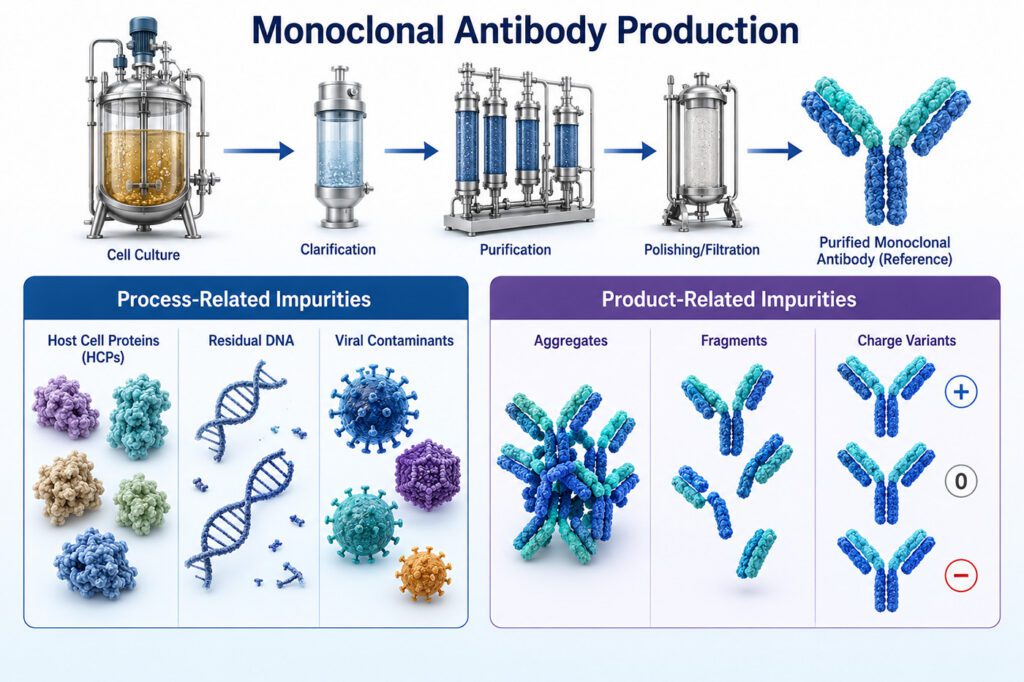
In today’s biopharmaceutical industry, success is no longer defined by how much therapeutic antibody you can produce, but by how well you can purify it. As upstream systems generate increasingly higher titers, downstream purification must evolve to keep pace. At the center of this evolution is cation exchange (CEX) chromatography, a polishing technique chosen not by convention, but by its trusted ability to separate what looks nearly identical.
Monoclonal antibodies (mAbs) have become an important class of therapeutics in modern medicine, used to treat cancers, autoimmune diseases, and infectious threats ranging from Ebola to COVID-19.1 But producing these powerful biologics is only half the battle. The real challenge—and increasingly the defining step—lies in purification.
Over the past decade, upstream bioprocessing has advanced dramatically. Modern expression systems routinely generate high titers of antibody from mammalian cell cultures, pushing productivity to levels that were once unattainable. However, this progress has shifted the burden downstream. The resulting product streams are denser, more complex, and filled with impurities that must be removed to meet strict regulatory and safety standards.
As Alejandro Becerra, PhD, principal applications scientist and global purification technical lead at Thermo Fisher Scientific, notes, “Cation exchange chromatography is one of the key polishing steps because antibodies have relatively high isoelectric points, or pIs, and many impurities have lower pIs.” His point underscores a broader reality: Although anion-exchange chromatography (AEX) is somewhat standardized, the increased impurity burden of more complex biologic feed streams needs to be addressed by intermediate polishing, usually CEX.
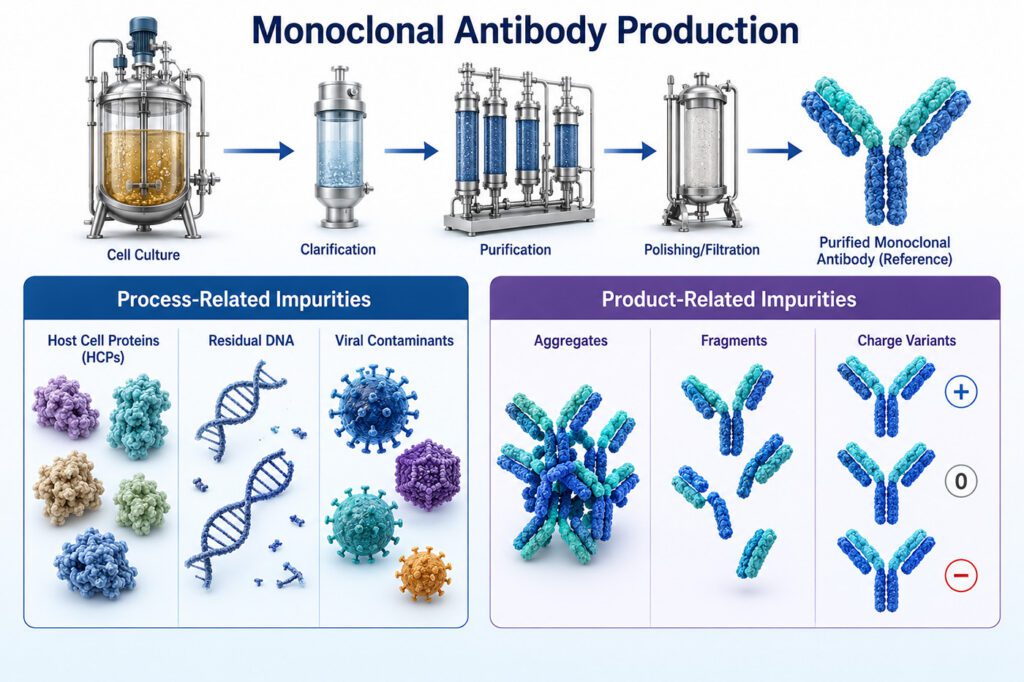
The impurities fall into two broad categories. Process-related impurities include host cell proteins (HCPs), residual DNA, and viral contaminants introduced during production. Product-related impurities, meanwhile, arise from the molecule itself and include aggregates, fragments, and charge variants. As antibody modalities evolve, incorporating bispecific formats, antibody–drug conjugates, and engineered scaffolds, this heterogeneity becomes even more pronounced.
Traditional purification strategies, anchored by affinity capture followed by polishing steps, are increasingly being pushed to their limits. While Protein A chromatography can deliver high purity for conventional antibodies, more complex molecules such as Fc fusion proteins, Fab fragments, bispecific antibodies, and antibody-drug conjugates, often emerge from capture with significantly lower purity—sometimes below 80%. If optimization of the capture step is deemed too much of a challenge, the burden of achieving final product quality therefore shifts to downstream polishing, where subtle differences between molecules must be resolved with precision.
Hydrophobic interaction chromatography (HIC) can be used for aggregates and/or HCPs, but CEX is the more common and powerful tool used to remove charge variants or other impurities with similar pIs. The mechanism is also well understood in the context of the separation, and a well-developed CEX unit operation can advance a candidate molecule toward clinical use.
Why CEX matters

CEX chromatography relies on charge-based interactions to separate molecules. Under mildly acidic conditions, mAbs typically carry a net positive charge and bind to negatively charged chromatography media. Impurities interact differently depending on their own charge distribution, the specific chemistry of the resin, and the composition of the mobile phase. By correctly choosing a suitable CEX resin and systematically developing the appropriate operating conditions, challenging impurities can be separated and removed.
What sets CEX apart is its ability to remove product-related impurities that closely resemble the target molecule. Among these, high molecular weight aggregates are particularly crucial. These multimers can form during cell culture, downstream processing, or even within the chromatography columns themselves. Because they are structurally similar to the desired antibody, they are difficult to remove using traditional purification steps.
Purity is “one of the main product-quality measures that we look for,” says David Brown, PhD, associate director, process development at KBI Biopharma. “Aggregates can form during production, and they are a key measure of product quality.” These aggregates are closely monitored because they can trigger immune responses or compromise therapeutic efficacy.
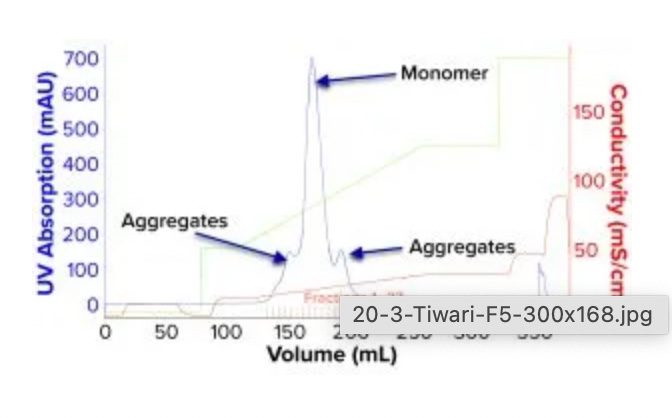
There are no specific regulatory requirements for aggregates. Each drug sponsor determines the acceptable value based on safety and efficacy as well as stability of the final drug product. Some programs require levels below two percent, others below one percent and, in some cases are acceptable with levels as high as four or five percent Achieving these targets consistently requires both precise control of process conditions and the use of high-performance chromatography materials capable of resolving barely discernable differences in molecular charge and structure.
CEX chromatography also plays a role in removing other types of challenging impurities, including charge variants and residual contaminants that persist after affinity capture. Its versatility and precision make it an indispensable component in the modern antibody-purification workflows.
CEX provides a degree of flexibility that is particularly valuable in development environments. Because separation can be tuned through relatively simple adjustments in buffer composition and the correct CEX resin selection, scientists can rapidly explore different operating conditions to optimize performance. This adaptability is especially important when working with novel or poorly characterized molecules, where prior knowledge might be limited and iterative experimentation is required. It also allows teams to respond quickly when upstream changes introduce new impurity profiles that must be addressed downstream.
The resin decision
The effectiveness of CEX chromatography depends heavily on the resin used. Resin selection is not merely a technical choice; it is a strategic decision that influences process efficiency, scalability, and cost. Developers must consider multiple factors simultaneously, including binding capacity, resolution, robustness, and pressure-flow behavior.
Becerra explains that the process begins with defining what the purification operation should accomplish. As he adds, this end goal must be attained “without losing sight that these processes will be eventually scaled up.” This dual focus ensures that conditions optimized during development can be translated into manufacturing environments.
Brown highlights the practical considerations: “We’re looking at aggregate removal, step yield, binding capacity, and pressure/flow dynamics.” Each of these factors plays a crucial role. High binding capacity reduces the amount of resin required, lowering cost. Strong resolution ensures effective separation of impurities. Favorable pressure/flow characteristics enable high flow rates without excessive backpressure, supporting efficient large-scale operation.
To navigate these trade-offs, many organizations adopt systematic approaches to resin selection. KBI Biopharma, for example, uses a “resin toolbox strategy, screening multiple resins against a library of molecules to build a robust dataset,” Brown says. This allows rapid decision-making when new programs arise, reducing development time while maintaining confidence in performance.
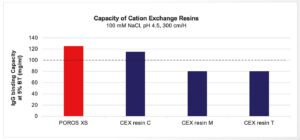
An example of screening a CEX resin toolbox is the comparative study of several commercially available CEX resins, “Streamlining cation exchange chromatography process development for therapeutic monoclonal antibody purification” published by Lau et al in the peer-reviewed Journal of Chromatography A. From their study of 3 mAb feeds and 5 CEX resins, the authors concluded that for industrial applications POROS XS had outperformed the other resins tested, “demonstrating outstanding column performance and impurity clearance. Application of Poros XS contributes to a highly efficient and robust manufacturing process, enhancing productivity while maintaining high product quality.”2
 XS Strong CEX resin [Thermo Fisher Scientific]
Thermo Fisher’s POROS XS Strong CEX resin has emerged as a trusted option. Its design addresses several of the key challenges in modern purification, especially resolution. This resin’s relatively small particle size and large through-pore structure allow more accessible surface area, which leads to high dynamic binding capacity. POROS XS resins can achieve capacities exceeding 100 g/L for mAbs which can improve throughput and reduce resin volume requirements comparted to lower capacity CEX resins.3
Moreover, the resin’s rigid poly(styrene-divinylbenzene) backbone provides mechanical strength and supports high flow rates with minimal pressure increase. This enables stable operation and scalability across different process scales.
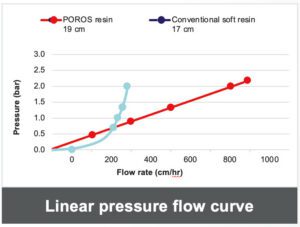
Real-world experience demonstrates this resin’s utility. Brown notes: “We’ve used the POROS XS resin extensively, and it has shown a good balance of aggregate clearance, step yield, capacity and pressure/flow dynamics.” This combination of attributes makes it particularly well suited for both development and manufacturing environments.
Importantly, the robustness of POROS XS resins extends beyond performance metrics. Its chemical stability across a wide pH range and tolerance to harsh cleaning conditions allow for extended resin lifetime and reuse. This contributes to lower overall cost of goods and improved process sustainability—factors that are increasingly important as biologics manufacturing scales globally. In large-scale facilities where chromatography columns are cycled repeatedly, durability translates directly into fewer resin replacements, reduced downtime, and more predictable manufacturing schedules.
Driving efficiency
Although resin performance is crucial, process design can further enhance efficiency. In “Cation exchange chromatography performed in overloaded mode is effective in removing viruses during the manufacturing of monoclonal antibodies,” which was published in Biotechnology Progress, by Masuda et al, scientists investigated alternative operating modes for CEX chromatography.4
Traditionally, CEX polishing is performed in bind-and-elute mode, where the antibody binds to the resin under low-salt conditions and is later eluted by increasing salt concentration or pH. Although effective, this approach requires significant resin volumes, increasing costs at scale.
To address this, Masuda and her colleagues evaluated an overloaded mode of operation. In this approach, the column was intentionally loaded with POROS XS resin beyond its nominal binding capacity. Instead of relying solely on binding, separation was driven by differences in binding affinity between the antibody and impurities.
The results were striking. Even at extremely high loading levels (up to 2,000 grams of antibody per liter of resin), viral clearance remained effective. Viruses such as murine leukemia virus were found to bind more strongly to the resin than the antibody, remaining on the column while the purified product was eluted.
This behavior enabled the simultaneous removal of multiple impurities, including aggregates, HCPs, and viruses—all in a single step. Importantly, viral clearance performance was not significantly affected by resin type nor by antibody variant, suggesting that the approach is broadly applicable.
The implications are substantial. Overloaded operation reduces resin requirements, lowering costs and improving process efficiency. It also simplifies workflows by combining multiple purification functions into a single step. At the same time, it highlights the importance of understanding molecular interactions, as these interactions ultimately govern separation performance.
Beyond cost savings, the study also underscores a shift in thinking about purification design. Rather than treating each step as a fixed unit operation, researchers are increasingly exploring flexible modes that adapt to process needs. Overloaded CEX represents one such innovation, demonstrating how established techniques can be reimagined to meet modern manufacturing demands.
Precision separation
Advanced purification will also be required for next-generation therapeutics. Bispecific antibodies present unique purification challenges because they require the correct pairing of multiple heavy and light chains. Mispaired variants so closely resemble the desired product that they can be difficult to remove.
In “Structural study of a light chain mispaired bispecific predicts mechanism of downstream separation,” published in the Journal of Chromatography A, by Cha et al, researchers addressed this challenge using CEX chromatography with POROS XS resin, combined with detailed structural analysis.5 In one case study, a mispaired variant disrupted a positively charged region on the antibody surface. This disruption weakened its interaction with the resin, allowing it to be selectively removed during washing.
Through high-throughput screening and careful optimization of pH and salt conditions, the team identified a process that enabled clear separation between the desired product and mispaired variants. The result was a significant improvement in purity, with the final product reaching 94.78%.5
What makes this work particularly notable is the integration of computational modeling with experimental chromatography. By analyzing electrostatic surface properties, researchers predicted how different variants would interact with the resin. This predictive capability enabled more targeted optimization and reduced reliance on trial-and-error experimentation.
The study demonstrates how subtle differences in molecular structure, such as changes in surface-charge distribution, can have a profound impact on purification outcomes. It also highlights the potential of combining structural biology and chromatography to address increasingly complex purification challenges. As antibody formats continue to diversify, such integrated approaches are likely to become standard practice, particularly for molecules where traditional purification heuristics fall short.
Toward smarter, integrated processes
The development of advanced CEX processes is undergoing a transformation driven by data, automation, and modeling. High-throughput screening platforms allow researchers to test multiple conditions simultaneously, exploring a wide range of pH, conductivity, and loading parameters. Statistical design methods help define optimal operating windows, while mechanistic models provide insight into the underlying processes.
One of the key insights from these approaches is the trade-off between yield and purity. Conditions that maximize binding strength might not produce the cleanest separations, while conditions that improve purity may reduce recovery. The optimal process lies in balancing these competing factors within a defined operating space.
Mechanistic modeling is playing an increasingly important role in achieving this balance. By simulating how molecules move, bind, and separate within a chromatography column, these models can predict process performance under different conditions. Once calibrated with experimental data, they provide a powerful tool for reducing development time and improving process understanding.
At the same time, advances in resin chemistry are expanding the capabilities of chromatography. New materials are being developed to address specific challenges associated with next-generation therapeutics, including higher levels of aggregation and increased structural complexity.
In addition, integrated approaches could transform purification from a reactive process into a proactive, design-driven discipline. Increasingly, developers are viewing purification as an interconnected system rather than a sequence of isolated steps, enabling more holistic optimization across the entire workflow.
From bottleneck to advantage
Purification is no longer a downstream bottleneck struggling to keep pace with upstream production. It is becoming a strategic advantage—one that determines not only product quality, but also development speed and manufacturing efficiency.
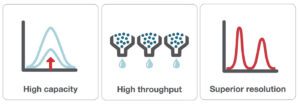
By combining high-performance resins like POROS XS Strong CEX Resin with data-driven optimization and collaborative development approaches, the industry is transforming how mAbs are refined. Companies are increasingly working in partnership with technology providers to design processes that are robust, scalable, and adaptable.
This shift reflects a broader change in mindset. Purification is no longer viewed as a necessary but secondary step. Instead, it is recognized as a crucial component of therapeutic development, one that requires the same level of innovation and attention as upstream production.
As biologics become more complex and production scales continue to rise, the importance of precise, efficient purification will only grow. In this evolving landscape, the ability to separate what is nearly indistinguishable and helping to remove important impurities will define success.
CEX chromatography now stands at the forefront of that effort. By enabling the removal of crucial impurities and supporting scalable, cost-effective manufacturing, it helps modern therapeutics to be purified with the precision required for improved therapies.
Learn more at: thermofisher.com/porosXS
REFERENCES
- Lu, R-M., Chiang, H-L., Yuan, J. P-Y., et al. Technological advancements in antibody-based therapeutics for treatment of diseases. J. Biomed. Sci. 32:98 (2025).
- Lau, W.Y., Mi, X., Dumont, A., Yang, L. Streamlining cation exchange chromatography process development for therapeutic monoclonal antibody purification. J. Chromatogr. A. 1762, 466391 (2025).
- Thermo Fisher Scientific. POROS XS Strong Cation Exchange Resin. https://documents.thermofisher.com/TFS-Assets/BPD/Flyers/poros-xs-resin-flyer.pdf
- Masuda, Y., Tsuda, M., Hashikawa-Muto, C., et al. Cation exchange chromatography performed in overloaded mode is effective in removing viruses during the manufacturing of monoclonal antibodies. Biotechnol. Prog. 35(5), e2858 (2019).
- Cha, M., Xu, A., Williams, A.J. Structural study of a light chain mispaired bispecific predicts mechanism of downstream separation. J. Chromatogr. A. 1730, 465117 (2024).
The post Renewed Importance of CEX in Monoclonal-Antibody Purification appeared first on GEN – Genetic Engineering and Biotechnology News.
Uncategorized
STAT+: Medicare quietly gave blockbuster AbbVie drug seven extra years before price negotiations, advocacy group asserts
A little-noticed policy shift by the Trump administration caused a seven-year delay in choosing a costly AbbVie medicine for Medicare price negotiations, a move likely to hurt taxpayers, according to an analysis by a consumer advocacy group.
The change occurred as the Centers for Medicare and Medicaid Services readied a new round of talks with drugmakers over prices that the agency would pay for a limited number of medicines. The process was created by the Inflation Reduction Act, which became law in 2022 in response to the rising cost of prescription drugs.

A little-noticed policy shift by the Trump administration caused a seven-year delay in choosing a costly AbbVie medicine for Medicare price negotiations, a move likely to hurt taxpayers, according to an analysis by a consumer advocacy group.
The change occurred as the Centers for Medicare and Medicaid Services readied a new round of talks with drugmakers over prices that the agency would pay for a limited number of medicines. The process was created by the Inflation Reduction Act, which became law in 2022 in response to the rising cost of prescription drugs.
Uncategorized
BioVie shares halve on murky Parkinson’s disease readout
BioVie shares halve on murky Parkinson’s disease readout
BioVie’s stock fell by nearly 50% as the biotech claimed victory in a mid-stage Parkinson’s disease trial using an alternative endpoint to the one submitted to the FDA. Read More


Illinois’ financial crisis could bring the state to a halt
The final 6 ‘Game of Thrones’ episodes might feel like a full season
New Season 8 Walking Dead trailer flashes forward in time
Mod turns ‘Counter-Strike’ into a ‘Tekken’ clone with fighting chickens
Meet Superman’s grandfather in new trailer for Krypton
Disney’s live-action Aladdin finally finds its stars

Renewed Importance of CEX in Monoclonal-Antibody Purification

STAT+: Medicare quietly gave blockbuster AbbVie drug seven extra years before price negotiations, advocacy group asserts
BioVie shares halve on murky Parkinson’s disease readout

Takeda approval ushers in new wave of sleep drugs
Tau Protein Linked to Mitochondrial Reverse Electron Transport in Preclinical Models

Erica Schwartz confirmed as next CDC director
Illinois’ financial crisis could bring the state to a halt
The final 6 ‘Game of Thrones’ episodes might feel like a full season
New Season 8 Walking Dead trailer flashes forward in time
Mod turns ‘Counter-Strike’ into a ‘Tekken’ clone with fighting chickens
Meet Superman’s grandfather in new trailer for Krypton
Disney’s live-action Aladdin finally finds its stars
-
Fierce Biotech4 months ago
Scientists turn pig semen extract into eye drops that kill cancer in mice
-
 Uncategorized9 years ago
These ’90s fashion trends are making a comeback in 2017
-
Endpoints News5 months ago
Novartis to pay $2B upfront to take next-gen PI3Kα inhibitor from Synnovation
-

 Uncategorized5 months ago
Novartis buys Synnovation’s PI3Kα inhibitors for $3 billion
-
Uncategorized9 years ago
According to Dior Couture, this taboo fashion accessory is back
-
Uncategorized9 years ago
Steph Curry finally got the contract he deserves from the Warriors
-
Uncategorized9 years ago
Phillies’ Aaron Altherr makes mind-boggling barehanded play
-
Uncategorized9 years ago
Uber and Lyft are finally available in all of New York State