
Uncategorized
StockWatch: Axiom CEO Explains Plans for Hong Kong IPO
StockWatch: Axiom CEO Explains Plans for Hong Kong IPO

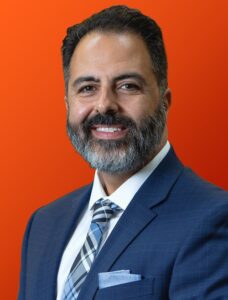
Axiom Biosciences, a privately held developer of regenerative therapies and targeted biologics that rebranded last month from Cytonus Therapeutics, made headlines around the world when it announced plans to go public through an initial public offering (IPO), since companies that go public typically do so quietly, by filing registration statements with regulators and exchanges.
What made Axiom’s IPO plans even more newsworthy: the San Diego-area company (based in suburban Carlsbad, CA) said it intends to trade its first public shares on the Hong Kong Exchange (HKEX) rather than a U.S. market like Nasdaq, the leading market for biotech IPOs, or the New York Stock Exchange.
Why Hong Kong? Axiom says the special administrative region of China possesses deep biotechnology expertise, a strong appetite for clinical-stage innovation, and direct proximity to the Asian partners and capital advancing the company’s science.
“For us, Hong Kong is a very good fit for the stage of company that we’re in, and the timing is right,” Remo Moomiaie-Qajar, MD, Axiom’s founder, CEO, and chairman, told GEN. “Hong Kong has a very well-established investor base that really understands the time requirements and the capital needs for biopharma, but in particular, cell therapies. And ultimately, given the fact that we have been working in Asia with partnerships for several years, this landing spot for us in Hong Kong seemed to be the right choice in a broader strategy.”
Does that mean the United States is finished for biotech innovation?
“I would not state that at all,” he replied. “I think the United States is very much still a leader. It is also very central to our strategy, and the FDA is really core to all of our decisions moving forward into clinics. I just see that this is, and I speak only for us, part of a bigger global strategy which includes both Asia and the United States.”
“Ecosystem to thrive”
However, Axiom has publicly offered other reasons for its move that convey a warmer biopharma climate in Hong Kong compared with the United States. In its announcement, the company said its Hong Kong IPO plans were “reflecting a broader shift in where the world’s most ambitious science finds the ecosystem to thrive.”
And speaking on CNBC, Moomiaie-Qajar raised a concern with the U.S. biopharma climate when it comes to financing: “Some of the most important science in the world is being built in the United States, but the way it gets funded hasn’t kept pace.”
He elaborated on that remark, telling GEN: “That speaks to a broad range of problems that we have in financing within this industry. In particular, I was referencing the private side.”
“The reality is, as you progress with your pipelines and you cross over the threshold of being a clinical stage company, and then you have clinical success, it requires a significant amount—more capital to get your assets to move forward, and hopefully, to a BLA [Biologics License Application],” Moomiaie-Qajar explained. “But the number of check writers diminishes at the same time. So, there is seemingly no shortage of capital within biopharma, but I do believe there’s a financing issue and an access issue.”
Hence Axiom’s exploration of whether this was the right time to go public—a question Axiom is answering in the affirmative: “Hong Kong, given our strategic fit, and relationships and proximity to our partners in Asia, was the right first decision in establishing our public identity as a company.”
Comeback mode
The IPO market has been in comeback mode most of this year, with 14 companies selling their first public shares on U.S. markets since January, and another five doing so overseas, in Asian markets that include the Tokyo Stock Exchange, South Korea’s tech-focused KOSDAQ, and the Hong Kong Exchange.
The biggest American biotech IPO—this year, and of all time—was an upsized offering that took place last month, when Parabilis Medicines (Nasdaq: PBLS) raised an eye-popping $770.5 million in gross proceeds by selling some 38.5 million shares at $20 per share. Parabilis’ shares have risen 56% since then, to $31.28 at Friday’s closing bell.
The latest biotech IPO, also upsized, came on Thursday when Scribe Therapeutics (Nasdaq: SCTX), a developer of in vivo CRISPR gene-edited therapies, raised $128.7 million gross by selling 8.58 million shares at the high end of its price range at $15 per share. The shares jumped 44% on Friday, finishing the day at $21.65. Scribe also raised another $7.5 million gross by selling 500,000 shares at the IPO price to Sanofi (Euronext Paris: SAN) in a concurrent private placement.
But the best-performing U.S. biotech IPO is Veradermics (NYSE: MANE), a developer of treatments for dermatology and aesthetic conditions whose shares have catapulted more than six-fold, rocketing 545% since pricing its IPO at $17 per share on February 3, closing Friday at $109.66 per share. Earlier this month, Veradermics announced positive topline results from its open-label Phase II Study 207 trial (NCT06527365) assessing VDPHL01, an extended-release oral minoxidil formulation, in women with mild-to-moderate pattern hair loss.
Hong Kong’s largest biotech IPO so far this year is Suzhou Ribo Life Science (6938.HK), a developer of oligonucleotide treatments based on RNA interference and other technologies. Ribo raised more than HKD 1.8 billion ($229.5 million) by selling 31,610,400 shares at HKD 57.97 ($7.39) on January 9. Since then, however, Ribo’s stock price has dipped 7.5%, closing Thursday at HKD 53.60 ($6.83).
Also going public via HKEX this year were medtech companies such as Hangzhou Diagens Biotechnology (2526.HK), a developer of artificial intelligence (AI)-based medical imaging tools whose customers include specialized genomics research labs and cytogenetics labs, as well as hospital pathology departments. Diagens went public March 30, raising about $101 million by selling 7,999,200 shares at HKD 99.00 ($12.62)—a price that has since more than doubled, leaping 172% after closing Friday at HKD 269.00 ($34.30).
HKEX lists 84 biotech companies, compared with more than 600 for Nasdaq, according to their respective websites.
Staying in America
Over time, Axiom plans to pursue a secondary stock listing in the United States. Moomiaie-Qajar says Axiom will remain an American company: “We are a U.S.-based, U.S.-headquartered company that is going to be something that does not change.”
Axiom says it intends to be the first U.S. biotech company planning to go public in Hong Kong. That’s the path that was successfully trod by AI-based drug developer Insilico Medicine (3696.HK) when it went public in December, raising HKD 2.277 billion (about $292.3 million at the time; now worth $290.3 million) on the Hong Kong Exchange by selling 94,690,500 shares at HKD 24.05 ($3.08, now worth $3.06) each.
Insilico’s stock has nearly doubled, soaring 96% since then, closing Friday at HKD 47.06 ($6.00) thanks to several collaborations with biopharma giants and an upbeat revenue and profit forecast for the first half of 2026.
“From my perspective, it certainly seeded a little bit of certainty in my mind that this was a good decision, because they’ve done really well post-IPO,” Moomiaie-Qajar commented.
Insilico’s parent InSilico Medicine Cayman TopCo lists a registered office in the Cayman Islands, while Insilico’s website lists additional offices in Cambridge, MA (announced in 2024 as the company’s headquarters), New York, Montreal, Abu Dhabi, Hong Kong, Shanghai, and Taipei.
“Very high listing standards”
“One of the reasons you would list in Hong Kong is to openly compete with the companies in the ‘China Gym’ and also take advantage of the increased visibility and transparency with the very high listing standards,” Alex Zhavoronkov, PhD, Insilico’s chairman, executive director, CEO, and CBO, told GEN.
“Many companies want to list there. But the barriers for listing are very high even for the biotech track.”
A company planning to go public, he explained, needs not only an asset in Phase II studies, but a clear funding history from credible investors, several years’ worth of cash to operate, and a level of corporate stability that the exchange will assess.
“For very early biotech companies it may be much easier to list in the United States,” Zhavoronkov said. “In general, it is a positive trend because biotech must become more international and collaborate and compete internationally. Competing for capital is the advanced form of competition because finance usually runs biotech—you cannot discover and develop drugs without it. Companies and ideas in biotech should become more fluid internationally. Public listings make companies and ideas more competitive and transparent.”
Together with Seoul-based, privately held Medinno, Axiom has co-developed its lead regenerative therapy based on umbilical cord-derived, conditioned mesenchymal stem cells (MSCs) sourced from Wharton’s Jelly. The therapy is under study in two pipeline programs that aim to treat newborns with severe brain injury: AX-007 for intraventricular hemorrhage (IVH); and AX-008 for hypoxic-ischemic encephalopathy (HIE).
Positive Phase I results
Earlier this month, Axiom announced positive results from a Phase I dose-escalation study assessing the safety, tolerability, and preliminary efficacy of the regenerative therapy across a range of doses in nine newborns—five diagnosed with severe IVH, four with HIE—following direct administration into the central nervous system.
Across all doses studied, the MSC therapy achieved a 0% mortality rate at 12 months compared to the historical natural 46% mortality rate within the first year of life for infants with severe IVH. The therapy also showed a favorable safety profile, with no treatment-related serious adverse events seen.
“We’re now in discussions with the FDA to move those programs into the next stages, which would be a Phase IIb study,” Moomiaie-Qajar said. The FDA has granted AX-007 and AX-008 its Rare Pediatric Disease and Orphan Disease designations.
Axiom is also evaluating an expansion of its therapy development into adult ischemic stroke, which affects approximately 700,000 adults annually in the United States, and additional neurological indications.
“We feel very confident that given our clinical trial success in Phase I, the expansion of our valuable asset into three, four indications is going to be a good basis for us to launch our IPO, but then after the IPO really go further and deeper into our pipeline that we’ve been developing for eight years,” Moomiaie-Qajar said. “We have a lot now that we need to translate into clinics.”
Leaders and laggards
- Immix Biopharma (Nasdaq: IMMX) shares tumbled 14% from $10.25 to $8.80 on July 20 following the arrest of Ronald L. Fischer, 70, who was one of Rhode Island’s Most Wanted fugitives—and who, under the alias of Richard Graydon, MD, PhD, served as the company’s CMO. Fischer was arrested by federal and Rhode Island authorities off the coast of New Jersey on a U.S. Marshals Service Unlawful Flight to Avoid Prosecution warrant, having been a fugitive since fleeing Rhode Island during a criminal trial in 2005, the U.S. Justice Department stated. Fischer was convicted in absentia of First-Degree Sexual Assault after failing to appear for trial and remained wanted for Failure to Appear, First Degree Sexual Assault, and Flight to Avoid Prosecution. Authorities also said Fischer was living on a 56-foot sailing vessel called The Silver Lining, which was registered under the Graydon name. As “Graydon,” Fischer was appointed Immix’s CMO in March, the company announced March 30 in a press release no longer posted on its website. “As of July 17, 2026, Richard Graydon has been terminated and is no longer with the company for reasons unrelated to his activities at the company,” Immix disclosed in a July 20 regulatory filing, adding: “Given his short tenure, management believes there is no material effect on the business.”
- Novocure (NVCR) shares jumped 28% from $15.57 to $19.99 Thursday after the Swiss-based oncology drug/device developer developer of the Tumor Treating Fields (TTFields) cancer therapy reported second quarter adjusted earnings before interest, taxes, depreciation, and amortization (EBITDA) of $10.757 million, vs. an adjusted loss of $9.934 million a year earlier, on net revenue that rose nearly 16% year-over-year, to $183.584 million from $158.805 million. Novocure still finished Q2 in the red with a net loss of $15.658 million, improved from the $40.139 million net loss of the second quarter of 2025. Novocure credited its 18% global active patient growth across indications for the positive numbers; as of June 30, more than 280 active patients were on Optune Pax®, a wearable device designed to deliver its TTFields therapy for adults with locally advanced pancreatic cancer concomitant with gemcitabine and nab-paclitaxel. “The main takeaway is that the early U.S. adoption of Optune Pax is off to an encouraging start,” J.P. Morgan analyst Jessica Fye wrote in a research note. Novocure shares reached a 52-week high of $21.35 at the start of the trading day before sliding 12% to $17.65 on apparent profit-taking.
The post StockWatch: Axiom CEO Explains Plans for Hong Kong IPO appeared first on GEN – Genetic Engineering and Biotechnology News.

Uncategorized
Genome Mapping Reveals Autoimmune Disease Risk Genes in Innate Lymphoid Cells
Genome Mapping Reveals Autoimmune Disease Risk Genes in Innate Lymphoid Cells
A new study published in Nature Genetics suggests that looking beyond the nearest gene may be essential for understanding how immune disease risk variants act in rare immune cells.
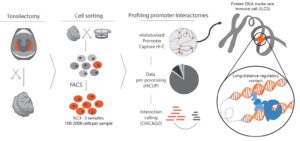
The paper, “High-resolution promoter interaction analysis implicates genes involved in activation of type 3 innate lymphoid cells in immune disease risk,” was co-led by researchers at Cincinnati Children’s Hospital, the MRC Laboratory of Medical Sciences, Imperial College London, along with collaborators. The team mapped long-distance DNA interactions in type 3 innate lymphoid cells, or ILC3s, a rare population of tissue-resident immune cells enriched in the gut, airways, and mucosal lymphoid tissues.
ILC3s help regulate inflammation and maintain barrier integrity, but their rarity has made them difficult to study with conventional genome-organization methods. Many approaches for mapping chromosomal contacts require millions of cells, limiting their use in cell types that may be particularly relevant to disease.
“This work opens the door to studying long-distance DNA interactions in rare immune cells,” says Stephen Waggoner, PhD, scientist in the Center of Autoimmune Genomics and Etiology at Cincinnati Children’s. “Until now, most methods required millions of cells, which limited what we could learn from the cell types most relevant to disease.”
To address that limitation, the investigators used a low-input, high-resolution Promoter Capture Hi-C (PCHi-C) approach to map promoter-anchored chromosomal contacts in primary human ILC3s, alongside CD4+ T cells. They then combined those maps with genome-wide association study data using a Bayesian framework, multiCOGS, to connect Crohn’s disease risk variants with the genes they are most likely to regulate.
The analysis linked Crohn’s disease risk variants to more than 100 candidate genes in ILC3s, including both known inflammatory bowel disease genes and less expected candidates. Among the latter was CLN3, a gene best known for its role in Batten disease, a rare neurodegenerative disorder.
“While some disease risk variants act on the genes nearest to them, others do not, so if we only look at the nearest gene, we may get the underlying mechanisms wrong,” says Mikhail Spivakov, PhD, head of the Functional Gene Control Research Group at MRC Laboratory of Medical Sciences. “What is more, the patterns of genome folding differ across cell types, so it is important to study the 3D connections between variants and the genes they control in the cells that are relevant for the disease.”
Follow-up experiments in a mouse ILC3-like cell line supported a possible role for CLN3 in regulating inflammatory activity. According to the paper, CLN3 was downregulated after cytokine stimulation, while increasing CLN3 expression altered stimulation-induced transcriptional programs and cytokine secretion. The findings do not establish CLN3 as a causal gene in Crohn’s disease, but they point to a potential immune-related function for a gene more commonly discussed in the context of neurodevelopmental disease.
The researchers also extended the approach to five additional autoimmune conditions, generating a catalog of ILC3-linked risk genes. These genes were enriched for regulators of the ILC3 inflammatory response identified in a CRISPR interference screen.
The next steps appear to include clarifying how CLN3 influences immune-cell function, testing whether the pathways identified in ILC3s can help explain disease mechanisms, and applying the low-input mapping strategy to other rare cell types that have been difficult to study. “Studying genetic regulation in rare cell types allows us to move closer to mechanism, not just association, and that’s essential for making genetic findings meaningful across medicine,” says Waggoner.
The post Genome Mapping Reveals Autoimmune Disease Risk Genes in Innate Lymphoid Cells appeared first on GEN – Genetic Engineering and Biotechnology News.
Uncategorized
STAT+: As Trump administration pushes court-ordered mental health care, a new report raises questions
In the last three decades, as involuntary outpatient treatment for people with serious mental health conditions like schizophrenia have expanded to almost every state, the evidence for these programs’ efficacy has remained murky.
A new evaluation of New York’s involuntary outpatient treatment program adds another wrinkle to the complex existing scientific literature on this type of care. Assisted outpatient treatment (AOT) reduced hospitalizations, arrests, and more. So did voluntary treatment. The independent authors concluded that the state should funnel more money toward voluntary services, especially after hearing about the coercion and harms that people experienced under AOT orders.
“When people are engaged in services, they have better outcomes,” said Bevin Croft, director of Human Services Research Institute’s Behavioral Health team and one of the study’s authors. “Whether or not that engagement is voluntary doesn’t seem to make a huge difference.”

In the last three decades, as involuntary outpatient treatment for people with serious mental health conditions like schizophrenia have expanded to almost every state, the evidence for these programs’ efficacy has remained murky.
A new evaluation of New York’s involuntary outpatient treatment program adds another wrinkle to the complex existing scientific literature on this type of care. Assisted outpatient treatment (AOT) reduced hospitalizations, arrests, and more. So did voluntary treatment. The independent authors concluded that the state should funnel more money toward voluntary services, especially after hearing about the coercion and harms that people experienced under AOT orders.
“When people are engaged in services, they have better outcomes,” said Bevin Croft, director of Human Services Research Institute’s Behavioral Health team and one of the study’s authors. “Whether or not that engagement is voluntary doesn’t seem to make a huge difference.”
The California Supreme Court sided with Gilead Sciences in a closely watched case brought by thousands of patients who argued the company was negligent for slow-walking development of an HIV medicine that was safer than another drug it was already selling.
In a 6-1 decision, the court overturned a state appeals court ruling two years ago that Gilead could be held liable, raising alarm in the pharmaceutical industry that drug development decisions could be influenced by the fear of legal liability.
The case began after more than 24,000 people claimed in federal and state court lawsuits that they unnecessarily suffered kidney injury and bone loss from the older drug. They maintained that Gilead cynically managed its product pipeline at the expense of people who should have been treated with a safer medicine.


Illinois’ financial crisis could bring the state to a halt
The final 6 ‘Game of Thrones’ episodes might feel like a full season
New Season 8 Walking Dead trailer flashes forward in time
Mod turns ‘Counter-Strike’ into a ‘Tekken’ clone with fighting chickens
Meet Superman’s grandfather in new trailer for Krypton
Disney’s live-action Aladdin finally finds its stars
Genome Mapping Reveals Autoimmune Disease Risk Genes in Innate Lymphoid Cells

STAT+: As Trump administration pushes court-ordered mental health care, a new report raises questions

STAT+: California Supreme Court sides with Gilead in ‘duty’ to innovate case
Combined Phage Therapy and FMT Reduces Recurrent UTIs and Antibiotic Use in First Human Case Series

STAT+: After Eli Lilly granted one man special access to obesity drug, doctors struggle to get answers

Michigan reports first two U.S. deaths in outbreak of cyclospora
Illinois’ financial crisis could bring the state to a halt
The final 6 ‘Game of Thrones’ episodes might feel like a full season
New Season 8 Walking Dead trailer flashes forward in time
Mod turns ‘Counter-Strike’ into a ‘Tekken’ clone with fighting chickens
Meet Superman’s grandfather in new trailer for Krypton
Disney’s live-action Aladdin finally finds its stars
-
Fierce Biotech4 months ago
Scientists turn pig semen extract into eye drops that kill cancer in mice
-
 Uncategorized9 years ago
These ’90s fashion trends are making a comeback in 2017
-
Endpoints News5 months ago
Novartis to pay $2B upfront to take next-gen PI3Kα inhibitor from Synnovation
-
 Uncategorized4 months ago
Novartis buys Synnovation’s PI3Kα inhibitors for $3 billion
-
Uncategorized9 years ago
According to Dior Couture, this taboo fashion accessory is back
-
Uncategorized9 years ago
Steph Curry finally got the contract he deserves from the Warriors
-
Uncategorized9 years ago
Phillies’ Aaron Altherr makes mind-boggling barehanded play
-
Uncategorized9 years ago
Uber and Lyft are finally available in all of New York State