
Uncategorized
Autism-Like Traits in Mice Improved After Single Rapamycin Dose
Autism-Like Traits in Mice Improved After Single Rapamycin Dose

The results of a preclinical study led by UCLA Health researchers suggest that inflammation during pregnancy in mice can trigger autism-like brain and behavior changes in offspring, and that the effects may be rapidly but temporarily reversible in adulthood with a short-term dose of the immunosuppressive drug rapamycin.
The study showed that a single dose of rapamycin rapidly improved changes including brain overactivity, seizure risk, sensory sensitivity, repetitive behaviors, and abnormal brain functional network organization. Rapamycin itself is not considered a viable candidate for human therapy, as the effects of the drug were found to be temporary, with repeated dosing losing efficacy, and repeated use also having the potential for toxicity. However, the researchers said the study findings indicate that some autism-related brain changes may still be treatable in adulthood, and point to possible therapeutic approaches that target the underlying pathway rather than only symptoms.
“These results reframe how autism-associated symptoms might be treated,” said Janel Le Belle, PhD, an associate professor in the UCLA Department of Neurosurgery. “If the adult brain remains capable of functional normalization, then some features of autism may be successfully addressed without needing to correct underlying structural differences.” Le Belle is first author of the researchers’ published paper in Nature Communications, titled “Acute rapamycin treatment reveals distinct mechanisms of dysfunction in a maternal inflammation mouse model.”
Neurodevelopmental disorders result from the disruption of brain development in utero or in early life, with genetic, environmental, epigenetic, and immunological factors all potential contributors to complex pathogenesis, the authors wrote. Previous studies have shown that offspring of mothers who experience inflammation while pregnant have a higher likelihood of developing autism-associated traits such as repetitive behaviors and difficulty with social interaction, as well as brain overgrowth and disrupted sensory processing that continue into adulthood. “Maternal inflammatory response (MIR) during early mouse gestation induces a cascade of physiological and behavioral changes associated with autism spectrum disorder (ASD),” they stated.
Rapamycin has been shown in previous mouse autism studies to improve symptoms by suppressing an overactive mTOR pathway that signals cell growth and proliferation. What has been less clear is whether these brain changes could still be modifiable in adulthood, and whether rapamycin’s benefits came from long-term structural repair or faster functional changes. “We wanted to understand the mechanisms that underlie the effects of adult mTOR inhibition, where treatment isn’t aimed at preventing or reversing structural brain abnormalities,” the team stated.
For their newly reported study the scientists exposed pregnant mice to a mild inflammatory trigger early in gestation at a dose that was too low to make the mothers significantly ill. The resulting offspring went on to develop chronic brain and body-wide inflammation, mild brain overgrowth, overactive cell-signaling in the mTOR pathway, disorganized brain functional network connectivity and behaviors associated with autism.
When researchers gave adult offspring a single dose of rapamycin they found rapid improvement across nearly every measure. Neurons that had been firing abnormally calmed down, susceptibility to seizures dropped, brain regions that had been miscommunicating reorganized into more typical patterns and repetitive behaviors and sensory over-responsivity eased. These changes occurred within roughly two hours of drug administration, which was too rapid to be explained by the kind of physical rewiring of brain synapses that typically takes longer.
“The level of functional normalization achieved over this short time suggests new mechanisms by which possible treatments may act,” said the study’s senior author Harley Kornblum, MD, PhD, director of the UCLA Intellectual and Developmental Disabilities Research Center in the Semel Institute for Neuroscience and Human Behavior. “It suggests the adult brain may be more adaptable than we assumed, even when the underlying structural changes from early development are still there. This points us toward the brain’s functional circuitry, not just its physical structure, as a target for future treatment approaches.”
To understand the mechanisms of rapid rapamycin effects, researchers examined gene activity in brain cells before and after treatment. They found that rapamycin reversed abnormal expression of genes tied to autism, epilepsy and ion channel function, particularly in excitatory neurons, suggesting the drug works by quickly rebalancing brain cell excitability rather than by repairing structural brain differences.
The findings suggest that mTOR pathway activity, brain network organization and neuronal excitation levels as potential targets for future therapies aimed at specific autism symptoms such as sensory over-responsivity, a common but difficult-to-treat symptom of autism. “Our findings demonstrate that mTOR dysregulation drives dysfunctional brain development in MIR offspring but the adult brain remains amenable to rapid functional normalization, rescuing core and comorbid ASD associated brain and behavior phenotypes,” the authors stated.
Co-senior author and professor in the UCLA Department of Neurosurgery, Neil Harris, PhD, cautioned that the results showed the treatment effects to be temporary and that daily dosing produced tolerance over several weeks. This, along with rapamycin’s high potential for toxicity and the fact that these studies were performed in mice, makes it unsuitable for broad use in humans. “This points toward new therapeutic targets like sensory circuit neuromodulation or balancing neuronal inhibition and excitation, rather than toward rapamycin itself as a treatment,” Harris said. As the authors further commented in their paper, “Restoring excitatory/inhibitory imbalance and sensory functional network modularity may be important targets for therapeutically addressing multiple ASD phenotypes.”
The post Autism-Like Traits in Mice Improved After Single Rapamycin Dose appeared first on GEN – Genetic Engineering and Biotechnology News.

A new study published in Nature Genetics suggests that looking beyond the nearest gene may be essential for understanding how immune disease risk variants act in rare immune cells.
The paper, “High-resolution promoter interaction analysis implicates genes involved in activation of type 3 innate lymphoid cells in immune disease risk,” was co-led by researchers at Cincinnati Children’s Hospital, the MRC Laboratory of Medical Sciences, Imperial College London, along with collaborators. The team mapped long-distance DNA interactions in type 3 innate lymphoid cells, or ILC3s, a rare population of tissue-resident immune cells enriched in the gut, airways, and mucosal lymphoid tissues.
ILC3s help regulate inflammation and maintain barrier integrity, but their rarity has made them difficult to study with conventional genome-organization methods. Many approaches for mapping chromosomal contacts require millions of cells, limiting their use in cell types that may be particularly relevant to disease.
“This work opens the door to studying long-distance DNA interactions in rare immune cells,” says Stephen Waggoner, PhD, scientist in the Center of Autoimmune Genomics and Etiology at Cincinnati Children’s. “Until now, most methods required millions of cells, which limited what we could learn from the cell types most relevant to disease.”
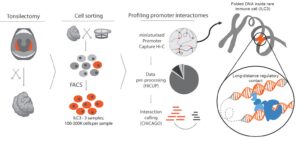
To address that limitation, the investigators used a low-input, high-resolution Promoter Capture Hi-C (PCHi-C) approach to map promoter-anchored chromosomal contacts in primary human ILC3s, alongside CD4+ T cells. They then combined those maps with genome-wide association study data using a Bayesian framework, multiCOGS, to connect Crohn’s disease risk variants with the genes they are most likely to regulate.
![Researchers mapped long-range DNA interactions in rare tonsil-derived ILC3 immune cells to identify regulatory mechanisms linked to autoimmune disease risk. [Cincinnati Children's]](https://www.genengnews.com/wp-content/uploads/2026/08/ILC3-in-autoimmune-risk-graphic_v2-300x141.jpg)
The analysis linked Crohn’s disease risk variants to more than 100 candidate genes in ILC3s, including both known inflammatory bowel disease genes and less expected candidates. Among the latter was CLN3, a gene best known for its role in Batten disease, a rare neurodegenerative disorder.
“While some disease risk variants act on the genes nearest to them, others do not, so if we only look at the nearest gene, we may get the underlying mechanisms wrong,” says Mikhail Spivakov, PhD, head of the Functional Gene Control Research Group at MRC Laboratory of Medical Sciences. “What is more, the patterns of genome folding differ across cell types, so it is important to study the 3D connections between variants and the genes they control in the cells that are relevant for the disease.”
Follow-up experiments in a mouse ILC3-like cell line supported a possible role for CLN3 in regulating inflammatory activity. According to the paper, CLN3 was downregulated after cytokine stimulation, while increasing CLN3 expression altered stimulation-induced transcriptional programs and cytokine secretion. The findings do not establish CLN3 as a causal gene in Crohn’s disease, but they point to a potential immune-related function for a gene more commonly discussed in the context of neurodevelopmental disease.
The researchers also extended the approach to five additional autoimmune conditions, generating a catalog of ILC3-linked risk genes. These genes were enriched for regulators of the ILC3 inflammatory response identified in a CRISPR interference screen.
The next steps appear to include clarifying how CLN3 influences immune-cell function, testing whether the pathways identified in ILC3s can help explain disease mechanisms, and applying the low-input mapping strategy to other rare cell types that have been difficult to study. “Studying genetic regulation in rare cell types allows us to move closer to mechanism, not just association, and that’s essential for making genetic findings meaningful across medicine,” says Waggoner.
The post Genome Mapping Reveals Autoimmune Disease Risk Genes in Innate Lymphoid Cells appeared first on GEN – Genetic Engineering and Biotechnology News.
Uncategorized
STAT+: As Trump administration pushes court-ordered mental health care, a new report raises questions
In the last three decades, as involuntary outpatient treatment for people with serious mental health conditions like schizophrenia have expanded to almost every state, the evidence for these programs’ efficacy has remained murky.
A new evaluation of New York’s involuntary outpatient treatment program adds another wrinkle to the complex existing scientific literature on this type of care. Assisted outpatient treatment (AOT) reduced hospitalizations, arrests, and more. So did voluntary treatment. The independent authors concluded that the state should funnel more money toward voluntary services, especially after hearing about the coercion and harms that people experienced under AOT orders.
“When people are engaged in services, they have better outcomes,” said Bevin Croft, director of Human Services Research Institute’s Behavioral Health team and one of the study’s authors. “Whether or not that engagement is voluntary doesn’t seem to make a huge difference.”

In the last three decades, as involuntary outpatient treatment for people with serious mental health conditions like schizophrenia have expanded to almost every state, the evidence for these programs’ efficacy has remained murky.
A new evaluation of New York’s involuntary outpatient treatment program adds another wrinkle to the complex existing scientific literature on this type of care. Assisted outpatient treatment (AOT) reduced hospitalizations, arrests, and more. So did voluntary treatment. The independent authors concluded that the state should funnel more money toward voluntary services, especially after hearing about the coercion and harms that people experienced under AOT orders.
“When people are engaged in services, they have better outcomes,” said Bevin Croft, director of Human Services Research Institute’s Behavioral Health team and one of the study’s authors. “Whether or not that engagement is voluntary doesn’t seem to make a huge difference.”

The California Supreme Court sided with Gilead Sciences in a closely watched case brought by thousands of patients who argued the company was negligent for slow-walking development of an HIV medicine that was safer than another drug it was already selling.
In a 6-1 decision, the court overturned a state appeals court ruling two years ago that Gilead could be held liable, raising alarm in the pharmaceutical industry that drug development decisions could be influenced by the fear of legal liability.
The case began after more than 24,000 people claimed in federal and state court lawsuits that they unnecessarily suffered kidney injury and bone loss from the older drug. They maintained that Gilead cynically managed its product pipeline at the expense of people who should have been treated with a safer medicine.


Illinois’ financial crisis could bring the state to a halt
The final 6 ‘Game of Thrones’ episodes might feel like a full season
New Season 8 Walking Dead trailer flashes forward in time
Mod turns ‘Counter-Strike’ into a ‘Tekken’ clone with fighting chickens
Meet Superman’s grandfather in new trailer for Krypton
Disney’s live-action Aladdin finally finds its stars

Genome Mapping Reveals Autoimmune Disease Risk Genes in Innate Lymphoid Cells

STAT+: As Trump administration pushes court-ordered mental health care, a new report raises questions

STAT+: California Supreme Court sides with Gilead in ‘duty’ to innovate case
Combined Phage Therapy and FMT Reduces Recurrent UTIs and Antibiotic Use in First Human Case Series

STAT+: After Eli Lilly granted one man special access to obesity drug, doctors struggle to get answers

Michigan reports first two U.S. deaths in outbreak of cyclospora
Illinois’ financial crisis could bring the state to a halt
The final 6 ‘Game of Thrones’ episodes might feel like a full season
New Season 8 Walking Dead trailer flashes forward in time
Mod turns ‘Counter-Strike’ into a ‘Tekken’ clone with fighting chickens
Meet Superman’s grandfather in new trailer for Krypton
Disney’s live-action Aladdin finally finds its stars
-
Fierce Biotech4 months ago
Scientists turn pig semen extract into eye drops that kill cancer in mice
-
 Uncategorized9 years ago
These ’90s fashion trends are making a comeback in 2017
-
Endpoints News5 months ago
Novartis to pay $2B upfront to take next-gen PI3Kα inhibitor from Synnovation
-

 Uncategorized4 months ago
Novartis buys Synnovation’s PI3Kα inhibitors for $3 billion
-
Uncategorized9 years ago
According to Dior Couture, this taboo fashion accessory is back
-
Uncategorized9 years ago
Steph Curry finally got the contract he deserves from the Warriors
-
Uncategorized9 years ago
Phillies’ Aaron Altherr makes mind-boggling barehanded play
-
Uncategorized9 years ago
Uber and Lyft are finally available in all of New York State