

Uncategorized
Lilly Acquires Centessa for Up to $7.8B; Biogen Buys Apellis for Up to $6.1B

A pair of billion-dollar-plus buyout deals are in the works with Eli Lilly agreeing to acquire sleep disorder drug developer Centessa Pharmaceuticals for approximately $7.8 billion, while Biogen has agreed to purchase Apellis Pharmaceuticals, a developer of immunology and rare disease treatments, for up to approximately $5.6 billion cash.
Operating from headquarters in Cheshire, U.K., and Boston, Centessa is developing a pipeline of orexin receptor 2 (OX2R) agonists designed to treat excessive daytime sleepiness and disorders of impaired wakefulness by targeting the neurobiological system at the center of the sleep-wake cycle. Centessa’s lead pipeline candidate cleminorexton (formerly ORX750) has shown what the company calls a potential best-in-class profile in Phase IIa clinical trials across narcolepsy type 1, narcolepsy type 2, and idiopathic hypersomnia.
Also in Centessa’s OX2R agonist portfolio are additional clinical and preclinical-stage programs that could be used across a broader range of neurological, neurodegenerative, and neuropsychiatric conditions. Two such programs are disclosed in the pipeline posted on the company’s website: ORX142, described only as a potential treatment of neurological and neurodegenerative disorders; and ORX489, described only as treating neuropsychiatric disorders.
“Orexin receptor biology represents one of the most compelling mechanistic opportunities in neuroscience as a direct intervention on the master switch of the sleep-wake cycle,” Carole Ho, executive vice president and president, Lilly Neuroscience, said in a statement. “Centessa has assembled a portfolio with the breadth and depth to improve wakefulness across a broad array of indications. Joining forces with Centessa colleagues means we can now pursue that potential at the speed and scale it deserves.”
Investors blessed the Lilly deal with a buying surge that sent Centessa’s share price leaping 45% in morning trading today, from $27.58 to $39.99 as of 11:30 a.m. ET. Lilly shares rose 3% from $886.63 to $912.60.
Three milestones
Lilly has agreed to acquire all issued and to-be-issued shares of Centessa (including its American Depositary Shares or ADSs representing ordinary shares) for $38 per share, or approximately $6.3 billion in upfront cash—plus one non-transferrable contingent value right (CVR) that entitles shareholders to receive up to $9 more per share if Lilly achieves three milestones:
- $2 per CVR cash upon FDA approval of cleminorexton or ORX142 for the treatment of narcolepsy type 2 before the fifth anniversary of the transaction closing.
- $5 per CVR cash upon FDA approval of cleminorexton (formerly ORX750) or ORX142 for the treatment of idiopathic hypersomnia prior to the fifth anniversary of transaction closing; and
- $2 per CVR cash, upon the first FDA approval of cleminorexton (formerly ORX750) or ORX142 for the treatment of any indication prior to January 1, 2030.
The cash payable at closing represents a premium of approximately 40.5% to the 30-day volume-weighted average trading price of Centessa’s ADSs ended on Monday. The boards of directors of both companies have approved the transaction, which is expected to close in the third quarter, subject to approval by Centessa shareholders, sanction by the High Court of Justice of England and Wales, and satisfaction of other customary closing conditions that include regulatory approvals.
Shareholders representing a total of approximately 24.1% of Centessa’s outstanding ordinary shares (represented by ADSs)—affiliates of Medicxi Ventures, Index Ventures, and General Atlantic—have agreed to vote to approve the transaction.
Lilly said it will determine how the deal will be reflected in its accounting, in accordance with Generally Accepted Accounting Principles (GAAP) upon closing.
“Driven by a bold vision, our team has advanced an innovative portfolio with the speed, rigor and conviction needed to lead a new era of orexin-based therapeutics,” stated Mario Alberto Accardi, PhD, Centessa’s CEO and founder of its orexin program. “By combining Centessa’s team and capabilities with Lilly’s global complementary research, clinical, regulatory, and commercial capabilities, we will seek to accelerate the advancement of our orexin portfolio across a broad range of neuroscience indications for the benefit of patients in need.”
Biogen eyes nephrology expansion
Biogen said its planned acquisition of Apellis will expand its portfolio of approved therapies with two complement inhibitors. One is Empaveli® (pegcetacoplan), which has approvals in two rare kidney diseases, C3 glomerulopathy (C3G) or primary immune-complex membranoproliferative glomerulonephritis (IC-MPGN), as well as adult patients with paroxysmal nocturnal hemoglobinuria (PNH). The other complement inhibitor is Syfovre® (pegcetacoplan injection), which made history in 2023 when it won the first-ever FDA approval for a therapy designed to treat geographic atrophy (GA). Syfovre is indicated for GA secondary to age-related macular degeneration.
Syfovre racked up $587 million, and Empaveli another $102 million, in net product revenue last year—a number Biogen said it expects will grow “at a rate in the mid-to-high teens at least through 2028.”
“We believe our combined capabilities and experience will allow us to maximize the potential of Syfovre and Empaveli, while Apellis’ talent, expertise and field capabilities will further strengthen Biogen,” Christopher A. Viehbacher, Biogen’s president and CEO, said in a statement. He said the acquisition will deepen the foundation for Biogen’s growing nephrology franchise with felzartamab, a CD38-targeting monoclonal antibody set to read out Phase III data next year, and enable it to serve many more patients with immune-mediated retinal disease.
Apellis investors more than shared Viehbacher’s enthusiasm for the deal, sending Apellis shares more than doubling, rocketing 136% to $40.29 from $17.09 yesterday. Not so for Biogen investors, as the company’s stock sank 5.6% to $177.06 from $187.57.
In a research note last month, William Blair analyst Lachlan Hanbury-Brown reported that total injections of Syfovre grew 17% year-over-year, with Apellis maintaining a leading market share in GA treatments of about 60%: “While management still expects modest growth in 2026, it remains optimistic that the introduction of a prefilled syringe, or PFS (NDA submission in the first half), and its OCT-F AI imaging tool, rolling out for research purposes in the second half, can meaningfully drive growth starting in 2027.”
Management confidence
As for Empaveli, Hanbury-Brown cited Apellis management confidence in the blockbuster [$1 billion or more in annual sales] potential for Empaveli, including a forecast of achieving 50% penetration of the U.S. market in C3G/IC-MPGN at the peak sales year.
Through a tender offer, Biogen plans to acquire all outstanding shares of Apellis for $41 per share cash at closing, approximately $5.6 billion, representing an 86% premium to the 90-day volume-weighted average stock price and a 35% premium to the 52-week high price of Apellis stock. The deal also includes a nontransferable CVR for each Apellis share held by shareholders, entitling them to receive two payments of $2 per share each, bringing the deal value to up-to-$6.1 billion, contingent on achieving annual global net sales thresholds for Syfovre:
- $2 per share cash if Syfovre achieves $1.5 billion in annual global net sales in any calendar year between 2027 and 2030.
- Another $2 per share cash if Syfovre achieves $2 billion in annual global net sales between 2027-2030.
- Also, $4 per share if Syfovre achieves $2 billion in annual global net sales in 2031, even if sales do not reach the levels needed to trigger cash per share payments for 2027-2030.
The boards of Biogen and Apellis have approved the acquisition transaction, which is subject to successful completion of the tender offer, customary closing conditions, and the receipt of necessary regulatory approvals.
Biogen said the deal for Apellis is expected to boost its revenue and EPS growth potential and add increasingly to its non-GAAP diluted earnings per share (EPS) starting in 2027. The transaction is also expected to “meaningfully” increase Biogen’s non-GAAP EPS compounded annual growth rate (CAGR) through the end of the decade, the company added.
Biogen expects to finance the acquisition with a combination of cash and borrowings, from which it believes it can fully de-leverage by the end of 2027, allowing for greater future financial flexibility. Biogen plans to update full year 2026 guidance when it reports earnings for the first quarter of 2026 later this spring.
“With Biogen’s extensive experience with immunology and rare disease, we believe this transaction will accelerate our impact and enable us to reach more patients,” stated Cedric Francois, MD, PhD, Apellis’ co-founder and CEO. “This transaction represents a compelling outcome for our shareholders and a strong validation of our strategy, scientific innovation, and execution.”
The post Lilly Acquires Centessa for Up to $7.8B; Biogen Buys Apellis for Up to $6.1B appeared first on GEN – Genetic Engineering and Biotechnology News.

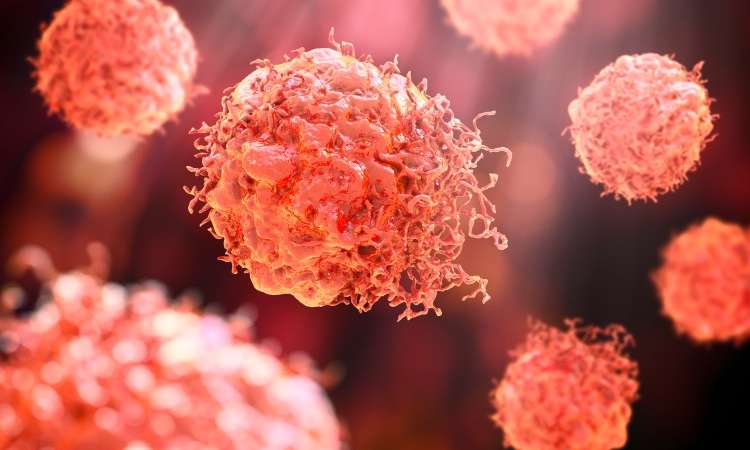

Hosted by Drug Discovery World and supported by Sartorius and BioIVT, this webinar will explore the opportunities and challenges that exist within cancer research drug discovery and development.
You will hear from Dr Sudha Rao, Chief Scientific Officer of Kazia Therapeutics, Karol Budzik, PhD, Business Development Associate at Vyriad Therapeutics and Lars van der Veen, Chief Scientific Officer at iOnctura.
Presentations will cover how cancer treatments have shifted towards reprogramming the biology driving tumour growth, immune escape and treatment resistance, the trajectory that in vivo CAR-T treatments are taking, and how challenging tumours burdened by stroma and immune-mediated resistance can be tackled.
Q&A with the speakers follows the presentations.
The post New webinar: Tackling drug discovery challenges in cancer research appeared first on Drug Discovery World (DDW).
Amid the rise of psychedelics in the mental health space, researchers have begun to explore psilocybin as a treatment for chemotherapy-induced peripheral neuropathy.
Uncategorized
New Spectrometry Technique Could Aid Formulation Development
New Spectrometry Technique Could Aid Formulation Development
A new technique combining two forms of spectrometry could help biopharmaceutical companies improve their choice of formulation buffer for antibody manufacturing by revealing how molecular forms and three-dimensional shapes of complex biologics respond to their environment. That’s the view of Christian Bleiholder, PhD, a professor at Florida State University who helped develop the technique.
According to Bleiholder, what happens structurally when a complex biological molecule, such as an antibody or viral spike protein, binds to its target is currently poorly understood.
“This is where [this approach] can help with the bioprocessing and formulation,” he says, as structural changes “can affect the lifespan [of the product] and lead to issues, such as aggregation.”
Because antibodies are complex, existing techniques tend to be powerful at different levels of complexity, he explains. Mass spectrometry is particularly powerful for distinguishing molecular composition, while structural approaches such as X-ray crystallography and cryo-electron microscopy can provide high-resolution structural information.
The challenge is understanding the link between these things within a heterogeneous sample, he says.
To overcome this, Bleiholder and his team worked with Bruker Daltonics to develop Tandem-Trapped Ion Mobility Spectrometry (Tandem-TIMS). This combines tandem ion mobility spectrometry with tandem mass spectrometry to disentangle three overlapping layers of molecular complexity: molecular form, three-dimensional shape, and binding or assembly state, he says.
He explains that, if the proteins have different structures, they can be characterized with tandem ion mobility spectrometry, and then mass spectrometry can be used to look at their molecular forms and binding states.
Going forward, Bleiholder hopes the technique can be used for formulation development but also earlier, during drug discovery of new products, such as multi-specific antibodies, to determine which molecular states are important and how those change when a biologic engages its target. He also plans to look at automating the technique.
Bleiholder spoke about using Tandem-TIMS at the Bioprocessing Summit in Boston earlier this year.
The post New Spectrometry Technique Could Aid Formulation Development appeared first on GEN – Genetic Engineering and Biotechnology News.


Lilly’s GIP/GLP-1 Candidate Brenipatide Shows Early Clinical Promise in Substance, Psych Disorders

Fatal toxicities test autoimmune CAR T’s safety thesis

Ultragenyx wins first approval for MPS IIIA, closing a bumpy four-year path

EMA’s CHMP backs eight new medicines in September

Electra dips after pricing upsized IPO, bucking trend: Public Equity Report

Generic Drugs
-
Fierce Biotech6 months ago
Scientists turn pig semen extract into eye drops that kill cancer in mice
-
Endpoints News6 months ago
Novartis to pay $2B upfront to take next-gen PI3Kα inhibitor from Synnovation
-
 Uncategorized6 months ago
Novartis buys Synnovation’s PI3Kα inhibitors for $3 billion
-
Nature Biotechnology6 months ago
Sustained nitric oxide production by engineered E. coli remodels the tumor microenvironment and potentiates immunotherapy
-
 Uncategorized5 months ago
Optical Pooled CRISPR Screen Reveals Regulators of NF-κB Dynamics in Human Cells
-
Uncategorized4 months ago
Relay’s PI3Kα inhibitor clears efficacy bar in Phase 2 vascular anomalies study
-

 STAT News – Biotech6 months ago
STAT+: In private meetings, White House works to win pharma companies’ support for drug pricing bill
-
 BioPharma Dive – AI / Data6 months ago
AstraZeneca lung drug gets ‘surprise’ win in COPD trials
 Scan to Read