Uncategorized
Six Takeaways from the Danaher Bioprocessing Summit


The Danaher Bioprocessing Summit, “The Next Era of Bioprocessing: From Promise to Patient Impact,” took place in London earlier this month. The event brought together officials from Danaher companies (Cytiva, Pall, Beckman Coulter Life Sciences, IDBS, and Leica Microsystems), along with biopharma manufacturers and researchers to discuss how the industry can accelerate the transition from scientific breakthroughs to commercial therapies.
Key themes included:
- AI-driven bioprocess development and manufacturing
- Intensified and continuous bioprocessing
- Digitalization and connected data ecosystems
- Improving productivity and reducing cost of goods
- Cell and gene therapy manufacturing challenges
- Scaling production of high-demand biologics, including GLP-1 therapies
- Advanced analytics and process control
- Sustainability in biomanufacturing
The conference emphasized that future competitive advantage in biomanufacturing will come less from building additional capacity and more from increasing productivity, speed, and process intelligence across the development-to-manufacturing workflow.
Based on the formal presentations, roundtable discussion groups, and conversations among speakers, panelists, and attendees, six key takeaway ideas emerged.
The old manufacturing playbook no longer fits
Biomanufacturing was built for large batches of standardized therapies. The next generation of medicines—cell and gene therapies, targeted and complex biologics, N-of-1 treatments—doesn’t fit that mold. As molecular diversity increases, the field is shifting toward smaller, parallel and distributed systems that can flex to meet the complexity of individualized medicine. This means faster decision-making, new investment models, and process designs that are data-driven and purpose-built from the start rather than adapted from previous playbooks.
Manufacturing can no longer be treated as a downstream problem. It has to be part of the scientific conversation from day one.
Automation and AI are making personalized scale possible
For years, the promise of personalized medicine ran into a hard wall: you can’t manufacture one patient’s therapy the same way you manufacture a million doses of a traditional drug. Integrating automation, AI and high-throughput experimentation is changing that equation.
These tools are enabling a shift from large-batch production to small-batch and even patient-specific manufacturing while improving efficiency, regulatory consistency, and access to advanced therapies. AI and digital tools are also compressing process development timelines, making it possible to design more tailored, adaptive manufacturing approaches without sacrificing rigor.
Prediction is becoming a competitive advantage
The organizations gaining ground are not merely reacting to problems faster but actually anticipating them. Digital twins powered by integrated data are helping teams model outcomes before committing resources, accelerating timelines and reducing risk. And real-time, molecular and submolecular-level data—shared across interoperable systems—are enabling more precise, proactive decision-making at every stage of development and manufacturing. Investing in this area with critical infrastructure is essential.
Breakthroughs require collaboration across the whole ecosystem
It turned out that the most consistent theme across both days of the Summit was this: no single organization can accomplish what’s needed alone. Partnerships across academia, industry, and regulators are accelerating how all kinds of therapies, especially gene therapies, move from discovery to approved treatment. Earlier alignment between developers, manufacturers, and regulators is reducing friction and compressing timelines.

What makes these partnerships work is not goodwill alone but transparency, shared incentives, and data-driven collaboration that keeps everyone oriented around the same outcomes. The organizations making the most progress are those treating collaboration as a core capability.
Regulatory models are evolving with the science, and sustainability is now a procurement requirement, not a values statement
Most of the frameworks that currently govern drug development were built for an earlier era of medicine. As therapies grow more complex and more personalized, those frameworks must change. Early engagement and risk-based approaches are helping bring complex therapies to patients faster without compromising scientific rigor. For rare diseases, which collectively affect an estimated 300 million people worldwide, tailored regulatory pathways are becoming essential.
Summit speakers agreed that regulators are not the obstacle they’re sometimes assumed to be. They want to move faster too, and building the right collaborative infrastructure makes that possible.
Environmental and social criteria are moving from corporate commitments into day-to-day supplier decisions. Organizations are integrating sustainability standards into procurement frameworks, requiring verified supplier commitments and shared performance targets as part of doing business.
Far from being separate from operational strategy, this is part of building supply chains resilient enough to support long-term innovation at scale. Progress toward net-zero goals, Summit participants agreed, accelerates when sustainability is wired into commercial relationships rather than managed alongside them.
The post Six Takeaways from the Danaher Bioprocessing Summit appeared first on GEN – Genetic Engineering and Biotechnology News.

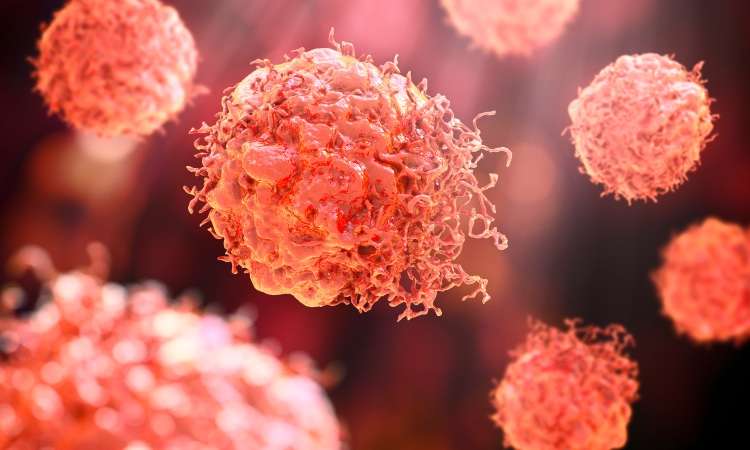

Hosted by Drug Discovery World and supported by Sartorius and BioIVT, this webinar will explore the opportunities and challenges that exist within cancer research drug discovery and development.
You will hear from Dr Sudha Rao, Chief Scientific Officer of Kazia Therapeutics, Karol Budzik, PhD, Business Development Associate at Vyriad Therapeutics and Lars van der Veen, Chief Scientific Officer at iOnctura.
Presentations will cover how cancer treatments have shifted towards reprogramming the biology driving tumour growth, immune escape and treatment resistance, the trajectory that in vivo CAR-T treatments are taking, and how challenging tumours burdened by stroma and immune-mediated resistance can be tackled.
Q&A with the speakers follows the presentations.
The post New webinar: Tackling drug discovery challenges in cancer research appeared first on Drug Discovery World (DDW).
Amid the rise of psychedelics in the mental health space, researchers have begun to explore psilocybin as a treatment for chemotherapy-induced peripheral neuropathy.
Uncategorized
New Spectrometry Technique Could Aid Formulation Development
New Spectrometry Technique Could Aid Formulation Development
A new technique combining two forms of spectrometry could help biopharmaceutical companies improve their choice of formulation buffer for antibody manufacturing by revealing how molecular forms and three-dimensional shapes of complex biologics respond to their environment. That’s the view of Christian Bleiholder, PhD, a professor at Florida State University who helped develop the technique.
According to Bleiholder, what happens structurally when a complex biological molecule, such as an antibody or viral spike protein, binds to its target is currently poorly understood.
“This is where [this approach] can help with the bioprocessing and formulation,” he says, as structural changes “can affect the lifespan [of the product] and lead to issues, such as aggregation.”
Because antibodies are complex, existing techniques tend to be powerful at different levels of complexity, he explains. Mass spectrometry is particularly powerful for distinguishing molecular composition, while structural approaches such as X-ray crystallography and cryo-electron microscopy can provide high-resolution structural information.
The challenge is understanding the link between these things within a heterogeneous sample, he says.
To overcome this, Bleiholder and his team worked with Bruker Daltonics to develop Tandem-Trapped Ion Mobility Spectrometry (Tandem-TIMS). This combines tandem ion mobility spectrometry with tandem mass spectrometry to disentangle three overlapping layers of molecular complexity: molecular form, three-dimensional shape, and binding or assembly state, he says.
He explains that, if the proteins have different structures, they can be characterized with tandem ion mobility spectrometry, and then mass spectrometry can be used to look at their molecular forms and binding states.
Going forward, Bleiholder hopes the technique can be used for formulation development but also earlier, during drug discovery of new products, such as multi-specific antibodies, to determine which molecular states are important and how those change when a biologic engages its target. He also plans to look at automating the technique.
Bleiholder spoke about using Tandem-TIMS at the Bioprocessing Summit in Boston earlier this year.
The post New Spectrometry Technique Could Aid Formulation Development appeared first on GEN – Genetic Engineering and Biotechnology News.


BIO’s plan for ‘securing America’s biotech century’

China’s innovation moment sees a rise in first in class

Windward prices IPO, Rezera postpones its offering: Finance Report

FDA Approves First Drug to Treat Adults with Primary Membranous Nephropathy

How Vancomycin-Resistant Enterococcus Evolved in a Danish Hospital

Cellectis could cut 70% of workforce in shift to in vivo therapies
-

 Uncategorized8 months ago
Novartis buys Synnovation’s PI3Kα inhibitors for $3 billion
-
Endpoints News8 months ago
Novartis to pay $2B upfront to take next-gen PI3Kα inhibitor from Synnovation
-
 Uncategorized6 months ago
Optical Pooled CRISPR Screen Reveals Regulators of NF-κB Dynamics in Human Cells
-
Uncategorized6 months ago
Relay’s PI3Kα inhibitor clears efficacy bar in Phase 2 vascular anomalies study
-
Uncategorized5 months ago
Hybrid solid−liquid optics enable scalable, high-resolution light-sheet microscopy across diverse immersion media
-
Fierce Biotech8 months ago
Scientists turn pig semen extract into eye drops that kill cancer in mice
-
Nature Biotechnology8 months ago
Sustained nitric oxide production by engineered E. coli remodels the tumor microenvironment and potentiates immunotherapy
-
 BioPharma Dive – AI / Data8 months ago
AstraZeneca lung drug gets ‘surprise’ win in COPD trials
 Scan to Read