Uncategorized
GSK to Acquire Nuvalent for $10.6B, Boosting Cancer Pipeline with Precision NSCLC Treatments

GlaxoSmithKline (GSK) has agreed to acquire Nuvalent for $10.6 billion, the companies said, in a deal designed to strengthen the buyer’s cancer pipeline with Nuvalent’s precision oncology treatments—including three non-small cell lung cancer (NSCLC) therapies, of which two are under FDA review with decisions expected later this year.
Boston-based Nuvalent’s pipeline is headed by the ROS1 inhibitor zidesamtinib (NVL-520) and the ALK inhibitor eladalkib (NVL-655), which according to the company represent potential best-in-class, next-generation, highly selective treatments for NSCLC. Both are brain penetrant. The FDA has set target decision dates of September 18 for zidesamtinib and November 27 for neladalkib, both of which have been granted the agency’s Breakthrough Therapy and Orphan Drug designations.
Zidesamtinib is designed to treat NSCLC tumors driven by ROS1 that have developed resistance to currently available ROS1 inhibitors, including tumors with the prevalent G2032R “solvent front” resistance mutation. Zidesamtinib is selective in order to minimize CNS adverse events related to off-target inhibition of the tropomyosin receptor kinase (TRK) family, and potentially drive durable responses for patients with ROS1-mutant variants, Nuvalent says.
Eladalkib was created to address treating tumors driven by ALK that have developed resistance to first-, second-, and third-generation ALK inhibitors, including tumors with both single or compound treatment-emergent ALK mutations such as those involving the G1202R “solvent front” mutation. Eladalkib is also designed to avoiding TRK family inhibition and to treat brain metastases.
The third NSCLC asset of Nuvalent, NVL-330, is a HER2 inhibitor now under study in Phase I trials for HER2-altered NSCLC. In addition, Nuvalent’s pipeline includes an unspecified number of preclinical programs focused on “addressing the limitations of existing therapies for clinically proven kinase targets in oncology,” the company states on its website.
“Today’s acquisition is a multi-product deal, consistent with our approach to acquire assets that have clinically proven targets and meaningfully address an efficacy and/or tolerability gap,” GSK CEO Luke Miels said in a statement. “The two lead products are potential best-in-class assets that could launch this year if approved by the FDA and offer significant new treatment options to patients with two forms of non-small cell lung cancer.”
GSK investors were less enthusiastic as its shares on the London Stock Exchange on Monday dipped 0.5% to 1,903.50 pence. However, Nuvalent shares jumped 39% on Nasdaq to $123.25.
The $10.6 billion Nuvalent acquisition is the third largest merger-and-acquisition (M&A) deal announced this year, behind the €10.7 billion ($12.355 billion) cash buyout offer for Italian-based Recordati being pursued by CVC Capital Partners and Groupe Bruxelles Lambert, which aim to take the company private; and Sun Pharmaceutical Industries’ planned $11.75 billion purchase of Organon, the women’s health drug developer spun out of Merck & Co., in a deal expected to close in early 2027.
Immediate sales opportunities
The Nuvalent candidates, GSK added, present immediate new sales growth opportunities, improving profit contributions from 2027, and a platform in lung cancer for rapid expansion with GSK’s Ris-Rez, a B7-H3 targeted antibody-drug conjugate (ADC) now in Phase III clinical development.
In a presentation to investors after announcing a series of business updates on May 27, Nuvalent projected an ROS1+ NSCLC treatment could generate ~$1.4 billion to $2.1 billion in peak year sales, with about 40% of those sales (from ~$570 million to $855M million) expected to come from the U.S.—multiples above the ~$150 million in peak year sales attained in 2019 by Xalkori® (crizotinib), marketed by Pfizer and Merck KGaA.
An ALK+ NSCLC treatment would potentially be even more lucrative, Nuvalent said last month, with projected worldwide peak year sales ranging from ~$3.4 billion to $5 billion, of which the U.S. would account for 40% of sales, or between ~$1.35 billion and $2 billion—well above the $519 million in peak sales attained in 2023 by Alecensa® (alectinib), marketed by Genentech, a member of the Roche Group and created by Roche-owned Chugai Pharmaceutical.
“Since our founding, we have leveraged our deep expertise in chemistry and structure-based drug design to develop a portfolio of novel, potentially best-in-class kinase inhibitors. Our close collaboration with leading physician-scientists and patient advocates has driven remarkable enrolment, accelerating development and building confidence in the clinical profile of these drugs,” Nuvalent CEO James Porter, PhD, stated. “We’re excited that GSK has recognized the significant value these programs can offer patients and shares our vision for practice-changing innovation.”
Positive pivotal data
In announcing the acquisition, GSK cited positive pivotal data Nuvalent presented at the IASLC 2025 World Conference on Lung Cancer and the 2026 ASCO Annual Meeting. Data at both conferences showed potential best-in-class profiles for zidesamtinib and neladalkib, with both treatments designed to deliver longer effective treatment with better quality of life than current therapies, through high target-selectivity, durable treatment response, improved tolerability, enhanced blood-brain barrier penetration for tumor spread, and broader coverage of ALK and ROS1 mutations.
ROS1- and ALK-altered NSCLC primarily affect non-smoking adults aged 40-50, GSK and Nuvalent said—a patient population the companies described as uniquely defined and engaged.
GSK said it will commence a tender offer to acquire all of Nuvalent’s outstanding shares of Class A and Class B common stock at a purchase price of $124 per share in cash within 10 business days. The expected purchase price represents a 40% premium to the last closing price and a 26% premium to the 30 calendar day volume-weighted average price.
Net of cash acquired, GSK estimated its aggregate investment in Nuvalent to be $9.4 billion.
GSK said the acquisition will not change its 2026 full-year guidance range of 7-9% core operating profit and core EPS growth. The acquisition is expected to contribute to revenue growth from 2027, be incremental to GSK’s existing ambition for sales of >£40 billion (>$53.56 billion) by 2031, and strengthen the company’s core operating profit through the two-year period of loss of exclusivity for its aging blockbuster dolutegravir (2028-2030).
Dolutegravir is an HIV-1 integrase strand transfer inhibitor (INSTI) marketed as the monotherapy Tivicay® by Viiv Healthcare, in which GSK holds a 78.3% majority stake (and Shionogi, the remaining 21.7% after Pfizer cashed out its 11.7% stake, receiving $1.88 billion). Dolutegravir is also included in Viiv’s fixed-dose HIV combination therapies Dovato (dolutegravir and lamivudine) and Juluca (dolutegravir and rilpivirine).
Adding to core profit, EPS
GSK said it expected to add to its core operating profit in 2027 and core earnings per share (EPS) in 2029 by acquiring Nuvalent, even after accounting for cost-cutting synergies and “reprioritization,” which it defines as the shifting of personnel, capital, and other resources away from lower-yield, early-stage research or legacy programs toward higher-value clinical assets and corporate activities. Nuvalent reported 228 full-time employees, of which 144 are engaged in R&D, in its Form 10-K annual report for 2025, filed February 26.
Should the transaction close in Q3 2026 as expected, GSK said it expects low single-digit percentage dilution to core EPS this year through 2028.
The company said it will fund the Nuvalent acquisition primarily from new and existing debt facilities plus cash, with no impact expected to its credit rating. GSK ended Q1 with £3.442 billion ($4.608 billion) in cash and cash equivalents, up 1.3% from £3.397 billion ($4.548 billion) at the end of 2025.
The transaction is subject to customary closing conditions, including the tender of a majority of Nuvalent’s outstanding shares of Class A common stock in the tender offer and the expiration or termination of the applicable waiting period under the Hart-Scott-Rodino Act in the U.S. Soon after the closing of the tender offer, GSK expects to acquire any remaining shares of Nuvalent through a second-step merger under Delaware law at the same price per share.
GSK said it will account for the transaction as a business combination and assume Nuvalent’s existing revenue-sharing arrangements of low-single-digit royalties payable to Royalty Pharma and Deerfield. Royalty Pharma in December acquired for up to $315 million a pre-existing royalty interest in zidesamtinib and neladalkib from an undisclosed third party. Deerfield is Nuvalent’s largest shareholder.
“GSK’s proven track record, infrastructure, and expertise will support the successful commercialization of zidesamtinib and neladalkib, as well as accelerate advancement of our broader discovery pipeline,” Porter added.
The post GSK to Acquire Nuvalent for $10.6B, Boosting Cancer Pipeline with Precision NSCLC Treatments appeared first on GEN – Genetic Engineering and Biotechnology News.

Uncategorized
An obesity drug deep-dive, and peptides move mainstream
Can any of the new obesity medications in development stand out from the pack? Which company just broke records with its IPO? And will the Food and Drug Administration allow greater access to experimental peptides?
We discuss all that and more on this week’s episode of “The Readout LOUD,” STAT’s biotech podcast.
Can any of the new obesity medications in development stand out from the pack? Which company just broke records with its IPO? And will the Food and Drug Administration allow greater access to experimental peptides?
We discuss all that and more on this week’s episode of “The Readout LOUD,” STAT’s biotech podcast.
Uncategorized
RFK Jr. claims his calendar is publicly available. We’ve been trying to get it for a year
WASHINGTON — Health secretary Robert F. Kennedy Jr. on Wednesday pointed to his “publicly available calendar” as an example of his commitment to transparency and to beat back unfavorable reporting.
But no such calendar, detailing who Kennedy meets with or how he spends his time, has been released by the administration. STAT has been asking the Department of Health and Human Services for Kennedy’s calendar for more than a year, via Freedom of Information Act requests and emails to the press office.
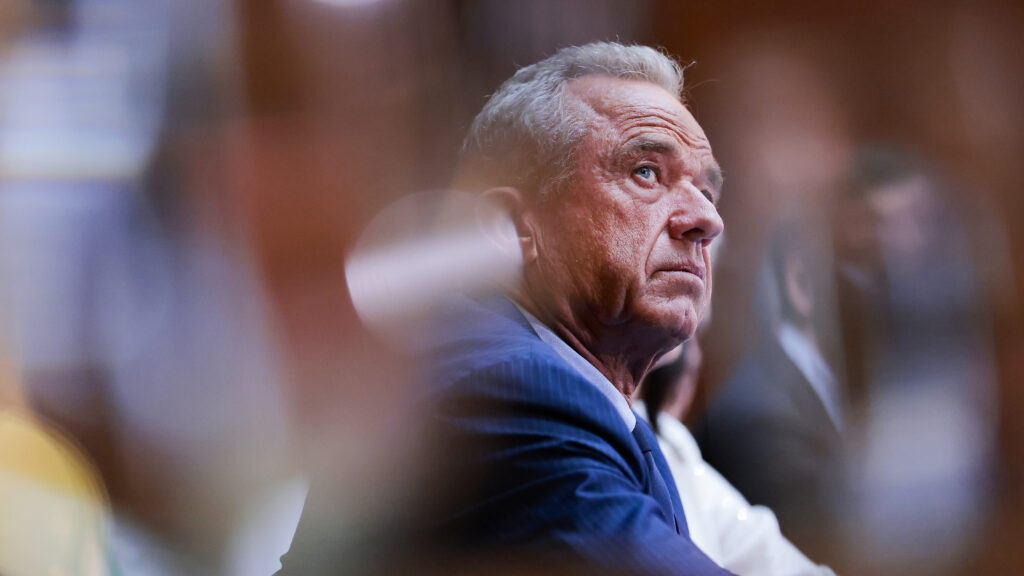
WASHINGTON — Health secretary Robert F. Kennedy Jr. on Wednesday pointed to his “publicly available calendar” as an example of his commitment to transparency and to beat back unfavorable reporting.
But no such calendar, detailing who Kennedy meets with or how he spends his time, has been released by the administration. STAT has been asking the Department of Health and Human Services for Kennedy’s calendar for more than a year, via Freedom of Information Act requests and emails to the press office.
Uncategorized
Nonprofit buys experimental cancer drug to maintain patient access
In a rare move, nonprofit organization Blood Cancer United announced Thursday it was buying the remaining supplies of Luvelta, a discontinued investigational cancer drug.
As part of the transaction, Blood Cancer United, previously known as the Leukemia & Lymphoma Society, will also acquire the investigational new drug designation and manage the compassionate-use program for children with a rare form of blood cancer, distributing the medication to patients at no cost while supplies last.
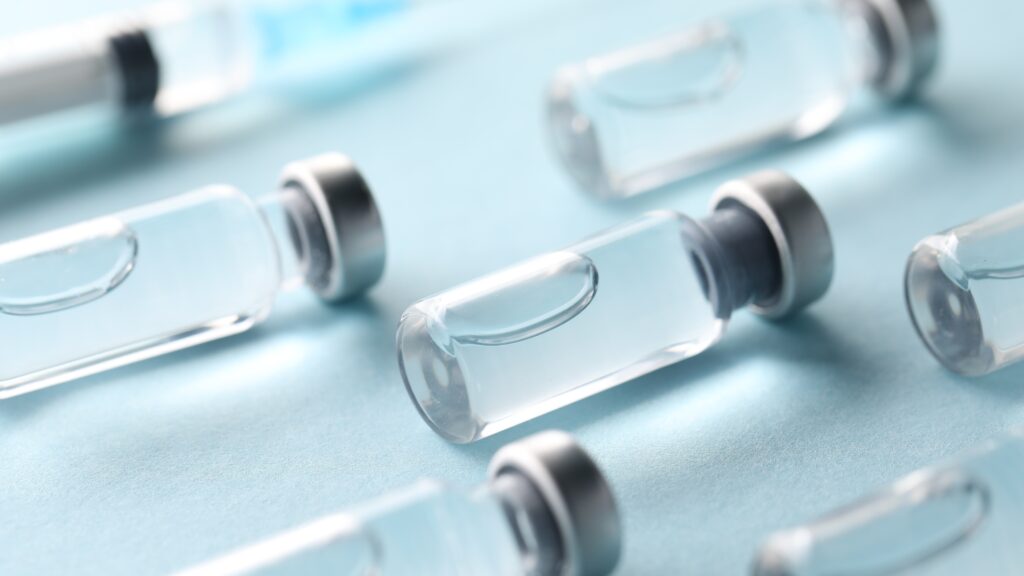
In a rare move, nonprofit organization Blood Cancer United announced Thursday it was buying the remaining supplies of Luvelta, a discontinued investigational cancer drug.
As part of the transaction, Blood Cancer United, previously known as the Leukemia & Lymphoma Society, will also acquire the investigational new drug designation and manage the compassionate-use program for children with a rare form of blood cancer, distributing the medication to patients at no cost while supplies last.


Illinois’ financial crisis could bring the state to a halt
The final 6 ‘Game of Thrones’ episodes might feel like a full season
New Season 8 Walking Dead trailer flashes forward in time
Mod turns ‘Counter-Strike’ into a ‘Tekken’ clone with fighting chickens
Meet Superman’s grandfather in new trailer for Krypton
Disney’s live-action Aladdin finally finds its stars

An obesity drug deep-dive, and peptides move mainstream

RFK Jr. claims his calendar is publicly available. We’ve been trying to get it for a year

Nonprofit buys experimental cancer drug to maintain patient access
Potential Cocaine Addiction Targets Identified Through Genetic Mapping in Rats
New mRNA Delivery Platform Restores Muscle Function in DMD Models

STAT+: Abridge inks deals with Nvidia and Lilly
Illinois’ financial crisis could bring the state to a halt
The final 6 ‘Game of Thrones’ episodes might feel like a full season
New Season 8 Walking Dead trailer flashes forward in time
Mod turns ‘Counter-Strike’ into a ‘Tekken’ clone with fighting chickens
Meet Superman’s grandfather in new trailer for Krypton
Disney’s live-action Aladdin finally finds its stars
-
 Uncategorized9 years ago
These ’90s fashion trends are making a comeback in 2017
-
Uncategorized9 years ago
According to Dior Couture, this taboo fashion accessory is back
-
Endpoints News3 months ago
Novartis to pay $2B upfront to take next-gen PI3Kα inhibitor from Synnovation
-
Uncategorized9 years ago
Phillies’ Aaron Altherr makes mind-boggling barehanded play
-
Contributors9 years ago
The final 6 ‘Game of Thrones’ episodes might feel like a full season
-
Uncategorized9 years ago
Uber and Lyft are finally available in all of New York State
-
Uncategorized9 years ago
Steph Curry finally got the contract he deserves from the Warriors
-
Uncategorized9 years ago
The old and New Edition cast comes together to perform