
Uncategorized
CiteSentinel Launched to Detect and Prevent AI Hallucinations in Legal Citations


Legal tech startup BrentWorks reports that it has launched CiteSentinel, a dedicated platform built specifically to detect and prevent AI hallucinations in legal citations, including those related to biotechnology. The tool scans legal documents and flags case law, statutes, and legal authorities that may be fabricated, misstated, or otherwise erroneous, before they reach a judge, according to the company.
Courts across the country are increasingly sanctioning attorneys who submit briefs containing invented case citations, a well-documented byproduct of generative AI drafting tools that produce authoritative-sounding, but entirely fictional, legal authority, says BrentWorks co-founder Brent Britton, a technology attorney and MIT-trained engineer. CiteSentinel was designed to close that verification gap, giving attorneys a fast and easy way to confirm that every citation in a filing corresponds to a real case, a real statute, and a real legal authority, he adds.
“The legal profession is learning, in very public ways, that AI doesn’t just make mistakes, it confidently lies to your face,” continues Britton. “CiteSentinel is about restoring trust. It lets lawyers move fast with the irresistible efficiencies of generative AI while still filing documents reciting authorities they can stand behind. It also enables them to scan opposing counsel’s documents, giving them a competitive edge in the courtroom.”

Many attorneys who do not personally use AI to draft documents are discovering they have a problem anyway, Britton points out. Opposing counsel may have used AI. Co-counsel may have. Contract attorneys and paralegals almost certainly have access to it and may be using it without disclosing that fact. When a brief containing fabricated citations reaches the court, the question of who drafted it quickly becomes secondary to the question of whose name is on it, he explains.
CiteSentinel lets attorneys scan any document, their own, a colleague’s, or an adversary’s, for citation errors before those errors become their problem, notes Britton. Attorneys who review opposing counsel’s filings with CiteSentinel gain an additional advantage: the ability to identify and challenge citations to authorities that simply do not exist, he says.
Unlike traditional research platforms that focus on finding more information, states Britton, CiteSentinel was created to confirm that the law cited in a document is real. Attorneys can scan:
- Their own AI-assisted drafts, before filing
- Submissions from co-counsel, contract attorneys, and support staff
- Opposing counsel’s filings, for strategic advantage
- Any document where citation accuracy carries professional or ethical weight
BrentWorks’ other co-founder is Brent Hunter, a technologist who applied neural networks to finance in 1993. He cites CiteSentinel as the first in a series of products the company will be releasing for the practice of law in the age of AI.
Both BrentWorks’ co-founders agree that AI hallucinations pose particular risks in biotechnology-related legal matters because cases often depend on highly technical evidence, including patent claims, prior art, clinical trial data, FDA regulatory history, scientific publications, expert witness testimony, freedom-to-operate analyses, and licensing agreements. In this context, an AI system could invent scientific references that do not exist, mischaracterize FDA guidance documents, fabricate patent precedents, incorrectly summarize clinical trial results, or generate inaccurate prior-art searches. Such errors can undermine legal arguments, regulatory submissions, and intellectual property strategies.
“Biotech litigation is where AI hallucinations turn genuinely dangerous. You have a system trained to sound authoritative now injecting phantom patent precedents and counterfeit clinical data into documents that determine whether a drug reaches patients or a patent survives challenge,” explains Brent Britton. “In this domain, where the technical record is everything, a ghost FDA guidance document or a fabricated prior art reference can unravel an entire legal strategy and years of work along with it. The law has always been a high-stakes information game, and right now the machines are playing it with synthetic cards.”
As CiteSentinel expands beyond just case citation verification, “it will be the truth layer that keeps all players honest,” he predicts.
The post CiteSentinel Launched to Detect and Prevent AI Hallucinations in Legal Citations appeared first on GEN – Genetic Engineering and Biotechnology News.

Uncategorized
STAT+: Updated: Tracking RFK Jr.’s promises to remake health in America
Updated June 11, 2026
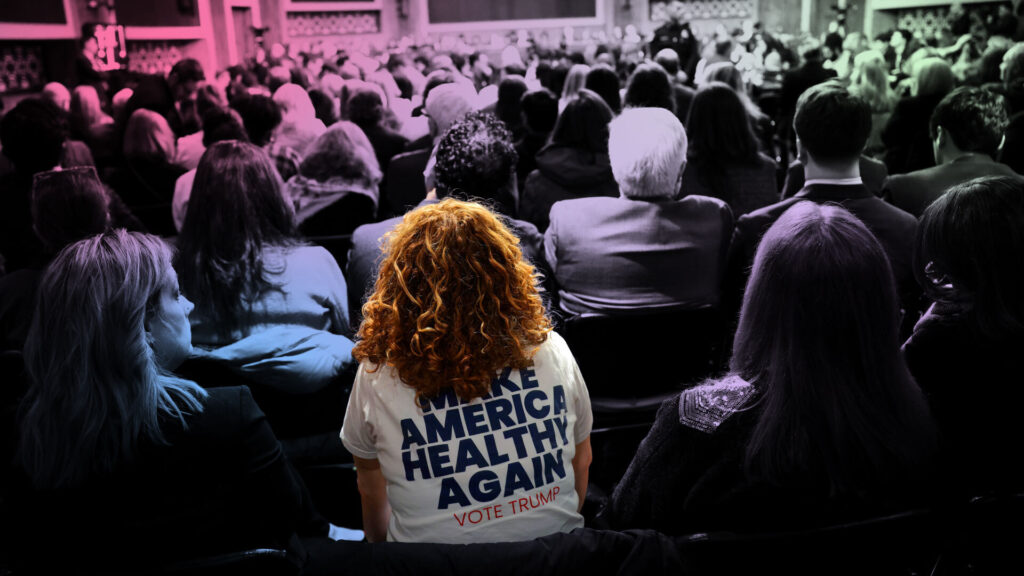
WASHINGTON — A pledge to “Make America Healthy Again” earned Robert F. Kennedy Jr. his job atop U.S. health agencies a year and some change ago. He’s now had the opportunity to turn his words into action, with mixed results.
“All one needs” to prove the health secretary’s attentiveness is to “review my unprecedented list of accomplishments on a wide range of issues, all of which I drove,” Kennedy posted on X on Wednesday in response to a journalist.
Updated June 11, 2026
WASHINGTON — A pledge to “Make America Healthy Again” earned Robert F. Kennedy Jr. his job atop U.S. health agencies a year and some change ago. He’s now had the opportunity to turn his words into action, with mixed results.
“All one needs” to prove the health secretary’s attentiveness is to “review my unprecedented list of accomplishments on a wide range of issues, all of which I drove,” Kennedy posted on X on Wednesday in response to a journalist.

Can any of the new obesity medications in development stand out from the pack? Which company just broke records with its IPO? And will the Food and Drug Administration allow greater access to experimental peptides?
We discuss all that and more on this week’s episode of “The Readout LOUD,” STAT’s biotech podcast.
Uncategorized
RFK Jr. claims his calendar is publicly available. We’ve been trying to get it for a year
WASHINGTON — Health secretary Robert F. Kennedy Jr. on Wednesday pointed to his “publicly available calendar” as an example of his commitment to transparency and to beat back unfavorable reporting.
But no such calendar, detailing who Kennedy meets with or how he spends his time, has been released by the administration. STAT has been asking the Department of Health and Human Services for Kennedy’s calendar for more than a year, via Freedom of Information Act requests and emails to the press office.
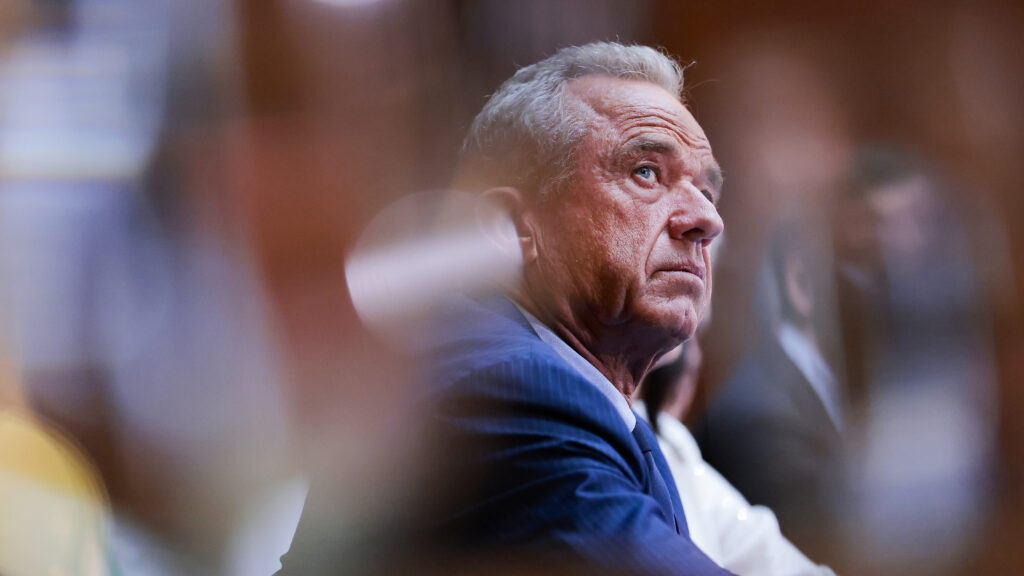
WASHINGTON — Health secretary Robert F. Kennedy Jr. on Wednesday pointed to his “publicly available calendar” as an example of his commitment to transparency and to beat back unfavorable reporting.
But no such calendar, detailing who Kennedy meets with or how he spends his time, has been released by the administration. STAT has been asking the Department of Health and Human Services for Kennedy’s calendar for more than a year, via Freedom of Information Act requests and emails to the press office.


Illinois’ financial crisis could bring the state to a halt
The final 6 ‘Game of Thrones’ episodes might feel like a full season
New Season 8 Walking Dead trailer flashes forward in time
Mod turns ‘Counter-Strike’ into a ‘Tekken’ clone with fighting chickens
Meet Superman’s grandfather in new trailer for Krypton
Disney’s live-action Aladdin finally finds its stars

STAT+: Updated: Tracking RFK Jr.’s promises to remake health in America

An obesity drug deep-dive, and peptides move mainstream

RFK Jr. claims his calendar is publicly available. We’ve been trying to get it for a year

Nonprofit buys experimental cancer drug to maintain patient access
Potential Cocaine Addiction Targets Identified Through Genetic Mapping in Rats
New mRNA Delivery Platform Restores Muscle Function in DMD Models
Illinois’ financial crisis could bring the state to a halt
The final 6 ‘Game of Thrones’ episodes might feel like a full season
New Season 8 Walking Dead trailer flashes forward in time
Mod turns ‘Counter-Strike’ into a ‘Tekken’ clone with fighting chickens
Meet Superman’s grandfather in new trailer for Krypton
Disney’s live-action Aladdin finally finds its stars
-
 Uncategorized9 years ago
These ’90s fashion trends are making a comeback in 2017
-
Uncategorized9 years ago
According to Dior Couture, this taboo fashion accessory is back
-
Endpoints News3 months ago
Novartis to pay $2B upfront to take next-gen PI3Kα inhibitor from Synnovation
-
Uncategorized9 years ago
Phillies’ Aaron Altherr makes mind-boggling barehanded play
-
Uncategorized9 years ago
Uber and Lyft are finally available in all of New York State
-
Contributors9 years ago
The final 6 ‘Game of Thrones’ episodes might feel like a full season
-
Uncategorized9 years ago
Steph Curry finally got the contract he deserves from the Warriors
-
Uncategorized9 years ago
The old and New Edition cast comes together to perform