
Uncategorized
STAT+: Pharmalittle: We’re reading about Lilly and Pfizer obesity drug data, Roche and J&J deals, and more
Good morning, everyone, and welcome to another working week. We hope the weekend respite was relaxing and invigorating because that oh-too-familiar routine of meetings, deadlines, and the like has returned with a vengeance. You knew this would happen, yes? To cope, we are relying, as always, on cups of stimulation. Our choice today is laced with chocolate raspberry. Feel free to join us. Remember, no prescription is required. Meanwhile, here are some tidbits to help you along. Best of luck accomplishing your goals today, and of course, do keep in touch. …
Revolution Medicines’ experimental pancreatic cancer drug has been the star of the oncology field in recent weeks, with new data showing the medicine produced unprecedented outcomes for patients, but its next act — this time as a co-lead — was just revealed, STAT points out. Tango Therapeutics said that in an early-stage clinical trial, a combination of its drug vopimetostat and Revolution’s daraxonrasib led to durable responses in the large majority of pancreatic cancer patients who received both medicines. Tango’s strategy of testing the two targeted drugs is notable because combination approaches in pancreatic cancer often include chemotherapy. The recent successful Revolution trial that has upended the specialty tested daraxonrasib versus chemotherapy as a second-line treatment.
Eli Lilly has already established that its next-generation obesity drug can lead to rapid weight loss, but researchers disclosed new data that provide more details on the safety and tolerability of the closely watched therapy, STAT writes. Lilly previously said that in one late-stage study, retatrutide helped people with diabetes lower blood sugar and lose a significant amount of weight, which is notable since those who have diabetes tend to lose less weight on treatment than those who do not. New data showed seven out of the 403 participants who received retatrutide experienced arrhythmias, and three treated participants experienced major cardiovascular complications, compared with none in the placebo group.


Good morning, everyone, and welcome to another working week. We hope the weekend respite was relaxing and invigorating because that oh-too-familiar routine of meetings, deadlines, and the like has returned with a vengeance. You knew this would happen, yes? To cope, we are relying, as always, on cups of stimulation. Our choice today is laced with chocolate raspberry. Feel free to join us. Remember, no prescription is required. Meanwhile, here are some tidbits to help you along. Best of luck accomplishing your goals today, and of course, do keep in touch. …
Revolution Medicines’ experimental pancreatic cancer drug has been the star of the oncology field in recent weeks, with new data showing the medicine produced unprecedented outcomes for patients, but its next act — this time as a co-lead — was just revealed, STAT points out. Tango Therapeutics said that in an early-stage clinical trial, a combination of its drug vopimetostat and Revolution’s daraxonrasib led to durable responses in the large majority of pancreatic cancer patients who received both medicines. Tango’s strategy of testing the two targeted drugs is notable because combination approaches in pancreatic cancer often include chemotherapy. The recent successful Revolution trial that has upended the specialty tested daraxonrasib versus chemotherapy as a second-line treatment.
Eli Lilly has already established that its next-generation obesity drug can lead to rapid weight loss, but researchers disclosed new data that provide more details on the safety and tolerability of the closely watched therapy, STAT writes. Lilly previously said that in one late-stage study, retatrutide helped people with diabetes lower blood sugar and lose a significant amount of weight, which is notable since those who have diabetes tend to lose less weight on treatment than those who do not. New data showed seven out of the 403 participants who received retatrutide experienced arrhythmias, and three treated participants experienced major cardiovascular complications, compared with none in the placebo group.

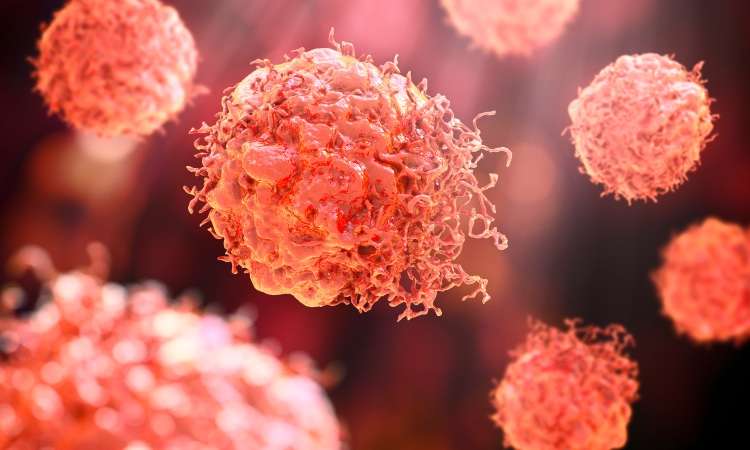

Hosted by Drug Discovery World and supported by Sartorius and BioIVT, this webinar will explore the opportunities and challenges that exist within cancer research drug discovery and development.
You will hear from Dr Sudha Rao, Chief Scientific Officer of Kazia Therapeutics, Karol Budzik, PhD, Business Development Associate at Vyriad Therapeutics and Lars van der Veen, Chief Scientific Officer at iOnctura.
Presentations will cover how cancer treatments have shifted towards reprogramming the biology driving tumour growth, immune escape and treatment resistance, the trajectory that in vivo CAR-T treatments are taking, and how challenging tumours burdened by stroma and immune-mediated resistance can be tackled.
Q&A with the speakers follows the presentations.
The post New webinar: Tackling drug discovery challenges in cancer research appeared first on Drug Discovery World (DDW).
Amid the rise of psychedelics in the mental health space, researchers have begun to explore psilocybin as a treatment for chemotherapy-induced peripheral neuropathy.
Uncategorized
New Spectrometry Technique Could Aid Formulation Development
New Spectrometry Technique Could Aid Formulation Development
A new technique combining two forms of spectrometry could help biopharmaceutical companies improve their choice of formulation buffer for antibody manufacturing by revealing how molecular forms and three-dimensional shapes of complex biologics respond to their environment. That’s the view of Christian Bleiholder, PhD, a professor at Florida State University who helped develop the technique.
According to Bleiholder, what happens structurally when a complex biological molecule, such as an antibody or viral spike protein, binds to its target is currently poorly understood.
“This is where [this approach] can help with the bioprocessing and formulation,” he says, as structural changes “can affect the lifespan [of the product] and lead to issues, such as aggregation.”
Because antibodies are complex, existing techniques tend to be powerful at different levels of complexity, he explains. Mass spectrometry is particularly powerful for distinguishing molecular composition, while structural approaches such as X-ray crystallography and cryo-electron microscopy can provide high-resolution structural information.
The challenge is understanding the link between these things within a heterogeneous sample, he says.
To overcome this, Bleiholder and his team worked with Bruker Daltonics to develop Tandem-Trapped Ion Mobility Spectrometry (Tandem-TIMS). This combines tandem ion mobility spectrometry with tandem mass spectrometry to disentangle three overlapping layers of molecular complexity: molecular form, three-dimensional shape, and binding or assembly state, he says.
He explains that, if the proteins have different structures, they can be characterized with tandem ion mobility spectrometry, and then mass spectrometry can be used to look at their molecular forms and binding states.
Going forward, Bleiholder hopes the technique can be used for formulation development but also earlier, during drug discovery of new products, such as multi-specific antibodies, to determine which molecular states are important and how those change when a biologic engages its target. He also plans to look at automating the technique.
Bleiholder spoke about using Tandem-TIMS at the Bioprocessing Summit in Boston earlier this year.
The post New Spectrometry Technique Could Aid Formulation Development appeared first on GEN – Genetic Engineering and Biotechnology News.


Next-Generation Antimalarial Research Explores Innovative Biological Targets and Modern Discovery Strategies

FDA Database Study Differentiates Cutaneous Adverse Events for Liver Cancer Therapies

STAT+: Why the latest heart drug failures should make us all more skeptical of AI hype

STAT+: BIO joins the legal fight against Medicare pilot that ties drug prices to peer countries

STAT+: Failure of Novartis Lp(a) drug raises questions about cardiovascular strategy

STAT+: Despite Novo drug’s failure, cardiologists say they will still pursue anti-inflammatories
-

 Uncategorized8 months ago
Novartis buys Synnovation’s PI3Kα inhibitors for $3 billion
-
Endpoints News8 months ago
Novartis to pay $2B upfront to take next-gen PI3Kα inhibitor from Synnovation
-

 Uncategorized6 months ago
Optical Pooled CRISPR Screen Reveals Regulators of NF-κB Dynamics in Human Cells
-
Uncategorized6 months ago
Relay’s PI3Kα inhibitor clears efficacy bar in Phase 2 vascular anomalies study
-
Uncategorized5 months ago
Hybrid solid−liquid optics enable scalable, high-resolution light-sheet microscopy across diverse immersion media
-
Fierce Biotech8 months ago
Scientists turn pig semen extract into eye drops that kill cancer in mice
-
Nature Biotechnology8 months ago
Sustained nitric oxide production by engineered E. coli remodels the tumor microenvironment and potentiates immunotherapy
-
Nature Biotechnology8 months ago
Mapping cis-regulatory mutations at scale in sorghum enables modulation of gene expression
 Scan to Read