Uncategorized
StockWatch: Abivax Survives a Roller Coaster Week

More acutely than most companies, Abivax (Euronext Paris and Nasdaq: ABVX) felt firsthand the ups and downs of the proverbial stock market roller coaster this past week as investor fears over safety signals associated with the French biotech’s late-stage ulcerative colitis (UC) drug candidate briefly overshadowed its positive Phase III clinical results.
Shares of Abivax skidded on June 2, the first trading day after the company announced positive topline results from the Phase III ABTECT maintenance trial (NCT05535946), which is assessing obefazimod in adults with moderately to severely active UC.
Abivax’s stock plummeted after analysts from Jefferies, Morgan Stanley, Truist Securities, and Wedbush Securities raised as a safety concern a portion of data showing malignancies in nine patients among the 580 enrolled in the study. Jefferies reacted the strongest among the firms, downgrading Abivax’s stock rating from “Buy” to “Hold” and lowering its 12-month price target on the company’s shares 44%, from $160 to $90.
“Cancer signal complicates matters,” Faisal Khurshid, a managing director and equity research analyst with Jefferies, wrote in a research note. “Promise of the drug is to deliver strong efficacy w/ oral convenience and w/out JAK safety baggage. However, cancer cases seen in maintenance break our thesis. Even if proven to be not drug-related or v[ery] low incidence, we expect an overhang to investor interest, strategic optionality, and commercial uptake.”
Wedbush analyst David Nierengarten upgraded Abivax on the overall ABTECT data, from “Underperform” to “Neutral,” though he lowered the firm’s target price 18%, from $110 to $90. But he also cautioned, according to published reports, that the data increase the risk of obefazimod being approved with a black box warning on its label.
The other two firms lowered their price targets as well:
- Morgan Stanley (Judah Frommer)—Down 9% from $145 to $132, maintaining its “Overweight” rating.
- Truist (Greg Renza)—Down 4% from $140 to $135, maintaining its “Buy” rating.
Of the nine patients diagnosed with malignancies, seven received the higher 50 mg dosage of obefazimod, one the lower 25 mg dose, and one placebo. Squamous cell carcinoma cases were seen in three of the patients—one dosed at 25 mg, the others 50 mg. Basal cell carcinoma cases emerged in two 50 mg patients and one placebo patient, while cases of prostate cancer, breast cancer, and colonic dysplasia were seen in one patient each, all dosed at 50 mg.
In its announcement of the ABTECT data, Abivax stated that the prostate, breast, and colon cancer cases “were considered unrelated to treatment by investigators.” Among the squamous cell and basal cell cases, two of the four 50 mg patients were deemed “not/unlikely related to drug,” while of the remaining two cases, one had a medical history of skin cancer, the company added.
Swinging negative, then positive
Yet the cancer and pre-cancerous cell cases nevertheless led investors to sell off their Abivax shares on June 2. Abivax’s ordinary shares traded on Euronext Paris plummeted 44% from €111.80 ($128.81) to €63.10 ($72.70), while the company’s American depositary shares (ADSs) traded on the Nasdaq Global Market also plunged 44% from $129.69 to $72.50.
No sooner did Abivax shares start to free-fall, however, than a more positive narrative emerged among another set of analysts. They cited the ABTECT maintenance study’s overall positive findings, which showed that both doses of the first-in-class miR-124 enhancer met the study’s primary endpoint by showing positive absolute clinical remission rates of 50.8% for the 25 mg dose and 51.3% for the 50 mg dose. Both results blew away the 10.4% absolute clinical remission rate of placebo.
When adjusted for placebo, obefazimod showed placebo-adjusted clinical remission rates of ∆39.3% for the 25 mg dose and ∆40.3% for the 50 mg (both p<0.0001).
Obefazimod also met all of ABTECT’s key secondary endpoints, including endoscopic improvement, endoscopic remission, histologic-endoscopic mucosal improvement (HEMI), corticosteroid free clinical remission, and sustained clinical remission.
In endoscopic remission, Abivax showed in an investor presentation, obefazimod showed placebo-adjusted endoscopic remission rates of 38% (50 mg) and 31% (25 mg), outperforming nine marketed drugs that carry indications in UC—which ranged from 8% by both Omvoh® (mirikizumab-mrkz) marketed by Eli Lilly (NYSE: LLY) and Skyrizi® (risankizumab-rzaa) marketed by AbbVie (NYSE: ABBV), to 20% shown by AbbVie’s Rinvoq® (upadacitinib), Tremfya® (guselkumab) marketed by Johnson & Johnson (NYSE: JNJ), and Velsipity® (etrasimod) marketed by Pfizer (NYSE: PFE).
“While most therapies cluster in the 8% to 20% range, obefazimod stands alone at 31% and 38%, demonstrating a level of efficacy that is well beyond the range achieved by other treatment classes. This finding is particularly important because achieving endoscopic remission has been consistently associated with lower relapse rates and better long-term patient outcomes,” Abivax CEO Marc de Garidel said June 1, addressing analysts during a conference call held to discuss the ABTECT study results.
He also cited Abivax’s Phase IIa/IIb open-label extension study (NCT05177835), designed to assess the long-term safety and the efficacy profile of 25 mg obefazimod given once daily in subjects previously enrolled in two earlier Phase II trials, ABX464-102 (NCT03368118) or ABX464-104 (NCT04023396). Data from the extension study announced in May showed that patients receiving 50 mg of obefazimod for two to four years and then transitioned to 25 mg for up to an additional three years maintained durable clinical remission and a favorable safety profile for up to seven years of treatment exposure.
Abivax said it plans to submit a New Drug Application (NDA) submission to the FDA for obefazimod late in the fourth quarter.
“Transformational potential”
“Taken together, we believe these results validate the transformational potential of obefazimod and position us well as we advance toward our planned NDA submission in late 2026,” de Garidel said, declaring: “Today’s results firmly establish obefazimod as a potential new standard of care for the treatment of ulcerative colitis.”
Thomas J. Smith, senior managing director, immunology and metabolism, and a senior research analyst with Leerink Partners, appeared to agree with de Garidel in a research note.
“We believe obe[fazimod]’s results suggest a best-in-disease maintenance profile, especially among oral therapeutics in UC,” Smith wrote in his initial research note on Abivax’s ABTECT data. “We continue to believe that obe features the most compelling late-stage clinical profile for a novel oral agent in IBD [inflammatory bowel disease] amid heightened M&A/BD [business development] activity that underscores large pharma’s interest in the space.”
Several big-money merger-and-acquisition (M&A) deals in recent years have centered around pharma giants buying developers of drugs for UC, Crohn’s disease, and other forms of IBD. The biggest of these was Merck & Co. (NYSE: MRK) acquiring Prometheus Biosciences for $10.8 billion in 2023, while Lilly bought out Morphic Therapeutic for about $3.2 billion in 2024; Roche Holding (SIX Swiss Exchange: ROP and RO; OTCQX: RHHBY) snapped up Telavant Holdings for up-to-$7.25 billion in 2023; and Pfizer acquired Arena Pharmaceuticals for $6.7 billion in a deal completed in 2022.
Abivax itself has found itself rumored as a potential candidate for being acquired—it made GEN’s A-List of Top 10 Takeover Targets of 2026—since last summer, when the company reported dazzling data from two Phase III trials, ABTECT-1 (ABX464-105; NCT05507203) and ABTECT-2 (ABX464-106; NCT05507216).
As for the reported malignancies, Smith commented in a follow-up research note: “We do not view the reported malignancies as an outsized or approvability-limiting safety risk, particularly given the absolute low event counts, investigator assessment that the non-NMSC malignancies were unrelated to treatment, IDMC [independent data monitoring commission] adjudication supporting the safety profile, lack of organ-specific clustering, and mitigating circumstances noted across each case.”
Obefazimod is a small molecule upregulator of miR-124, an anti-inflammatory microRNA. It enhances the selective splicing of a single long noncoding RNA to generate miR-124, which downregulates cytokines and chemokines shown to promote inflammation, including tumor necrosis factor (TNF) alpha, IL-6, monocyte chemoattractant protein-1 (MCP-1), and IL-17, as well as Th17+ cells.
Under its former name ABX464, obefazimod was initially developed against HIV but was repurposed to fight inflammatory conditions based on its anti-inflammatory effect.
“Best in indication”
Also bullish on Abivax is Citizens JMP Securities, where Jason Butler, managing director, biotechnology equity research, raised his firm’s price target 43%, from $131 to $187, based on ABTECT’s positive data exceeding expectations. Butler maintained Citizens JMP’s “Market Outperform” rating on Abivax shares.
“We view efficacy (~40% placebo-adjusted clinical remission rate) as best in indication, easily surpassing drugs across all approved classes of UC therapies,” Butler wrote. “We believe the Phase [III] efficacy and safety results, together with its oral once-daily profile, support that obefazimod can be transformational to the UC treatment landscape, benefiting both earlier-stage and more severe/refractory patients.”
“Importantly, we also view the safety profile as compelling and are comfortable that the drug is not associated with a clear malignancy risk (which is the primary debate driving stock volatility post-market),” Butler added.
The more positive feedback from analysts apparently swayed investors, as Abivax’s stock price rebounded roughly 40% on both exchanges since the initial nosedive. The Nasdaq shares vaulted 24% to $90.15 on Wednesday, then rose another 16% to $104.93 Thursday before dipping 3% Friday, finishing the week at $101.53 and with a 23.5% five-day decline.
On Euronext Paris, Abivax shares bounced back 13% to €71.25 ($82.09) on Wednesday, jumped another 18% Thursday to €83.95 ($96.72), then finished Friday up 5% to €87.85 ($101.21) and a 22.5% five-day decline.
Butler said the maintenance study’s data suggested that Abivax could potentially generate more positive clinical results for obefazimod in its ongoing Phase IIb ENHANCE-CD induction trial in Crohn’s disease (NCT06456593), which is expected to read out in mid-2027. He added that ABTECT’s results were strong enough to support approval of both the 25 mg and 50 mg doses: “While we anticipate malignancies to be included in the label, we continue to believe in the differentiated profile of obefazimod.”
Speaking with analysts, de Garidel agreed with pursuing approvals for obefazimod at both 25 mg and 50 mg: “Our thinking is that both doses will be very helpful for patients, and we plan to file at year-end with those two doses for maintenance.”
Leaders and laggards
- Absci (Nasdaq: ABSI) shares climbed 24% from $5.94 to $7.34 Thursday after Leerink Partners initiated coverage of the generative AI-based drug developer with an “Outperform” rating and a 12-month price target of $12. Mani Foroohar, MD, senior managing director, genetic medicines, and a senior research analyst with Leerink, lauded the company’s drug mechanism of blocking prolactin (PRL)–prolactin receptor (PRLR) signaling as seen in its lead pipeline candidate ABS-201, an anti-prolactin receptor antibody in Phase I/II studies for androgenetic alopecia that advanced into the clinic last year, with a Phase II study in endometriosis expected to start in the fourth quarter: “We see a totality of evidence supporting PRLR blockade in these indications, and see even partial/early clinical validation opening a clear path to valuation >double the current market cap (~$1.1B fully diluted),” Foroohar wrote in a research note.
- Fulcrum Therapeutics (Nasdaq: FULC) shares jumped 9.5% from $3.37 to $3.69 Friday after the developer of small molecule drugs for rare blood disorders disclosed in a regulatory filing that it will slash its workforce approximately 85%—from 57 to nine full-time employees—in a cost-cutting move expected to be substantially completed during the second quarter. Fulcrum said it expects to incur approximately $4.2 million in charges related to the layoffs, consisting primarily of employee severance, employee benefits, and related costs. Fulcrum vowed to “significantly” reduce its operating expenses and launched a strategic review after scrapping its lead pipeline program to develop pociredir as a treatment for sickle cell disease (SCD). The development followed the FDA expressing heightened concerns about pociredir’s risks and benefits in fighting SCD due to an unexpectedly high rate of secondary blood cancers seen with another PRC2 inhibitor, Tazverik®(tazemetostat), marketed by Ipsen (Euronext Paris: IPN).
- Oculis Holding (Nasdaq: OCS) shares tumbled 36% from $22.70 to $14.51 June 1, after the Swiss neuroophthalmology and ophthalmology drug developer said it did not plan to pursue an FDA filing seeking approval for its OCS-01 eye drops in diabetic macular edema (DME). Oculis acknowledged that OCS-01 failed two Phase III trials, DIAMOND-1 (NCT05066997) and DIAMOND-2 (NCT06172257), by missing their primary endpoint, mean change in best corrected visual acuity early treatment diabetic retinopathy study (BCVA ETDRS) letter score at Week 52. The key secondary endpoint of the proportion of patients with ≥15-letter gain in BCVA was not met in both trials, though another secondary endpoint, retinal thickness as measured by OCT, showed a “substantial and persistent” reduction with OCS-01 vs vehicle at all visits in DIAMOND-2, and at all visits except Week 52 in DIAMOND-1.
The post StockWatch: Abivax Survives a Roller Coaster Week appeared first on GEN – Genetic Engineering and Biotechnology News.

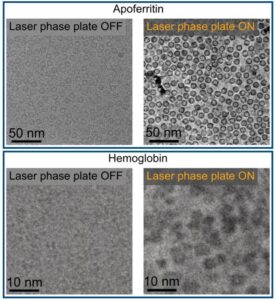
You know when you are at the eye doctor getting an updated prescription, and suddenly the world snaps into sharper focus? Physicists at the University of California (UC), Berkeley, have now done something similar for electron microscopy. By introducing phase contrast into a cryo‑electron microscope, they have delivered dramatically sharper images of some of biology’s smallest and most elusive proteins.
The advance comes from a new laser phase plate (LPP), described in the paper “Laser phase plate improves structure determination of small proteins by cryo‑EM,” which was published recently in Science. Led by physicist Holger Mueller, PhD, of UC Berkeley and Lawrence Berkeley National Laboratory, the team demonstrated that a laser‑driven phase plate can overcome one of cryo‑EM’s most persistent limitations: poor contrast for small proteins.
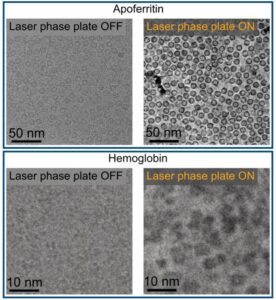
Cryo‑EM has transformed structural biology over the past decade, earning a Nobel Prize in 2017 for enabling high‑resolution structures without crystallization. But despite its impact, the technique still struggles with proteins below ~70 kilodaltons—a size range that includes about 90% of the human proteome. “Because of signal-to-noise limitations, the majority of human and animal proteins are too small to be analyzed by these methods [cryo-EM and cryoelectron tomography]. The increase in signal-to-noise ratio provided by this laser phase plate is expected to overcome these important limitations.”
The new LPP begins to address that problem. The LPP uses an intense, continuous‑wave laser to shift the phase of the electron beam itself. This produces true phase contrast without dimming or destabilizing the beam. Mueller described the laser focus as “75 kilowatts focused to a few microns… That’s more powerful than what you use for welding. It has more power than a military laser. It builds up the brightest continuous laser focus ever.”
Installed in a custom Thermo Fisher Titan Krios, the LPP immediately improved the clarity and resolvability of small proteins, including hemoglobin, which sits at the lower limit of what today’s cryo‑EM instruments can handle. As the authors wrote in the abstract: “Here, we show that the laser phase plate (LPP)… enhances the resolution in single-particle reconstruction of small proteins by improving specimen-motion correction, recovery of information from the early frames, as well as particle visualization, 3D classification, and alignment.”
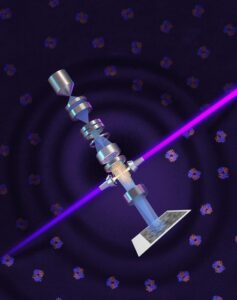
These improvements were achieved using standard defocus ranges and reconstruction workflows. “For the most challenging cases—small particles, bad specimens—the laser produces a very considerable advantage,” Mueller said.
The impact extends beyond single‑particle analysis. Cryo‑electron tomography (cryo‑ET), which assembles multiple angular views of a molecule or protein into a three-dimensional image, stands to benefit even more. “With cryo-ET, we’re looking at small, very complicated cellular material that’s incredibly crowded inside the cell,” said Bridget Carragher, PhD, founding technical director of imaging at Biohub. “It’s like a forest of trees, and you’re trying to find one leaf on one tree in there. Cryo-ET needs a dramatic step forward in contrast, so we can start to see what’s going on inside the cell. That’s what the laser phase plate promises to give us.”
Biohub is developing a dual‑laser version of the system, designed to reduce component wear and minimize aberrations. Meanwhile, Mueller’s team is pushing toward imaging proteins as small as 17 kilodaltons, a threshold that would open access to vast regions of the human proteome previously invisible to cryo‑EM.
“This technology is a step function change for biology,” said Stephani Otte, PhD, Biohub’s vice president of imaging science. “What was once invisible will become visible—and that changes everything about how we understand disease.”
“The bottom line is, if you have a large protein and a really good sample—a fresh one or one frozen without bubbles, for example—you may not need the phase plate to get a single, high-quality image. But for a small protein and a bad sample, laser-on is best,” Mueller said. “This could fill an enormous gap in our knowledge of protein structures that can’t be crystallized or are too small for today’s cryo-EM. And it will be revolutionary for cryo-ET.”
The post Laser‑Driven Phase Contrast Enhances Cryo‑EM Resolution of Small Proteins appeared first on GEN – Genetic Engineering and Biotechnology News.
Uncategorized
STAT+: Updated: Tracking RFK Jr.’s promises to remake health in America
Updated June 11, 2026
WASHINGTON — A pledge to “Make America Healthy Again” earned Robert F. Kennedy Jr. his job atop U.S. health agencies a year and some change ago. He’s now had the opportunity to turn his words into action, with mixed results.
“All one needs” to prove the health secretary’s attentiveness is to “review my unprecedented list of accomplishments on a wide range of issues, all of which I drove,” Kennedy posted on X on Wednesday in response to a journalist.

Updated June 11, 2026
WASHINGTON — A pledge to “Make America Healthy Again” earned Robert F. Kennedy Jr. his job atop U.S. health agencies a year and some change ago. He’s now had the opportunity to turn his words into action, with mixed results.
“All one needs” to prove the health secretary’s attentiveness is to “review my unprecedented list of accomplishments on a wide range of issues, all of which I drove,” Kennedy posted on X on Wednesday in response to a journalist.

Can any of the new obesity medications in development stand out from the pack? Which company just broke records with its IPO? And will the Food and Drug Administration allow greater access to experimental peptides?
We discuss all that and more on this week’s episode of “The Readout LOUD,” STAT’s biotech podcast.


Illinois’ financial crisis could bring the state to a halt
The final 6 ‘Game of Thrones’ episodes might feel like a full season
New Season 8 Walking Dead trailer flashes forward in time
Mod turns ‘Counter-Strike’ into a ‘Tekken’ clone with fighting chickens
Meet Superman’s grandfather in new trailer for Krypton
Disney’s live-action Aladdin finally finds its stars

Laser‑Driven Phase Contrast Enhances Cryo‑EM Resolution of Small Proteins

STAT+: Updated: Tracking RFK Jr.’s promises to remake health in America

An obesity drug deep-dive, and peptides move mainstream

RFK Jr. claims his calendar is publicly available. We’ve been trying to get it for a year

Nonprofit buys experimental cancer drug to maintain patient access
Potential Cocaine Addiction Targets Identified Through Genetic Mapping in Rats
Illinois’ financial crisis could bring the state to a halt
The final 6 ‘Game of Thrones’ episodes might feel like a full season
New Season 8 Walking Dead trailer flashes forward in time
Mod turns ‘Counter-Strike’ into a ‘Tekken’ clone with fighting chickens
Meet Superman’s grandfather in new trailer for Krypton
Disney’s live-action Aladdin finally finds its stars
-
 Uncategorized9 years ago
These ’90s fashion trends are making a comeback in 2017
-
Uncategorized9 years ago
According to Dior Couture, this taboo fashion accessory is back
-
Endpoints News3 months ago
Novartis to pay $2B upfront to take next-gen PI3Kα inhibitor from Synnovation
-
Uncategorized9 years ago
Phillies’ Aaron Altherr makes mind-boggling barehanded play
-
Uncategorized9 years ago
Uber and Lyft are finally available in all of New York State
-
Contributors9 years ago
The final 6 ‘Game of Thrones’ episodes might feel like a full season
-
Uncategorized9 years ago
Steph Curry finally got the contract he deserves from the Warriors
-
Uncategorized9 years ago
The old and New Edition cast comes together to perform