Uncategorized
Attacking Gout: Crystalys Sees Room for Its Dotinurad and Other Allopurinol Alternatives

Once labeled the “disease of kings” because of its association with consuming rich foods and alcohol, gout has emerged as a royal pain to a growing number of people. A 2024 study showed the prevalence of the most common form of inflammatory arthritis jumping 22.5% between 1990 and 2020, to 55.8 million people worldwide, with 95.8 million projected by 2050. An aging population and rising rates of metabolic conditions like obesity, hypertension, and chronic kidney disease have fueled gout’s growing prevalence.
Yet recent gout-related approvals have been limited to supplemental applications and additional indications for existing treatments. In 2022, the FDA approved an expanded label for Krystexxa® (pegloticase) by authorizing the chronic, treatment-refractory gout drug to be combined with methotrexate, a combo shown to be more effective against the disease. Last year the FDA approved Glopbera®, a new liquid formulation of colchicine indicated for prevention of gout flares in adults. The liquid formulation allows doctors to adjust dosages more easily for patients with kidney or liver impairment.
Among companies developing new gout treatments is Crystalys Therapeutics, which has dosed the first patient with its once daily oral, URAT1 inhibitor dotinurad in its Phase II AMETHYST trial (NCT07535034). The study is designed to assess dotinurad’s effectiveness in patients with gout who are intolerant or have a contraindication to xanthine oxidase inhibitors (XOIs) or have failed prior uricase treatment.
AMETHYST is expected to enroll about 90 patients, with an estimated primary completion date of July 2027. The trial’s primary endpoint will be the percentage of patients with a serum uric acid (sUA) level of <6.0 mg/dL at Week 24 following dosing.
‘Important milestone’
“Dosing the first patient in our Phase II AMETHYST study marks an important milestone for Crystalys, and for those living with gout who have limited treatment options,” said James M. Mackay, PhD, Crystalys’ president and CEO.
That population, he said, represents about 10% of gout patients or ~1.5 million Americans who cannot tolerate the current standard of care, xanthine oxidase inhibitors (XOIs). The most commonly prescribed drug for gout is the XOI allopurinol, a first-line treatment marketed in the U.S. as Zyloprim® by Casper Pharma and sold outside the U.S. as Zyloric® by Aspen Pharmacare, but also available as a generic drug.
“We think that our target population for dotinurad to is about 500,000 to 600,000 patients in the U.S.,” Mackay estimated, adding the estimate was for the broader Phase III population, not the AMETHYST Phase II population. “It’s those patients who failed allopurinol and were referred to a rheumatologist. The rheumatologist has tried to up-titrate allopurinol but has still not been successful in getting the disease under control. The patient’s still experiencing gout flares, still has tophi and potentially joint damage. That’s our target patient population.
In that class of patients, Crystalys envisions dotinurad succeeding in second-line treatment by outperforming allopurinol in their Phase III clinical trials.
“Our goal is to go beyond serum uric acid lowering and actually show that our drug can actually impact the clinical manifestations of the disease, which allopurinol really doesn’t do significantly. And as a result of that, we wanted to position it as a second-line treatment,” Mackay said. “As time goes on and rheumatologists become comfortable with it, and PCPs [primary care physicians] who are referring their gout patients to rheumatologists will get comfortable with it and we may start to see some usage in the PCP market, but I imagine that payers are going to want patients to have failed on allopurinol before they’re prepared to pay for a new drug. This is why we are positioning it as a second line treatment in patients who have failed on standard of care.”
Phase III triumph
First-patient dosing in AMETHYST comes five days after a Crystalys rival, Swedish Orphan Biovitrum (Sobi), announced positive Phase III data for pozdeutinurad, a treatment for progressive gout which like dotinurad is a next-generation, once-daily oral URAT1 inhibitor.
Sobi said May 21 that pozdeutinurad aced its pivotal 811-patient, placebo-controlled Phase III REDUCE-2 trial (NCT06439602) as both doses of the drug met the study’s primary efficacy endpoint, defined as the proportion of patients achieving an sUA level <6 mg/dL at month 6. The 75 mg high dose of pozdeutinurad led to 69.2% of patients achieving sUA level <6 mg/dL at month 6 and the 50 mg low dose, 56.6%, compared with 8.1% for placebo (p<0.0001).
Sobi said it will report further detailed results at an upcoming scientific conference during Q4.
“We are very encouraged by these results and their implications for patients whose gout remains inadequately controlled,” Lydia Abad-Franch, MD, Sobi’s head of R&D and medical affairs and chief medical officer, said in a statement. “These findings, including sustained urate lowering and a favorable efficacy and tolerability profile, support the potential of pozdeutinurad to address a significant unmet need and provide a strong foundation for regulatory submissions.”
REDUCE-2 is one of two fully recruited 12-month, 800+-patient randomized, placebo-controlled Phase III trials in which Sobi is studying pozdeutinurad. The other is REDUCE-1 (NCT06846515), which is expected to read out data in the second half of this year.
Sobi took over development of pozdeutinurad when it acquired the drug’s original developer, San Diego-based Arthrosi Therapeutics for up to $1.5 billion in a deal completed in February. Sobi agreed to pay $950 million in upfront cash plus up to $550 million cash in payments tied to achieving clinical, regulatory, and sales milestones under the companies’ acquisition deal, designed to strengthen the buyer’s gout drug franchise since pozdeutinurad is designed for patients whose treatment with first-line therapies proved unsuccessful.
“Sobi’s acquisition, we actually view that as very positive: Good for gout patients. Good that pharmas are showing an interest in this space,” Mackay said.
Sobi envisions pozdeutinurad as one of two gout drugs it aims to bring to market. The other is Nanoecapsulated Sirolimus plus Pegadricase (NASP, formerly SEL-212), a combination of the PEGylated recombinant uricase enzyme pegadricase and ImmTOR, a tolerogenic nanoparticle encapsulating the immunosuppressant sirolimus, being developed to treat uncontrolled gout. The FDA is evaluating Sobi’s biologics license application (BLA) for NASP, for which the agency has set a June 27 target action date under the Prescription Drug User Fee Act (PDUFA).
Business case
Mackay said Crystalys’ business case when it acquired dotinurad assumed that pozdeutinurad would be on the market with a similar profile: “We took a pretty conservative set of assumptions. Our market research that we did gave us a 65% market share versus 35% market share for the competitor [pozdeutinurad], and that’s with the profiles being the same.”
“We actually believe we’re going to have a better profile for the molecule, and there are a lot of patients out there,” Mackay added. “It’s a big, big market, so there’s no doubt that there’s room for more than one player here.”
How does dotinurad’s profile stand out compared with pozdeutinurad’s?
“They’re both URAT1 inhibitors, but pozdeutinurad is not quite as potent as dotinurad, so we end up using lower dose levels than they do. They were using 50 and 75 mg in their Phase III trials. We’re using 2 and 4 (mg),” Mackay said.
Mackay also cited dotinurad’s ability to target the URAT1 transporter without impacting the other transporters involved in regulating blood uric acid levels, the organic anion transporters OAT1 and OAT3, and ABCG2 (ATP-Binding Cassette Subfamily G Member 2): “We believe that that’s partially why we don’t have a renal tox liability, because it means that there’s more control over the excretion of the uric acid.”
“This is a very, very big second-line space here. There are many, many patients who are uncontrolled, and so, we made the assumption that pozdeutinurad would be on the market alongside dotinurad.”
To date, Sobi has the advantage of positive Phase III data showing reduced serum uric acid, with expectations for more positive data this year: “Later we will see the tophi reduction, the tophi resolution and the flare reduction. We’re expecting very strong data,” Lydia Abad-Franch, MD, MBA , Sobi’s head of R&D and chief medical officer, told analysts April 28 on the company’s Q1 earnings call.
At its Capital Markets Day on February 18, Sobi told analysts that upon approval, followed by a launch scheduled for 2028, pozdeutinurad is expected to generate blockbuster-level peak sales of SEK 10 billion ($1.075 billion) from a progressive gout patient population it has pegged at more than 200,000 patients in the U.S. alone. “Pozdeutinurad represents the primary economic opportunity for Sobi in our gout franchise,” Guido Oelkers, Sobi’s president and CEO, said at the event.
Long-term sales generator
In announcing Sobi’s acquisition of Arthrosi in December, Oelkers said the company sees pozdeutinurad as a long-term sales generator: “The product has the potential to materially accelerate our growth until the mid-2030s, and beyond.”
AMETHYST is among randomized, double-blind, multicenter trials Crystalys is conducting in the U.S. and European Union (E.U.) for dotinurad. Two of the trials are in Phase III, both aiming to evaluate dotinurad’s efficacy in lowering sUA at week 24:
- RUBY (NCT07089875), a U.S. and E.U. study evaluating the safety and efficacy of dotinurad compared with a physician-determined stable dose of allopurinol in approximately 500 patients with hyperuricemia associated with gout. Study participants will be given dotinurad orally once daily for up to 64 weeks.
- TOPAZ (NCT07089888), a U.S. study assessing the safety and efficacy of dotinurad compared to allopurinol in approximately 250 patients with tophaceous gout. Participants are being given dotinurad orally once daily for up to 76 weeks.
Crystalys acquired dotinurad in 2024 by purchasing from Urica Therapeutics its license covering development and commercialization rights in the U.S. as well as Europe, the Middle East, and North Africa, from the drug’s discoverer, Japanese pharma Fuji Yakuhin. In return, Crystalys gave Urica—a subsidiary of Fortress Biotech—an equity stake in Crystalys and a 3% royalty on future net sales of dotinurad.
In Asia, Fuji Yakuhin has licensed to Eisai rights to dotinurad, which is approved as a treatment for gout and hyperuricemia in China, Japan, Thailand, and the Philippines.
25+ novel gout drugs
As of September, more than 20 companies had developed over 25 novel drugs across various clinical stages for indications related to gout, according to DelveInsight. Among later phase drugs in clinical phases with gout indications:
- Dapansutrile (OLT1177®)—Olatec Therapeutics’ oral NLRP3 inhibitor is under study in the Phase II/III PODAGRA II trial (NCT04971499) in roughly 300 patients with an acute gout flare. The study’s estimated completion date is December 31. In March, Olatec began studying dapansutrile in the Phase II DAPA-PD trial, a 12-month study of the drug as a treatment for Parkinson’s disease.
- Epaminurad—JW Pharmaceutical said April 27 that it finished dosing the final patient in a Phase III trial (NCT05815901) designed to compare the safety and efficacy of the selective URAT1 inhibitor to febuxostat, which in the U.S. is a generic drug once marketed by Takeda Pharmaceutical as Uloric®.
- Lingdolinurad (ABP-671)—Atom Therapeutics’ lead candidate, also a selective URAT1 inhibitor, is in Phase IIb/III trials worldwide, including the U.S., for indications that include chronic gout and hyperuricemia, and refractory and/or tophaceous gout. Last October at the American College of Rheumatology’s ACR Convergence 2025, Atom presented positive Phase IIa data for lingdolinurad and Phase I data for a separate gout flares candidate, ABP-745.
XRx-026—XORTX Therapeutics’ Phase III gout candidate uses a proprietary formulation of oxypurinol, the active subunit of allopurinol, called XORLO . XRx-026 is being developed for patients with allopurinol intolerant gout.
Mackay, a veteran pharmaceutical executive, was a 30-year AstraZeneca executive who held several VP-level clinical and product positions with the pharma giant, where he led teams that advanced six drugs through development and commercialization across a range of therapy areas. He later oversaw development of AstraZeneca’s gout franchise as president and COO and then CEO of Ardea Biosciences, which remained an independent business unit following its acquisition in 2012 by AstraZeneca.
In 2018, Mackay founded Aristea Therapeutics, an immunology focused company developing treatments for rare inflammatory disorders. As Aristea’s CEO, he led the company’s raising of $138 million between 2018 and 2023.
That year, Mackay said, Aristea discovered an unexpected liver toxicity issue during Phase II trials of its lead drug RIST4721, which it licensed from AstraZeneca. RIST4721 was an antagonist of the CXCR2 protein that was being studied as a treatment for the inflammatory disorder palmoplantar pustulosis. Aristea’s board considered strategic alternatives before opting to end the RIST4721 development program—”in order to protect patient safety,” the company stated at the time—and dissolve Aristea.
‘Want to work with you’
“Once the dust had settled a little bit, my main investor in Aristea Therapeutics came back to me and said, look, we want to work with you and the team again,” Mackay recalled.
The investor was Novo Holdings, the asset manager of the foundation that controls Novo Nordisk.
“They said, ‘We’re really interested in the gout space and would like to invest there,’” Mackay recalled. “Are you prepared to work with us and see if we can find an asset that, is worthy of developing and worthy of investment?”
Mackay agreed.
“We did a landscape search of all the molecules under development, and we identified dotinurad as the molecule that we felt had best-in-class safety and efficacy, and we decided to form Crystalys Therapeutics with Catalys Pacific and Novo Ventures as the company to, basically, develop dotinurad,” Mackay added.
Novo Holdings and Catalys Pacific joined SR-One in launching Crystalys last September with a $205 million Series A that also saw participation from an investor syndicate that included Perceptive Xontogeny Venture Funds, Lightstone Ventures, AN Venture Partners, funds managed by abrdn Inc., KB Investments, Pontifax, Longwood Fund, Alexandria Venture Investments, Wedbush Healthcare Partners, and Prebys Ventures Fund.
The financing extended Crystalys’ financial runway into end 2027—long enough, the company says, to allow it to carry out both the RUBY and TOPAZ trials: “We secured all the money that we need in order to deliver those programs,” Mackay said.
Based in San Diego, Crystalys has a workforce of 14 staffers: “I expect we’ll probably double the size, so around 25 people by the time we get into the end of 2026.”
Workforce growth will primarily take place in Crystalys’ R&D operations since the company’s focus will continue to be on its clinical trials—not only AMETHYST but the Phase III RUBY and TOPAZ studies as well.
“I think it’ll be into 2027 before we start to build that commercial infrastructure,” Mackay added.
The post Attacking Gout: Crystalys Sees Room for Its Dotinurad and Other Allopurinol Alternatives appeared first on GEN – Genetic Engineering and Biotechnology News.

Strong science, lower costs and growing capital networks are putting Spain and Portugal on the biotech investment map, even as structural bottlenecks persist, according to two investors.
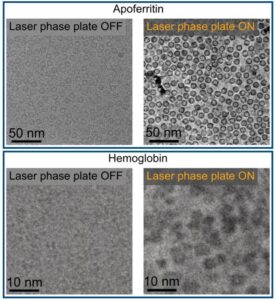
You know when you are at the eye doctor getting an updated prescription, and suddenly the world snaps into sharper focus? Physicists at the University of California (UC), Berkeley, have now done something similar for electron microscopy. By introducing phase contrast into a cryo‑electron microscope, they have delivered dramatically sharper images of some of biology’s smallest and most elusive proteins.
The advance comes from a new laser phase plate (LPP), described in the paper “Laser phase plate improves structure determination of small proteins by cryo‑EM,” which was published recently in Science. Led by physicist Holger Mueller, PhD, of UC Berkeley and Lawrence Berkeley National Laboratory, the team demonstrated that a laser‑driven phase plate can overcome one of cryo‑EM’s most persistent limitations: poor contrast for small proteins.
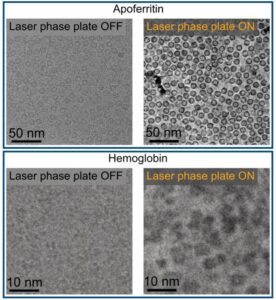
Cryo‑EM has transformed structural biology over the past decade, earning a Nobel Prize in 2017 for enabling high‑resolution structures without crystallization. But despite its impact, the technique still struggles with proteins below ~70 kilodaltons—a size range that includes about 90% of the human proteome. “Because of signal-to-noise limitations, the majority of human and animal proteins are too small to be analyzed by these methods [cryo-EM and cryoelectron tomography]. The increase in signal-to-noise ratio provided by this laser phase plate is expected to overcome these important limitations.”
The new LPP begins to address that problem. The LPP uses an intense, continuous‑wave laser to shift the phase of the electron beam itself. This produces true phase contrast without dimming or destabilizing the beam. Mueller described the laser focus as “75 kilowatts focused to a few microns… That’s more powerful than what you use for welding. It has more power than a military laser. It builds up the brightest continuous laser focus ever.”
Installed in a custom Thermo Fisher Titan Krios, the LPP immediately improved the clarity and resolvability of small proteins, including hemoglobin, which sits at the lower limit of what today’s cryo‑EM instruments can handle. As the authors wrote in the abstract: “Here, we show that the laser phase plate (LPP)… enhances the resolution in single-particle reconstruction of small proteins by improving specimen-motion correction, recovery of information from the early frames, as well as particle visualization, 3D classification, and alignment.”
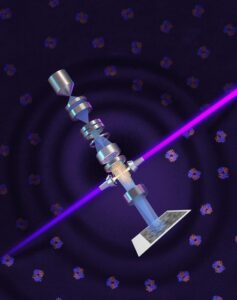
These improvements were achieved using standard defocus ranges and reconstruction workflows. “For the most challenging cases—small particles, bad specimens—the laser produces a very considerable advantage,” Mueller said.
The impact extends beyond single‑particle analysis. Cryo‑electron tomography (cryo‑ET), which assembles multiple angular views of a molecule or protein into a three-dimensional image, stands to benefit even more. “With cryo-ET, we’re looking at small, very complicated cellular material that’s incredibly crowded inside the cell,” said Bridget Carragher, PhD, founding technical director of imaging at Biohub. “It’s like a forest of trees, and you’re trying to find one leaf on one tree in there. Cryo-ET needs a dramatic step forward in contrast, so we can start to see what’s going on inside the cell. That’s what the laser phase plate promises to give us.”
Biohub is developing a dual‑laser version of the system, designed to reduce component wear and minimize aberrations. Meanwhile, Mueller’s team is pushing toward imaging proteins as small as 17 kilodaltons, a threshold that would open access to vast regions of the human proteome previously invisible to cryo‑EM.
“This technology is a step function change for biology,” said Stephani Otte, PhD, Biohub’s vice president of imaging science. “What was once invisible will become visible—and that changes everything about how we understand disease.”
“The bottom line is, if you have a large protein and a really good sample—a fresh one or one frozen without bubbles, for example—you may not need the phase plate to get a single, high-quality image. But for a small protein and a bad sample, laser-on is best,” Mueller said. “This could fill an enormous gap in our knowledge of protein structures that can’t be crystallized or are too small for today’s cryo-EM. And it will be revolutionary for cryo-ET.”
The post Laser‑Driven Phase Contrast Enhances Cryo‑EM Resolution of Small Proteins appeared first on GEN – Genetic Engineering and Biotechnology News.
Uncategorized
STAT+: Updated: Tracking RFK Jr.’s promises to remake health in America
Updated June 11, 2026
WASHINGTON — A pledge to “Make America Healthy Again” earned Robert F. Kennedy Jr. his job atop U.S. health agencies a year and some change ago. He’s now had the opportunity to turn his words into action, with mixed results.
“All one needs” to prove the health secretary’s attentiveness is to “review my unprecedented list of accomplishments on a wide range of issues, all of which I drove,” Kennedy posted on X on Wednesday in response to a journalist.

Updated June 11, 2026
WASHINGTON — A pledge to “Make America Healthy Again” earned Robert F. Kennedy Jr. his job atop U.S. health agencies a year and some change ago. He’s now had the opportunity to turn his words into action, with mixed results.
“All one needs” to prove the health secretary’s attentiveness is to “review my unprecedented list of accomplishments on a wide range of issues, all of which I drove,” Kennedy posted on X on Wednesday in response to a journalist.


Illinois’ financial crisis could bring the state to a halt
The final 6 ‘Game of Thrones’ episodes might feel like a full season
New Season 8 Walking Dead trailer flashes forward in time
Mod turns ‘Counter-Strike’ into a ‘Tekken’ clone with fighting chickens
Meet Superman’s grandfather in new trailer for Krypton
Disney’s live-action Aladdin finally finds its stars
Beyond sunshine: Iberia’s biotech moment has arrived with developing capital networks

Laser‑Driven Phase Contrast Enhances Cryo‑EM Resolution of Small Proteins

STAT+: Updated: Tracking RFK Jr.’s promises to remake health in America

An obesity drug deep-dive, and peptides move mainstream

RFK Jr. claims his calendar is publicly available. We’ve been trying to get it for a year

Nonprofit buys experimental cancer drug to maintain patient access
Illinois’ financial crisis could bring the state to a halt
The final 6 ‘Game of Thrones’ episodes might feel like a full season
New Season 8 Walking Dead trailer flashes forward in time
Mod turns ‘Counter-Strike’ into a ‘Tekken’ clone with fighting chickens
Meet Superman’s grandfather in new trailer for Krypton
Disney’s live-action Aladdin finally finds its stars
-
 Uncategorized9 years ago
These ’90s fashion trends are making a comeback in 2017
-
Uncategorized9 years ago
According to Dior Couture, this taboo fashion accessory is back
-
Endpoints News3 months ago
Novartis to pay $2B upfront to take next-gen PI3Kα inhibitor from Synnovation
-
Uncategorized9 years ago
Phillies’ Aaron Altherr makes mind-boggling barehanded play
-
Uncategorized9 years ago
Uber and Lyft are finally available in all of New York State
-
Contributors9 years ago
The final 6 ‘Game of Thrones’ episodes might feel like a full season
-
Uncategorized9 years ago
Steph Curry finally got the contract he deserves from the Warriors
-
Uncategorized9 years ago
The old and New Edition cast comes together to perform