

Uncategorized
News round-up from SLAS Europe



DDW reports on some key news releases that emerged out of this year’s SLAS Europe.
Cenevo reinforces agentic AI approach with new AI-assistant
Announced at SLAS Europe, lab management specialist Cenevo launched a new AI-enabled capability for its agentic AI platform Mosaic.
The company’s Mosaic AI Inventory Search enables scientists to search inventory using natural language, in the hope that it can make sample discovery faster and more intuitive. The function’s AI capabilities lets scientific teams turn inventory data into action without losing traceability, control or context. Teams can describe in plain language what they’re looking for and the AI assistant automatically builds and executes the appropriate search.
Unlike generic AI chat tools, Mosaic AI Inventory Search is integrated into Mosaic’s sample-centric data model. The assistant understands sample properties, labware types, modalities and customer-specific configurations, enabling more accurate and context-aware search results.
“Mosaic AI Inventory Search is another step toward connected, agentic labs where AI helps scientific teams move from data to action more seamlessly,” said Alan Parkin, Vice President Product – Mosaic. “By embedding AI directly within trusted laboratory systems, we can deliver faster, more intuitive workflows while maintaining the governance, traceability and control modern labs require.”
Collaborative Drug Discovery partners with Lily Tunelab to incorporate AI/ML models
Collaborative Drug Discovery (CDD) has partnered with Eli Lilly and Company to incorporate the organisation’s collaborative AI/ML drug discovery platform into its CDD Vault platform.
Lilly TuneLab is Eli Lilly’s AI/ML platform that was created to accelerate biotech innovation by enabling participating companies to access models trained on decades of Lilly’s proprietary research data.
The agreement between CDD and Lilly will see biotech companies that use CDD Vault able to utilise select Lilly predictive models within their natural scientific workflows. It also paves the way for the planned integration of Lilly Tunelab in both the core and AI modules within CDD Vault.
“By integrating TuneLab directly into CDD Vault, we are advancing CDD’s core vision to enable collaboration across drug discovery teams and organisations. We believe that solving the most complex challenges in drug discovery will depend on innovative collaboration models that provide broad access to research data and empower chemists and biologists to make informed, data-driven decisions,” said Barry Bunin, CDD Chief Executive Officer and President. “TuneLab’s ADMET models will fit in our trusted secure CDD Vault software environment in natural workflows for experimental and computational scientists and with our growing CDD Vault ecosystem of biopharmaceutical companies.”
Bionomous launches automated platform for complex biological models
Swiss-based start-up Bionomous launched its new Sortivo platform at SLAS Europe. The device automates the screening, sorting and plating of complex biological entities from 300µm to ~2mm such as zebrafish embryos and organoids, workflows that, until now, have relied on hours of manual pipetting under a stereomicroscope.
Sortivo integrates high-resolution brightfield and multi-channel fluorescence imaging with AI classification and gentle handling in a compact benchtop system. By combining the capabilities of image-based picking and large-particle sorting, Sortivo offers the same individualised, large-scale screening for large and delicate entities that flow cytometry provided for single cells.
With regulators actively encouraging the adoption of New Approach Methodologies (NAMs), the company is hoping that Sortivo can increase the adoption of Zebrafish embryos and organoids, whose adoption at scale has been limited by manual, labour intensive workflows.
By automating those workflows, Sortivo helps academic, pharma and CRO labs translate the promise of NAMs into routine, reproducible experiments.
Frank Bonnet, CEO and Co-Founder of Bionomous, said: “Sortivo represents the next step in our mission to automate and accelerate life science research. Our customers told us very clearly: zebrafish and organoid workflows have outgrown manual sorting. They need a platform that combines gentle handling with image-based AI and standardised plating, and that they can actually afford and operate every week. Sortivo is our answer.”
Hamilton and Cerillo partner on automation and microplate capabilities
Hamilton will utilise its expertise in liquid handling and automation with Cerillo’s compact microplate reader technology in a collaboration announced at SLAS Europe.
The companies state that the partnership will strengthen both organisations’ ability to deliver seamless, end-to-end detection and analysis solutions for modern laboratory workflow.
Cerillo will bring its expertise in delivering high-performance microplate readers to Hamilton’s liquid handling and automation platforms. The companies state the partnership and integration of technologies will enable them to offer more tightly integrated solutions that combine precision liquid handling with advanced detection, enabling researchers to streamline workflows without compromising performance or reliability.
Through the partnership, the companies hope to better serve the rapidly growing microbiome research, synthetic biology, and environmental microbiology markets.
The post News round-up from SLAS Europe appeared first on Drug Discovery World (DDW).

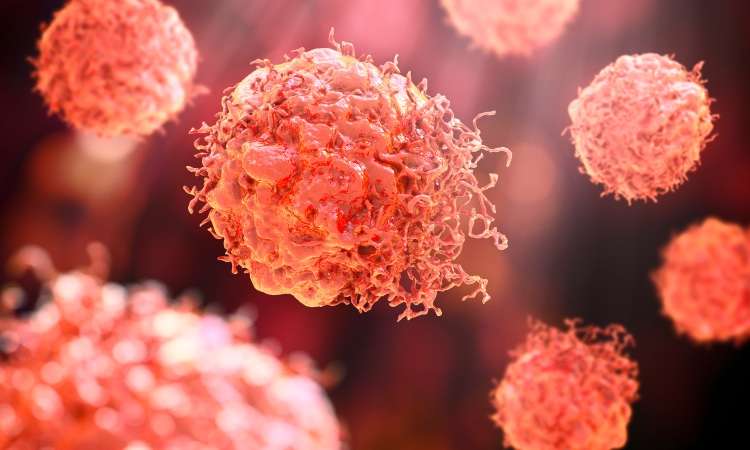

Hosted by Drug Discovery World and supported by Sartorius and BioIVT, this webinar will explore the opportunities and challenges that exist within cancer research drug discovery and development.
You will hear from Dr Sudha Rao, Chief Scientific Officer of Kazia Therapeutics, Karol Budzik, PhD, Business Development Associate at Vyriad Therapeutics and Lars van der Veen, Chief Scientific Officer at iOnctura.
Presentations will cover how cancer treatments have shifted towards reprogramming the biology driving tumour growth, immune escape and treatment resistance, the trajectory that in vivo CAR-T treatments are taking, and how challenging tumours burdened by stroma and immune-mediated resistance can be tackled.
Q&A with the speakers follows the presentations.
The post New webinar: Tackling drug discovery challenges in cancer research appeared first on Drug Discovery World (DDW).
Amid the rise of psychedelics in the mental health space, researchers have begun to explore psilocybin as a treatment for chemotherapy-induced peripheral neuropathy.
Uncategorized
New Spectrometry Technique Could Aid Formulation Development
New Spectrometry Technique Could Aid Formulation Development
A new technique combining two forms of spectrometry could help biopharmaceutical companies improve their choice of formulation buffer for antibody manufacturing by revealing how molecular forms and three-dimensional shapes of complex biologics respond to their environment. That’s the view of Christian Bleiholder, PhD, a professor at Florida State University who helped develop the technique.
According to Bleiholder, what happens structurally when a complex biological molecule, such as an antibody or viral spike protein, binds to its target is currently poorly understood.
“This is where [this approach] can help with the bioprocessing and formulation,” he says, as structural changes “can affect the lifespan [of the product] and lead to issues, such as aggregation.”
Because antibodies are complex, existing techniques tend to be powerful at different levels of complexity, he explains. Mass spectrometry is particularly powerful for distinguishing molecular composition, while structural approaches such as X-ray crystallography and cryo-electron microscopy can provide high-resolution structural information.
The challenge is understanding the link between these things within a heterogeneous sample, he says.
To overcome this, Bleiholder and his team worked with Bruker Daltonics to develop Tandem-Trapped Ion Mobility Spectrometry (Tandem-TIMS). This combines tandem ion mobility spectrometry with tandem mass spectrometry to disentangle three overlapping layers of molecular complexity: molecular form, three-dimensional shape, and binding or assembly state, he says.
He explains that, if the proteins have different structures, they can be characterized with tandem ion mobility spectrometry, and then mass spectrometry can be used to look at their molecular forms and binding states.
Going forward, Bleiholder hopes the technique can be used for formulation development but also earlier, during drug discovery of new products, such as multi-specific antibodies, to determine which molecular states are important and how those change when a biologic engages its target. He also plans to look at automating the technique.
Bleiholder spoke about using Tandem-TIMS at the Bioprocessing Summit in Boston earlier this year.
The post New Spectrometry Technique Could Aid Formulation Development appeared first on GEN – Genetic Engineering and Biotechnology News.


Tetraploid Astrocytes Emerge as Potential Players in Drug-Resistant Temporal Lobe Epilepsy

Where DNA Copying Fails Can Decide How Cancer Cells Respond to PARP Inhibitors

Ramaswamy’s biotech baggage haunted his political run

BIO responds to Health Affairs Analysis, highlighting the importance of orphan drug incentives

Boehringer Ingelheim Inks Up-to-$7.4B+ Cancer Drug Collaboration with Sino Biopharmaceutical

Patient Advocacy Coffee Chat: Basic steps to being a good advocate
-

 Uncategorized8 months ago
Novartis buys Synnovation’s PI3Kα inhibitors for $3 billion
-
Endpoints News8 months ago
Novartis to pay $2B upfront to take next-gen PI3Kα inhibitor from Synnovation
-

 Uncategorized6 months ago
Optical Pooled CRISPR Screen Reveals Regulators of NF-κB Dynamics in Human Cells
-
Uncategorized6 months ago
Relay’s PI3Kα inhibitor clears efficacy bar in Phase 2 vascular anomalies study
-
Uncategorized5 months ago
Hybrid solid−liquid optics enable scalable, high-resolution light-sheet microscopy across diverse immersion media
-
Fierce Biotech7 months ago
Scientists turn pig semen extract into eye drops that kill cancer in mice
-
Nature Biotechnology8 months ago
Sustained nitric oxide production by engineered E. coli remodels the tumor microenvironment and potentiates immunotherapy
-
Nature Biotechnology7 months ago
Mapping cis-regulatory mutations at scale in sorghum enables modulation of gene expression
 Scan to Read