

Synthetic Biology, Genomics & Advanced Therapeutics
CAR T Production Bottlenecks Best Tackled with AI, Automation, and Skilled Staff
CAR T Production Bottlenecks Best Tackled with AI, Automation, and Skilled Staff

Patient-specific cell therapies have the potential to cure cancers when other treatments have failed. Unfortunately, a global lack of production capacity and a paucity of skilled production staff are limiting access.
The seven autologous CAR T therapies approved by the FDA to date—Abecma, Aucatzyl, Breyanzi, Carvykti, Kymriah, Tecartus, and Yescarta—have two things in common: they are made from patient-specific cells, and they are complex to produce.
And, for traditional manufacturing models, these characteristics are a major challenge, says B. Wayne Bequette, PhD, a professor from the Department of Chemical and Biological Engineering at Rensselaer Polytechnic Institute in New York.
“The current manufacturing mode of operation is centralized, with only a few manufacturing sites available. There are currently many manual manufacturing steps and a limited number of operators and technicians with the background and skills to operate them. And there is substantial variability in the number and quality of cells available from patients.
“Analysis by Bristol Myers Squibb [which makes Abecma] shows that the major contributor to therapeutic product variability is the cells from the patient. Indeed, they propose that patient-specific product specifications should be used.”
Patient-specific product specs aside, to really address the production challenges, the industry needs to take a multifaceted approach, with the development of faster manufacturing and more efficient logistical methods being obvious starting points.
Bequette tells GEN, “Production times can be reduced using several strategies, from decentralized capacity that could eliminate cryopreservation steps and shipping delays, to rapid manufacturing that results in fewer but more viable product cells, and finally reduced product release testing times by using more in-process monitoring.”
Innovation
The burgeoning autologous cell therapy industry would also benefit from embracing innovative production technologies and methods, Bequette says, citing automation and AI as examples.
“More complete manufacturing automation helps in many ways, by enabling closed systems that do not require as expensive cleanroom environments and enable a reduction in the number of operators/technicians and the facility space required.
“AI can be implemented at many levels, from learning algorithms that better operate expansion bioreactors to assisting with planning and scheduling production lines between manufacturing sites,” he says.
Bequette, who set out a blueprint for faster, more efficient production in recent research, believes AI can help even earlier in the process.
“Although technically not associated directly with manufacturing, I feel AI-based decision support systems could assist a clinician in choosing between alternative treatments for a particular patient. For example, product A may have a higher expected efficacy for a particular patient, but product B may currently have a shorter expected vein-to-vein time, so a clinician could use this information to make a treatment recommendation.”
Skills shortage
Industry also needs more engineers with the specialist skills needed to manufacture CAR T therapies, Bequette says, citing study programs at the Rensselaer Polytechnic Institute as a potential source.
“It is important that we have a well-educated workforce to expand production of life-saving therapeutics. For example, our Center for Engineering in Precision Medicine (CEPM) is linked with the Mount Sinai School of Medicine in New York City.
“One CEPM activity involves a PhD program in Health Sciences Engineering (HSE), where students spend their first year on the engineering campus in Troy, NY, followed by clinical and translational research at Mount Sinai.
“In my courses, in addition to developing mathematical algorithms, I motivate students to consider the human element throughout the process—from maintaining the safety of the process operators to the quality of the therapeutics being manufactured and delivered to patients,” he adds.
The post CAR T Production Bottlenecks Best Tackled with AI, Automation, and Skilled Staff appeared first on GEN – Genetic Engineering and Biotechnology News.

Synthetic Biology, Genomics & Advanced Therapeutics
Longeveron’s shares crash as stem cell therapy flunks mid-stage cardio trial
With just over $10 million in cash available to fuel operations through the end of the year, Longeveron is undertaking a strategic review after the failure of a cardiovascular study.


Synthetic Biology, Genomics & Advanced Therapeutics
Cellares and GenomeFrontier to assess automated GF-CART01 production
The collaboration, which marks Cellares’ first development project in Asia, will explore adapting GenomeFrontier’s virus-free process to the Cell Shuttle system. It aims to assist GenomeFrontier’s clinical activities
The post Cellares and GenomeFrontier to assess automated GF-CART01 production appeared first on Pharmaceutical Business review.

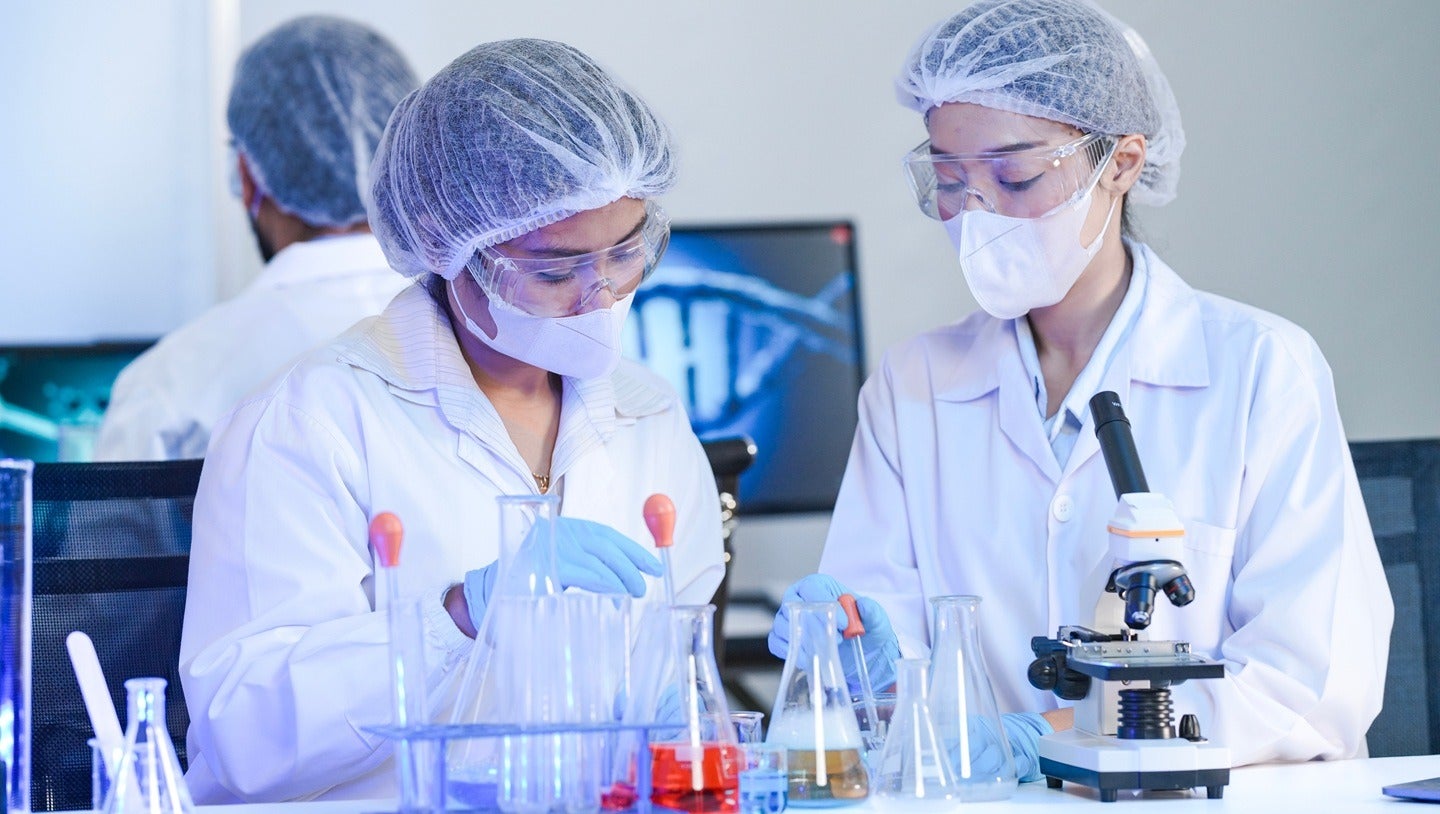
The collaboration, which marks Cellares’ first development project in Asia, will explore adapting GenomeFrontier’s virus-free process to the Cell Shuttle system.
It aims to assist GenomeFrontier’s clinical activities for GF-CART01 in the US.
GF-CART01 is being developed for a range of B-cell malignancies. Target indications include diffuse large B-cell lymphoma, follicular lymphoma, high-grade B-cell lymphoma and primary mediastinal large B-cell lymphoma.
It has shown positive clinical trial data in Taiwan, and patient recruitment is ongoing for a Phase I trial in the US.
GenomeFrontier founder, CEO and chief scientific officer Sareina Wu said: “As we advance GF-CART01, it is important that our manufacturing strategy can support both clinical development and future scale.”
The evaluation will concentrate on translating GenomeFrontier’s manufacturing technique to the Cell Shuttle platform, particularly focusing on transfection operations using Cellares’ integrated electroporator.
The companies aim to examine the feasibility of automating the process while maintaining the flexibility GenomeFrontier’s virus-free system requires.
Cellares co-founder and CEO Fabian Gerlinghaus said: “GenomeFrontier’s virus-free approach reflects the increasing complexity of next-generation cell therapy manufacturing.
“The Cell Shuttle is built to automate complex processes, including electroporation-based workflows, with the scalability and reliability needed as therapies advance through clinical development. This partnership brings that capability to GenomeFrontier as it expands its programme in the US.”
Autologous CAR-T production is typically labour-intensive, variable and challenging to scale, which affects manufacturing reliability, cost and patient access.
Cellares’ Cell Shuttle is intended to address these challenges by automating end-to-end cell therapy manufacturing.
GenomeFrontier and Cellares intend to establish whether the automated process can support the virus-free approach, with objectives to enhance reliability and reduce costs.
The post Cellares and GenomeFrontier to assess automated GF-CART01 production appeared first on Pharmaceutical Business review.
Synthetic Biology, Genomics & Advanced Therapeutics
Cellares and GenomeFrontier Therapeutics Partner to Advance Automated Manufacturing of GF-CART01
The partnership marks Cellares’ first collaboration with a cell therapy developer in Asia and will evaluate automated manufacturing of GenomeFrontier’s virus-free CAR T process for clinical manufacturing in the U.S.
The post Cellares and GenomeFrontier Therapeutics Partner to Advance Automated Manufacturing of GF-CART01 appeared first on GEN – Genetic Engineering and Biotechnology News.


Cellares, an integrated development and manufacturing organization (IDMO), and GenomeFrontier Therapeutics, a Taiwanese cell therapy company developing virus-free CAR T therapies, formed a partnership to evaluate automated manufacturing for GF-CART01, GenomeFrontier’s investigational CAR T-cell therapy, on Cellares’ Cell Shuttle platform.
The collaboration will focus on the translation of GenomeFrontier’s manufacturing process to the Cell Shuttle, with an emphasis on supporting transfection unit operation using Cellares’ integrated electroporator. The partnership marks Cellares’ first development collaboration in Asia and is intended to support GenomeFrontier’s U.S. clinical initiative as it advances GF-CART01.
GenomeFrontier is developing GF-CART01 for B-cell malignancies, including diffuse large B-cell lymphoma, follicular lymphoma, primary mediastinal large B-cell lymphoma, and high-grade B-cell lymphoma. The company reports that it has demonstrated promising clinical data in Taiwan and is now recruiting for a Phase I clinical trial in the U.S.
“As we advance GF-CART01, it is important that our manufacturing strategy can support both clinical development and future scale,” said Sareina Wu, PhD, founder, CEO, and CSO of GenomeFrontier. “Our virus-free approach is central to the development of GF-CART01, and this collaboration with Cellares allows us to evaluate how that process can be translated to an automated manufacturing platform as we expand our clinical development in the U.S.”
“GenomeFrontier’s approach reflects the increasing complexity of next-generation cell therapy manufacturing,” added Fabian Gerlinghaus, co-founder and CEO of Cellares. “The Cell Shuttle is built to automate complex processes, including electroporation-based workflows, with the scalability and reliability needed as therapies advance through clinical development.”
Autologous CAR T manufacturing remains labor-intensive, variable and difficult to scale, creating challenges for clinical development, manufacturing reliability, cost, and ultimately patient access. The Cell Shuttle is an end-to-end automated cell therapy manufacturing platform designed to improve the scalability and reliability of autologous cell therapy manufacturing, according to Cellares.
The post Cellares and GenomeFrontier Therapeutics Partner to Advance Automated Manufacturing of GF-CART01 appeared first on GEN - Genetic Engineering and Biotechnology News.


Novo’s Denecimig Demonstrates Tolerability After Switch from Emicizumab in FRONTIER5 Study of People with Haemophilia A as Published in the Journal of Thrombosis and Haemostasis

Animal Rule Information

Non-Compliance Letters under 505B(d)(1) of the Federal Food, Drug, and Cosmetic Act

Korea Filler Experts – 718706 – 11/03/2025

Verified Clinical Benefit | Cancer Accelerated Approvals

Novo notches up to $1.4B pact with Orbis to develop oral macrocycle cardiometabolic drugs
-
Fierce Biotech6 months ago
Scientists turn pig semen extract into eye drops that kill cancer in mice
-
Endpoints News6 months ago
Novartis to pay $2B upfront to take next-gen PI3Kα inhibitor from Synnovation
-

 Uncategorized6 months ago
Novartis buys Synnovation’s PI3Kα inhibitors for $3 billion
-
Nature Biotechnology6 months ago
Sustained nitric oxide production by engineered E. coli remodels the tumor microenvironment and potentiates immunotherapy
-

 Uncategorized5 months ago
Optical Pooled CRISPR Screen Reveals Regulators of NF-κB Dynamics in Human Cells
-
Uncategorized4 months ago
Relay’s PI3Kα inhibitor clears efficacy bar in Phase 2 vascular anomalies study
-

 STAT News – Biotech6 months ago
STAT+: In private meetings, White House works to win pharma companies’ support for drug pricing bill
-
Nature Biotechnology6 months ago
Mapping cis-regulatory mutations at scale in sorghum enables modulation of gene expression
 Scan to Read